about the American Civil War
Monday, May 25, 2020
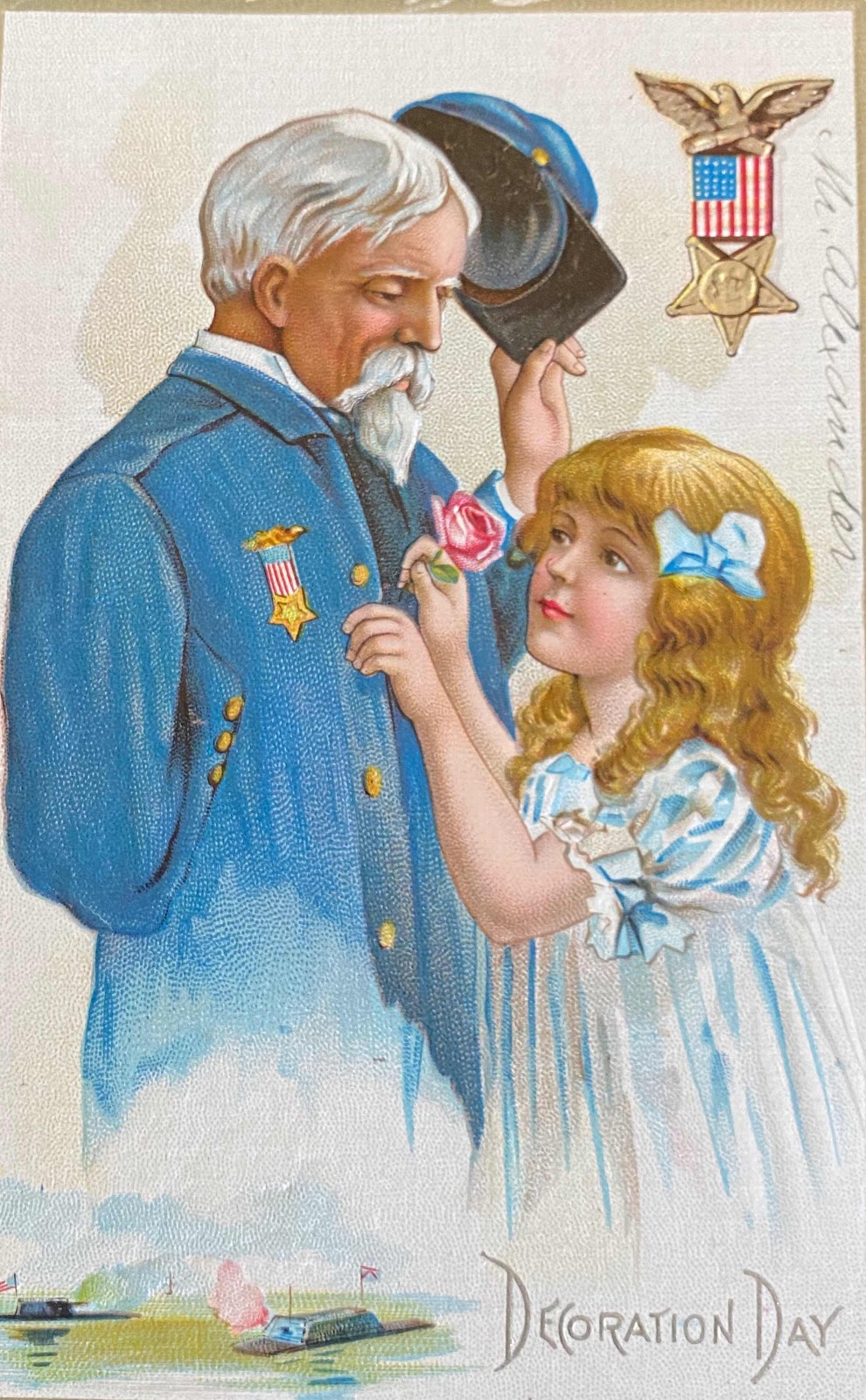
Decoration Day
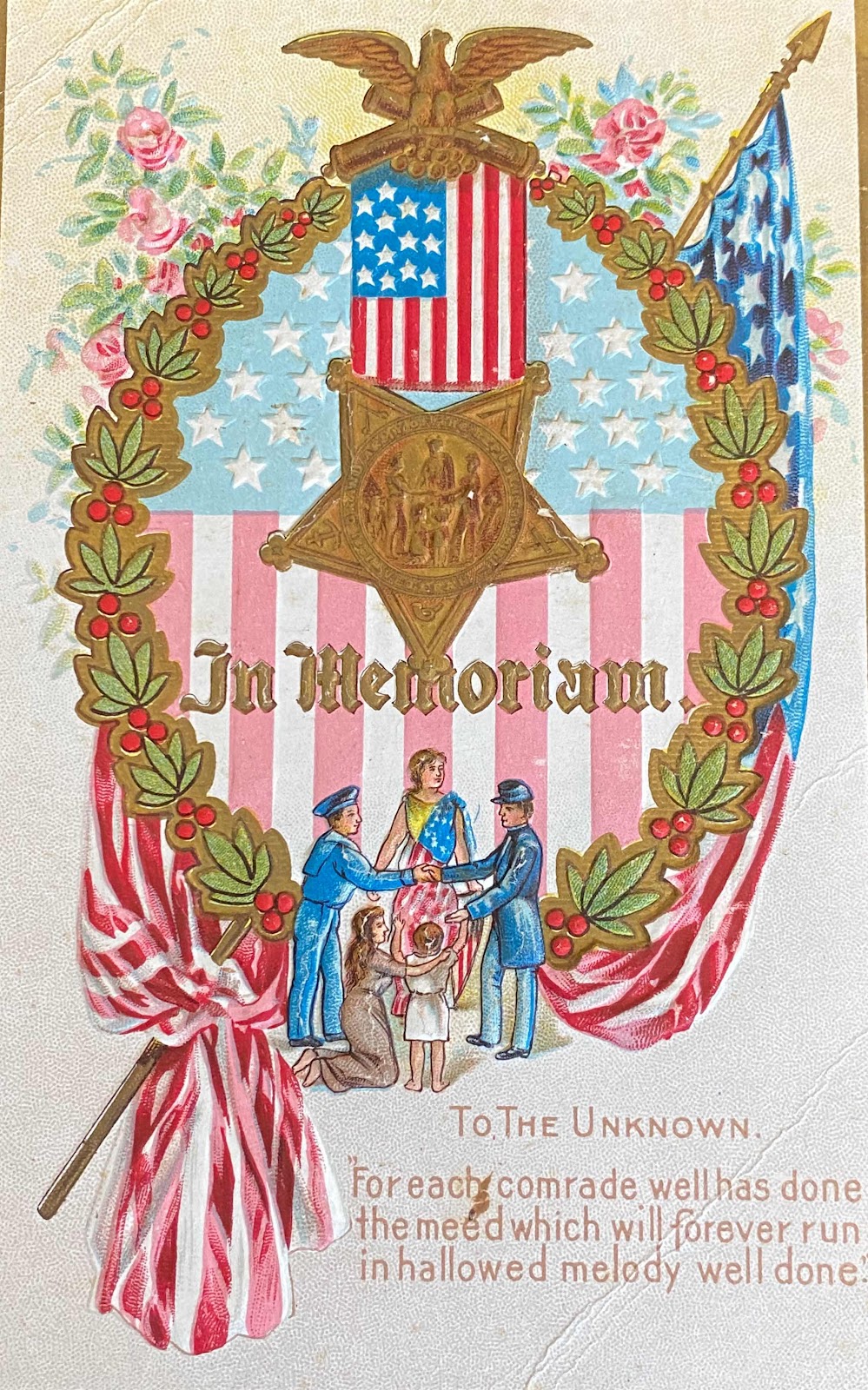
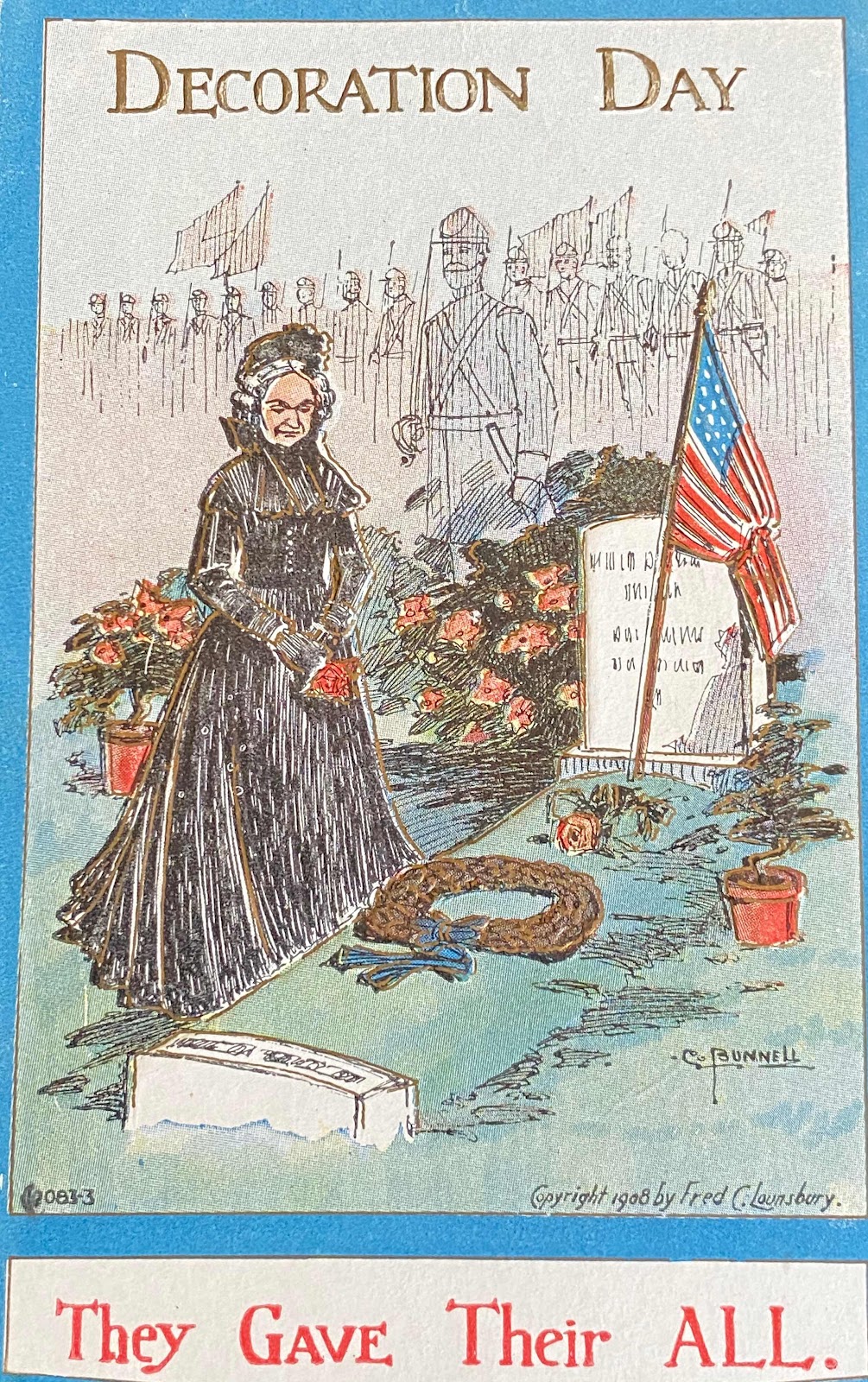
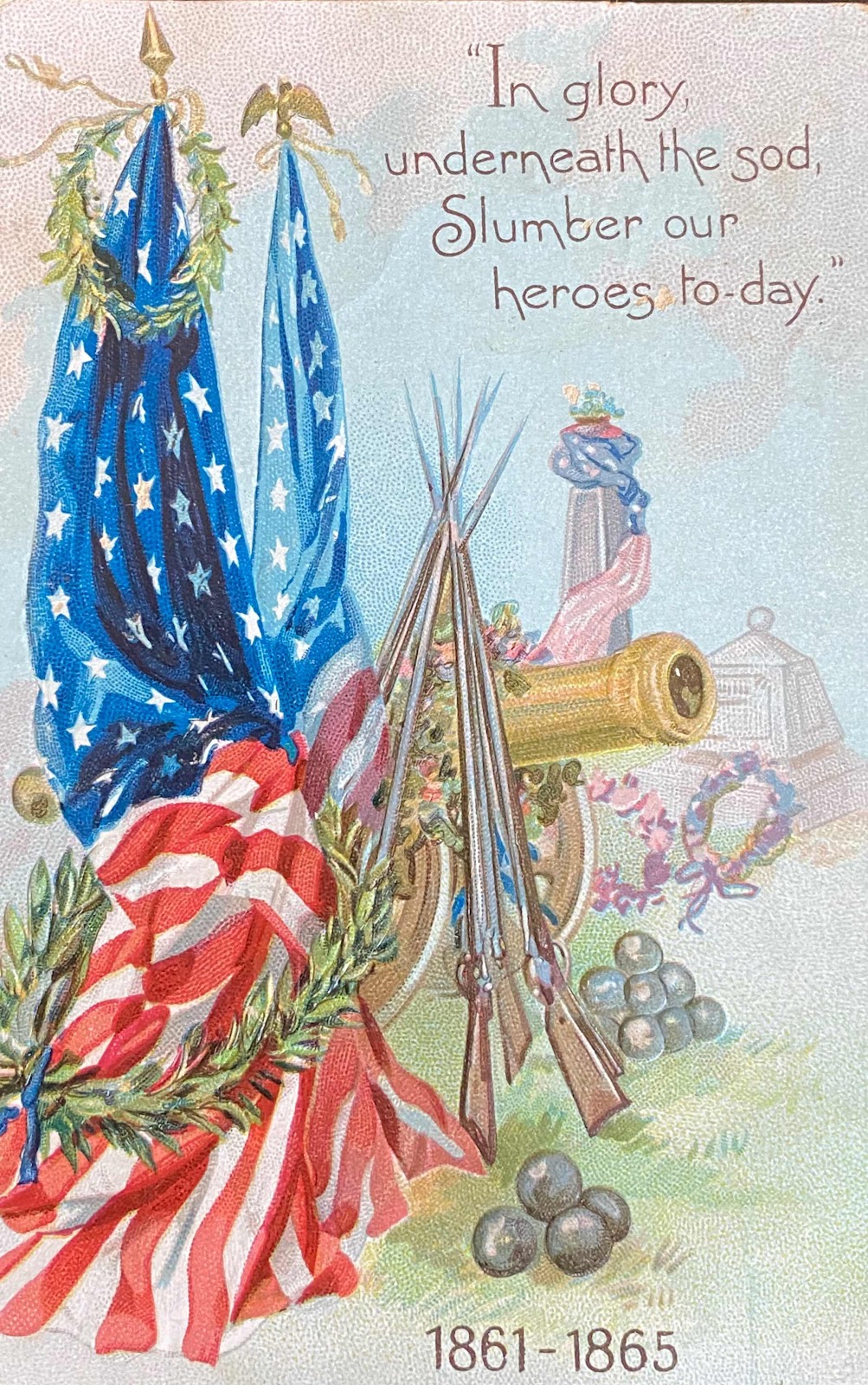
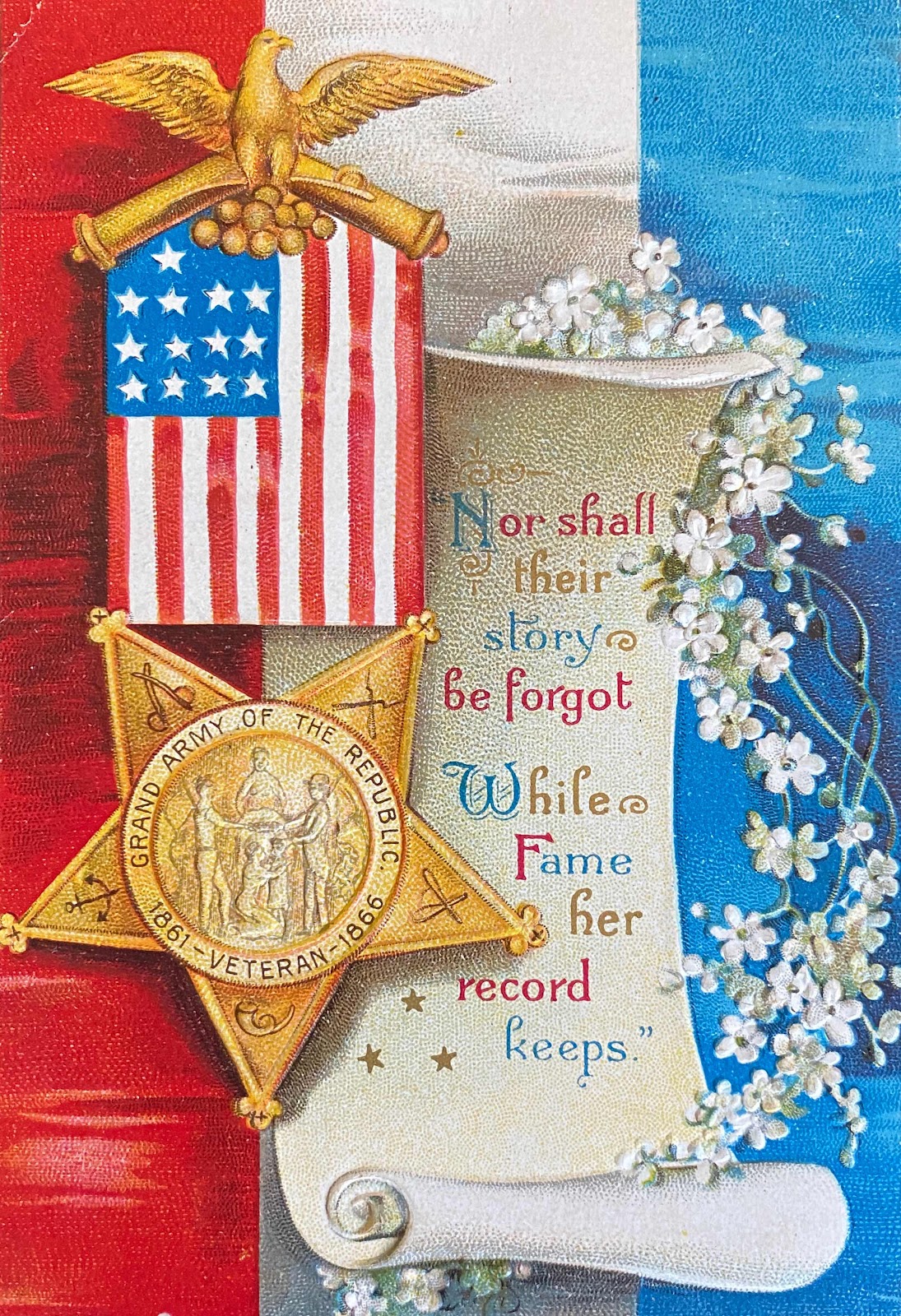
Here are a few images of antique Decoration Day postcards. There are many more out there but I feel these few from my collection represent and express the reasons for Decoration Day, now known as Memorial Day.


Wednesday, May 20, 2020
A Sketch of Rebel Hospitals
This was in the Cincinnati Enquirer June 2 1863. The full title seems a bit inaccurate, or at least the final line does, but it is a good description of one young patient.
A Sketch of Rebel Hospitals - The Wounded Artillerymen - What I Saw In a Hospital - Reformation of the System
From the Knoxville (Tenn.) Whig May 11
On three long rows of narrow cots, on either side of the great hall, are sick and wounded soldiers. On that nearest cot is a mere boy. How listlessly and wearily he gazes through the open window. His hand, lying (ILLEGIBLE, perhaps “outside”) the soiled and stained coverlid, is white as a snow-flake. He raises his pale face from the pillow of straw, and his eyes grow bright when a soft voice pronounces words of sympathy and love. He can move with the utmost difficulty, since his leg, that was crushed by a cannon-ball, was amputated. He does not complain when he shows you the bandaged stump that is left, but his deep sunken eyes and little wrists so thin, with the blue veins so clearly marked, and the dropping fingers tell, with touching eloquence, what the poor soldier boy has suffered. Twice has that sunken limb been subjected to the Surgeon’s knife. It was taken off first at the ankle, just after the battle. The Surgeon hoped to save the rest of the leg, but afterward they found it must be taken off higher up, just above the knee, and the patient sufferer wen through with the agony over again. It would make a woman weep to think over it; but men become accustomed to such incidents, and the fountain of our sympathies have been exhausted by the demands made upon them since this horrible and unnatural war began.
The Surgeon says he will get well slowly, but he is so listless and pale, and wears a look of such unutterable weariness, that life itself seems burdensome to the wounded soldier. He says he is so tired looking at the long rows of cots with a groaning sick person in each; at the rows of windows, too, down the long hall; he grows weary moving his wasted fingers round and round the figures on the coarse bed-quilt; he wearied of looking at the withered stump of a limb, and wondering how he shall learn to walk with only one leg, and he wearies lying in one position hour after hour and day after day, without turning over. I thought as I watched the pale wan sufferer, that I would like to hang some pictures on the bare wall for the poor boy to look at and think about as he lies without one word of sympathy from any human being. Now gladly would he receive a fresh bunch of flowers from a sister’s or a mother’s hand! He would smile then, and the blood would flow from his heart with something of its wonted vigor. How sad to think that, instead of this, he must lie there through all these bright days of spring-time, and sick and nervous and weak, he must see the patient in the next bed die, he must listen to his ceaseless groans, and witness the horrible agonies and writings of the wretched sufferer. He must see him struggle awhile in the grasp of death, and then borne away to the grave by rude attendants who have become as heartless as familiarity with human woes can make them.
Sunday, May 3, 2020
Why not hang every Dutchman captured?
This commentary is from the Cincinnati Enquirer of June 25, 1863, reprinted from a Tennessee newspaper, and likely refers to the failed Streight’s Raid.
Southern News
From the Knoxville Register June 12
PROPOSITION TO HANG THE DUTCH SOLDIERS
Of late, in all the battles, and in all the recent incursions made by Federal cavalry, we have found the great mass of Northern soldiers to consist of Dutchmen. The plundering thieves captured by Forrest, who stole half the jewelry and watches in a dozen counties of Alabama, were immaculate Dutchmen. The national order (EDITOR’S NOTE: perhaps the author meant “odor” but the story clearly said “order.”) of Dutchmen, as distinctive of the race as that which, constantly ascending to heaven, has distended the nostrils of the negro, is as unmistakable as that particular to a pole cat, an old pipe, or a lager-beer saloon. Crimes, thefts, and insults to the women of the South, invariably mark the course of these stinking bodies of animated sour kraut. Rosecrans himself is an unmixed Dutchman, an accursed race which has overrun the vast districts of the country of the North-west.
It happens that we entertain a greater degree of respect for an Ethiopian in the ranks of the Northern armies then for an odiferous Dutchman, who can have no possible interest in this revolution.
Why not hang every Dutchman captured? We will hereafter hang, or shoot, or imprison for life, all white men taken in command of negroes, and enslave the negroes themselves. This is not too harsh. No human being will assert the contrary. Why, then, should we not hang a Dutchman, who deserves infinitely less of our sympathy than Sambo. The live masses of beer, kraut, tobacco, and rotten cheese, which, on two legs and four, on foot and mounted, go prowling through the South, should be used to manure the sandy plains and barren hillsides of Alabama, Tennessee and Georgia.
Whenever a Dutch regiment adorn(s) the limbs of a Southern forest, daring cavalry raids into the South shall cease.
President Davis need not be specially consulted, and if an accident of this sort should occur to a plundering band like that captured by Forrest, we are not inclined to believe that our President would be greatly disgruntled.
———
This may be the most remarkable Civil War newspaper article I have found. I keep thinking “wow!” every time I re-read it. I certainly know that anti-immigrant sentiment existed during the Civil War, just a few years after the Know Nothing/American Party/Nativist movement in the 1850s, but the harsh language, repeated insults, and non-stop stereotypes in this story somewhat shocked me when I first saw it. Maybe I have not studied this subject enough - I have seen immigrant soldiers in the Union Army referred to as “Lincoln’s hirelings” and, of course, ridicule of the performance of some foreign soldiers, such as at Chancellorsville, but I have not found a story quite like this. Especially noteworthy, in my view, are the comparisons to African-Americans, who certainly were not respected in the South. Could this writer have considered anything a worse insult than those comparisons?
I also wonder if any German-language newspapers reprinted this or similar articles.
Subscribe to:
Comments (Atom)