Showing posts with label desertion. Show all posts

Wednesday, May 10, 2023

Book Review: Tar Heels in Gray: Life in the 30th North Carolina Infantry in the Civil War

By John B. Cameron
McFarland & Company, Inc.
Copyright 2021


As the back cover of this book states, “The 30th North Carolina was involved in most of the major battles in Virginia from the Seven Days through the surrender at Appomattox.” Most of its men joined early in the war, but others were drafted and served unwillingly. 


“What was the war actually like for these men?”


It is that question, and others like it, that this book explores and discusses in a deeply-researched text that those interested in the men of the Civil War armies should read. 


Tar Heels in Gray is a good book, an enjoyable and detailed biography of a regiment’s time in the war, focusing on non-combst-specific challenges the unit and its men faced, including recruitment, motivation, disease, desertion, hunger and others.


It is not intended as a military study of campaigns and battles like most regimental histories are, but focuses its attention on other important details about daily soldier life that contributed to the regiment’s ability to arrive at and perform in battle. This is a good approach by the author and produces a valuable look at the challenges the unit faced just to have enough able-bodied men to fight.


This book is generally well-written and easy to read, but I admit that some of the statistical discussions, and the descriptions of how the author decided what fit in which category and how he assembled the statistics, were not as enjoyable as other parts, though the graphs and charts were helpful. That may just be me - I often don’t enjoy the deeply analytical and statistically-based articles about sports I follow either - but I do understand why he included these sections in the book to show his methodology. I do wonder, however, if some of the discussion of the methods could have been included in an appendix.


My personal taste on that one issue aside, I especially enjoyed the letters to and from the home front and the descriptions of camp life and relationships between soldiers were outstanding and valuable. (The discussion about Louis McLeod and Francis Moore was especially interesting. I wish their friendship had lasted longer do that their story would have been longer and provided more material for the author. That was a perfect discussuon for this type of book and showed the humanity of these men in terms of the appreciation of friendships and the feelings of loss or betrayal.)


 The 30th North Carolina was just one regiment, but this is a look at it likely shows similar experiences as men in other units, especially Confederate ones, faced. 


I also enjoyed the discussions of the various diseases men in the men of the 30th faced. Some medical terms are technical and/or in Latin, but the overview of the diseases, how common they were, and, especially, how some were likely misdiagnosed was enlightening, and might help me on my current project. 


This note might be another quite picky one, but the author’s style of writing dates - the day, followed by the month, then the year (e.g. 23 June 1865) - is a bit distracting at least for me as I am accustomed to the more traditional style (e.g. June 23, 1865).


This is a relatively short book, 161 pages including the endnotes (which are worth reading, as many include additional information other than sources), plus a six page bibliography, but is well-researched, with the use of many soldier letters, census records, tax records and more. It is clearly the product of much work (such as the analysis of how to classify the economic and occupational statuses of the more than 1,000 soldiers in the regiment, and the discussion of the wounds and diseases these men suffered). It is an impressive effort, with a fine result that provides good insight into how a regiment and its men joined the army, lived, survived, were motivated, deserted and/or died in the dangerous and deadly years of the Civil War.


*Please note that I received a copy from the publisher for no charge. I have published my honest comments herein without allowing how I acquired it to affect my opinions.  

Wednesday, November 30, 2022

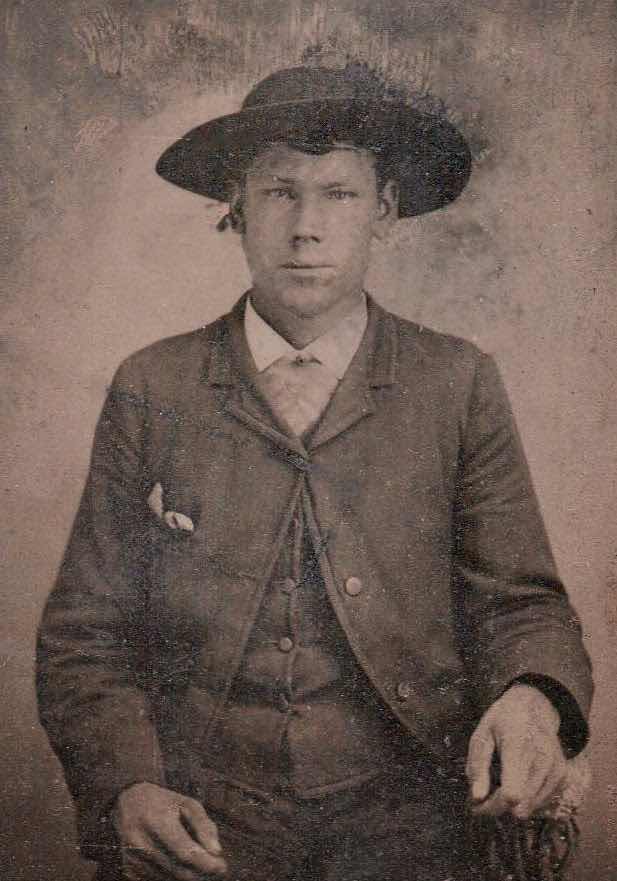
Private Foster Caseman, Company D, 23rd Kentucky Volunteer Infantry


Photo from findagravecom, memorial 66529335


Private Foster Caseman was born in Hamilton County, Ohio, perhaps in Cincinnati, in 1841.

In 1860, he resided in the area of Tibbatt’s Cross Roads, in southern Campbell County, Kentucky, which lies just across the Ohio River from the Buckeye State. 

He enlisted in company D of the 23rd Kentucky Infantry at Camp King, in Covington, Kentucky, on December 4, 1861. He was 5 feet 8 inches tall, had a dark complexion, brown eyes, and black hair. He worked as a farmer. 

His time in the unit may not have been easy, as the 23rd saw a lot of action in major battles and campaigns. Foster must not have liked his military experiences, and deserted from the regiment on August 2, 1862. He did, however, return on March 30, 1863, after President Abraham Lincoln had issued a proclamation of amnesty for deserters who returned to their units by April 1, 1863.

About six months after his return, he lost his life on September 19, 1863, at the Battle of Chickamauga in northern Georgia. This was the second bloodiest battle of the entire war (behind Gettysburg) per the American Battlefield Trust. Foster was just one of 16,170 Union men who were killed, wounded, or missing during and after that fight, which also included 18,454 Confederate casualties.  It was “by far the deadliest battle fought in the west.” 

Private Caseman was buried in the Chattanooga National Cemetery. 

The accompanying photograph came from findagrave.com. Nothing  indicates when the photo was taken, but it shows a very young-looking man, though it does not seem to show a “dark” complexion that his paperwork claimed.

This is, perhaps, how he appeared when he met his demise, one of so many young men cut down by the long, bloody war.

Saturday, February 5, 2011

The Youth's Companion: A Deserter Shot

Here is another story from the Youth's Companion magazine, this one dated April 14, 1864. It gives some good details on how an execution was carried out during the Civil War.

I have not yet confirmed that a Joseph Stroble was a member of the 55th Pennsylvania Regiment, but the National Park Service's Soldiers and Sailors System does confirm that this regiment was stationed in or near Beaufort, S.C., from late 1862 until 1864. It is possible that this young man's name does not appear on the list of regiment members because of his crime and execution.

Another link I found shows only a James Murphy having been executed from the 55th Pennsylvania before this article was published. Did the author of the article get the wrong name or just the wrong regiment?  Even without this detail, the description of the process is still worth reading, but having that type of detail would just add a bit of "human touch" to the story.

A Deserter Shot   


Death is the penalty for desertion from the army. It is a severe punishment, but as the efficiency and oftentimes the existence of an army depends upon the prevention of desertion, the most effectual means must be taken to secure it, and the fear of death exerts upon most minds the greatest power of restraint. A clergyman at Beaufort, S. S., describes the shooting of a deserter at that post, of which he was a witness: 


 Joseph Stroble, a member of the 55th Pennsylvania Regiment, was tried by court martial for "desertion and attempting to enter the rebel lines," convicted and sentenced to be sot, at Beaufort, S.C., at three o'clock P.M. At two o'clock all the military of this post were drawn up in order, formed in two lines on three sides of a hollow square. Through these lines, about twenty feet apart, the condemned man rode beside the chaplain, in a cart. Four soldiers bore his coffin in front of him, and his executioners marched behind him, with laded muskets, while the ban, with muffled drums, played a solemn dirge. After the condemned man had passed through the lines, in plain view of every soldier, he halted at the fatal spot designated for his execution. The coffin was borne forward ten paces in front and placed upon the ground. The chaplain and young Stroble advanced together and knelt beside the coffin. A prayer was offered in his behalf. They arose, and the prisoner read, in a clear, strong voice, a paper confessing his guilt and the justice of his sentence, and that he had lived a thoughtless and wicked life, regardless of God or his soul, and in the name of Christ implored pardon. The chaplain read the colloquy between Christ and the two thieves, and they both knelt again beside the coffin, and both offered vocal prayer.


 He arose, shook hands with the provost marshal and his spiritual adviser, calmly took off his blue overcoat and laid it on his coffin. He was not pinioned for hoodwinked, at his own request, but stood erect in a soldier's position, at the head of his coffin, and ten feet in front of seven soldiers detailed as his executioners. He put his hand to his left breast and said, "Aim there." The word of command was given, and six minie balls passed through his body, and his soul was launched into the presence of his God.


Each regiment then marched in rank and file past the body of the deserter, while the band was playing a solemn dirge with muffled drums. It was truly a sad and heart-aching sight to see a young man thus violently hurried into eternity, but no malice or revenge could have dictated his death. H attempted desertion to the rebel lines under the most aggravating circumstances; and had he succeeded in his plot, the streets of Beaufort might have been drenched in blood by a rebel raid. 


Awful as this extreme penalty of military law may seem, yet is, I am convinced, a necessity, as a terror and warning to those who contemplate desertion. 

The following illustration was in the December 28, 1861 Harper's Weekly, courtesy of www.sonofthesouth.net