Tuesday, April 21, 2020

1863 Kentucky Election Controversy in Campbell County

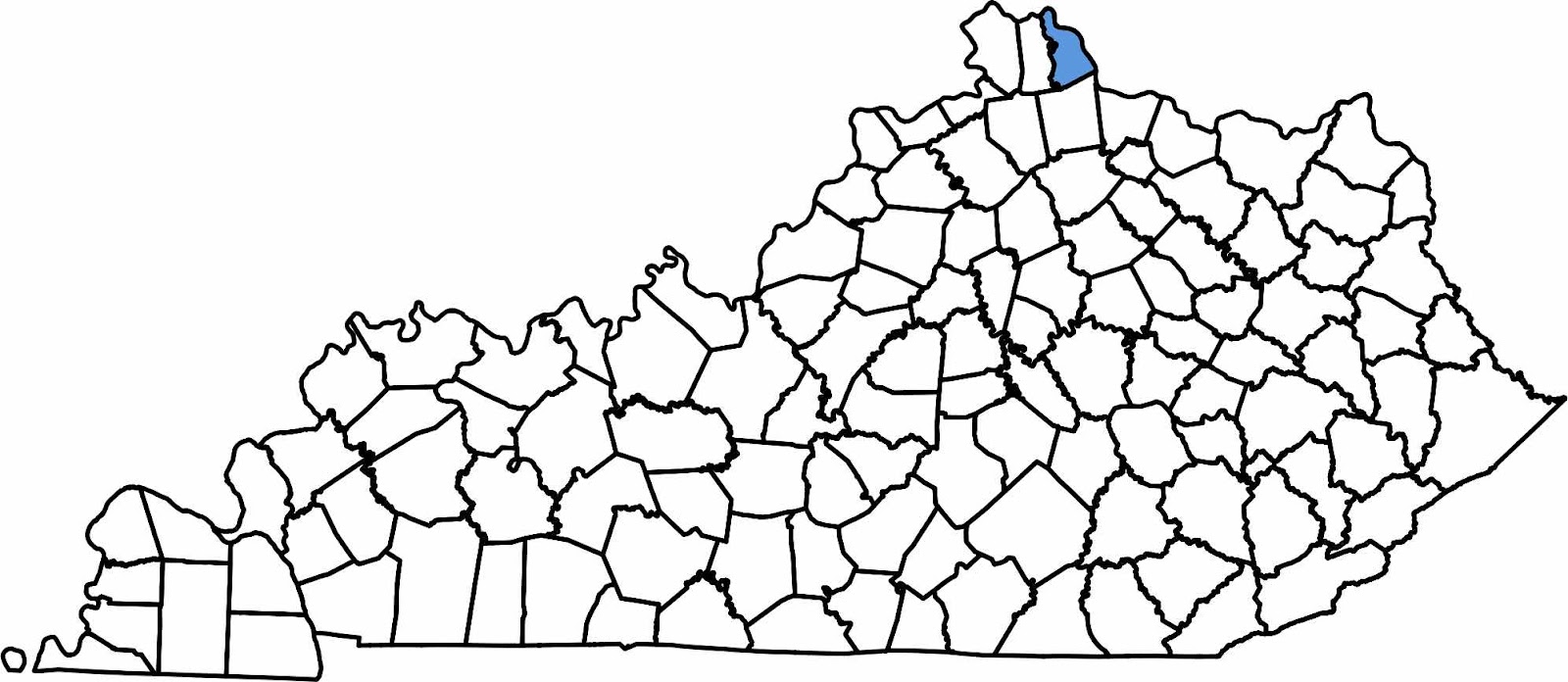
Location of Campbell County, from usnews.com

The 1863 Kentucky Gubernatorial election was controversial, with charges of military interference influencing the election’s results. The mention of the Jamestown Precinct refers to the town now called Dayton but I am not certain who “General Smith” was (presumably the same “Smith” listed in “Bramlette, Smith & Co.”) Ironically, the author was also named Smith or at least used that name. 

The controversy did not escape my home of Campbell County, as one letter-writer informed the Cincinnati Enquirer, which published this report on August 13,1863.


The Infamous Election In Kentucky

Newport, Campbell Co., Ky., August 10, 1863

To the Editors of the Enquirer:

I have waited for some days to see if any correspondence would give to the public the ways and means by which the Abolition party, aided by the military carried the State at the election held last Monday.

I now desire to add my mite to the list of outrages recorded in your paper.

My experience at the polls in Jamestown Precinct was of five minutes’ duration, but that was enough to show the drift of matters. Two scoundrels were employed to challenge Democrats, to threaten, to bully, and even knock down, in all of which they had the protection of the soldiers. These latter doing their share in aiding BramletteSmith & Co., by ordering voters from the polls. 

Many a Democrat’s did not attempt to vote, knowing that they would be subject to insult and violence if they did so. So outrages was one of these challengers, that one of the judges, who is also a Deputy Sheriff of Campbell County, called for the sergeant commanding the troops to restrain this rowdy, whereupon the rowdy threatened to take him from his desk, and actually attacked him; the soldiers also rushed at the Sheriff with charged bayonets, and would have killed him had he not drawn back. 

A judge of election calls for aid from the military, they respond by menacing him with bayonet. Had General Smith any thing to do with these outrages? It looks suspicious. 

The Democrats of the free States should be well informed of the methods which Lincoln takes to place his entire  satraps in power in the Sates of Kentucky,  Missouri, Western Virginia and Maryland.

SMITH 


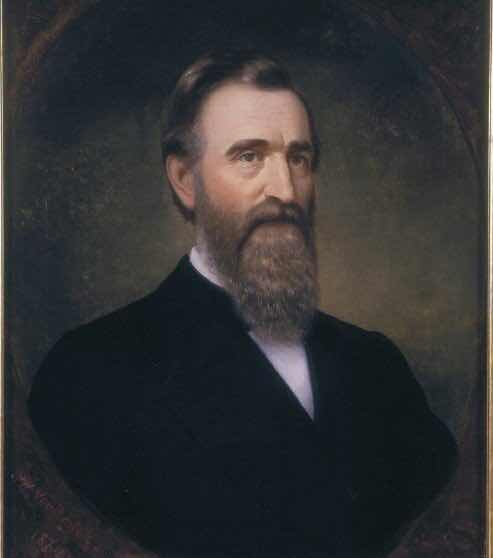
Governor Thomas E. Bramlette, from explorekyhistory.ky.gov


Wednesday, April 8, 2020

Michael Gabbard Part 2: A Deeper Look

Concluding the series on Civil War soldier Michael Gabbard and his wife Mary Ann, this post will explore the story of his service on the honor guard that escorted Abraham Lincoln’s body from Chicago to Springfield following Lincoln’s assassination.

As I read the story about his presence on Lincoln’s honor guard, it intrigued me more and more. How cool would it be to find a soldier who had such a role in a hugely important moment of American history? 

Soon, however, I began to wonder how true it was. History is full of myths, often to benefit a person’s reputation, which probably is the source of my skepticism, so I decided to look into it a little more before posting it.

I found the honor guard story in a 1979 newspaper article called It Happened Here (see the previous posts), on family history sites, and on a findagrave page that lists a family newsletter as a sourceEven with my uncertainty about how true the this entire story is, I find it to be an interesting tale, a combination of history, memory, and family oral tradition.

It Happened Here provided some information about Michael’s military service, including the honor guard story in italics below:

It is one of my hobbies to look for common everyday events that are linked to history. Today I discovered one that links the assassination of President Abraham Lincoln, April 14, 1865, to the fact that when our members or visitors come into the Co-op office, the first person they usually see...is our receptionist...Mrs. Marjorie Mullins, an Owsley County McIntosh.  Her mother was a Gabbard. 

Per this article, Mrs. Mullins’ aunt Nell typed a twenty-four page “family history from their oral tradition” (emphasis added.This article reprinted part of that history.

The article started with a mention of Michael Gabbard’s wound, as the previous post discussed. Then, He was sent to a prison at Rock Island, Illinois to guard the southern prisoners. While (he was) here, President Lincoln was killed. The body was brought to Chicago. Grandpa was chosen as one of the honor guards to accompany the body from Chicago to Springfield, Illinois and help bury it. In Chicago he met and married Mary Ann Manguin from County Cork, Ireland in the spring of 1865 (Note: “Mangan” is the correct spelling of her name, and they actually married in September 1864 ) 

Michael Gabbard and Mary Ann Manguim lived on Indian Creek in Owsley County (Kentucky.) They had a son, Stephen, who had a daughter, Edna (sister to Nell) that married Charley McIntosh. (Edna was the mother of the Mrs. Mullins mentioned above.)

When your great grandparents married and he was mustered out of the army, they came to Kentucky and built two rooms of the house on Indian Creek where your mother and dad first started housekeeping and where your sister Geneva was born.

His wife's story indicates he spent time at Camp Douglas not Rock Island, but he may have been at both. Both locations are only mentioned in one source each, neither on Fold3.com.

I found similar stories about his presence on the honor guard online, first on findagrave.com, where his page states: Michael was a member of the honor guard that accompanied Abraham Lincoln’s body by rail from Chicago to Springfield Illinois for burial. All information from the Gabbard family Newsletter. Article by John Gabbard June 1995.

I also found this story and genealogical information on a family/military history siteThe key section indicated: 

Michael Gabbard - Private   Michael 'Drunk Mike' Gabbard was chosen to escort President Abraham Lincoln's funeral train from Chicago to Springfield, IL.

After the Battle of Perryville, Michael was attached to Camp Chase Ohio to guard Confederate Prisoners.  

Michael and his 8 brothers served within the 8th KY INF.  

This next site tells a similar tale. I suspect each one shared a common source for the honor guard story, but here are the relevant lines from this site:

Four of the sons of Isaac and Jane were in the Union Army during the Civil War: George W., James, Jacob and Michael. James was killed in the battle Lookout Mountain; Michael was wounded in the same battle. Michael was an Honor Guard for Abraham Lincoln's body when it was transported by rail from Chicago to Springfield, Illinois. [Actually 5 sons served - Abel served, too, because he applied for his pension.]

(Note: A quick search indicates that George and Jacob were in the 47th Kentucky Infantry and that Abel joined Michael in the 8th Kentucky. James, however, died in 1859, before the war even began. Still, a family having four brothers in the war is a fascinating story itself (though I don’t know where the previous site got the “8 brothers” figure.) Maybe researching the other three will make a good future project.)

These stories are fairly consistent, and that made me more interested in finding other sources about it. I admittedly did all my research online, and realize I may have missed published works that provide more information, but I thought the search was as thorough as I could reasonably do for this blog. Maybe someone who knows more about the honor guard or other sources will stumble upon these words and help uncover more about this story. I will gladly post corrections of any errors made herein.

I searched under terms like “Lincoln’s honor guard,” “Lincoln honor guard Chicago,” “Gabbard, Lincoln honor guard,” and similar phrases and did find some helpful information. 


Gabbard was in the Veteran Reserve Corps (VRC,) but was a private, not a non-commissioned officer such as a sergeant. 

Another site provides a list of individual names on the honor guard. Gabbard is not on that list, nor is any member of the 8th VRC. 

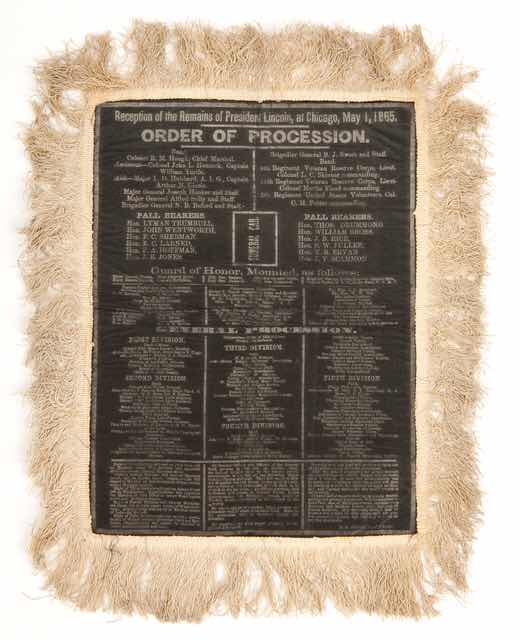
I did find an image of the program from the public viewing of Lincoln’s body in Chicago, and the website’s description caught my attention: This program for the Chicago funeral includes the names of pall bearers, a mounted honor guard, and general processors. Unfortunately, the list of honor guard members is not legible, even when I save and enlarge it. (Other pages, including Pinterest, show this same image, without the tassels, but are no more readable than this one.) I am not sure Gabbard would have been on a “mounted” honor guard, but I would like to see those names anyway.

Here is the artifact: 


No source I found listed Gabbard as part of Lincoln’s honor guard, other than the genealogy websites and the newspaper article. It seems likely that these may have all been based on family oral history like the article mentioned. 

This contrast between family history and official public records leaves me with a few theories as to how this story developed.

1. Michael witnessed the transportation of Lincoln’s body and later described it to someone who shared the story. Over time and many retellings the story mistakenly evolved to include Michael as part of the honor guard.  

2. He did view the honor guard at work, but as time passed and his memory faded, he unintentionally and honestly started believing he was part of it and communicated that to others. He lived until 1902, and memories do fail over time, especially decades.

3. He was part of the honor guard, unofficially or in a small role that went unrecorded. He was in Chicago as part of the VRC, during the right time period. Moving Lincoln’s body was a big deal and possibly required many additional workers beyond the official guards. In that case, the family story could be correct even if no “official records” ever existed to confirm it. 

One message board mentioned a similar possibility: ...as I understand it, each city which had services for Abraham Lincoln had its own set of honorary pallbearers. The honorary pallbearers walked on either side of the coffin as it was carried by the men listed above. I realize this is not the most scholarly source, but the thought was similar to (and more detailed than) mine, so I am sharing it for consideration.

4. He was part of the honor guard, but any records proving so have been lost, destroyed or misplaced over time, or they still exist to prove it, but I have simply not found them.

5. He was not part of the honor guard, but at some point he told someone he was (perhaps to counter his reputation as “Drunk Mike,” or maybe he created this tale while drinking and perhaps bragging about his service) and it became part of family history over time.

6. Someone else created the idea, either intentionally or not, perhaps to help his reputation or to create family pride.

Let me note here that the family history excerpt in the newspaper article  was incorrect t when it claimed Michael was injured at Lookout Mountain as well as with a couple other details, so that leads me to question the accuracy of the rest of it. 

If this is just family legend, many legends do have some basis in truth, even if small, and that may be the case here, despite the apparent lack of other documentation. Perhaps future research (or luck) will uncover further evidence or sources someday.

Overall, the stories of Michael Gabbard and his wife fascinate me and show how family lore can intersect with history.Even if the legends are not always completely true, they are important, especially to that family. Many families likely have their own oral histories whose only sources are the retelling of stories from previous generations. My own family has an undocumented story about  Civil War veteran Henderson Turner walking hundreds of miles home after leaving his regiment, but we cannot even find his name in any records other than the 1890 Veteran’s Census, though he received a veteran’s headstone. 

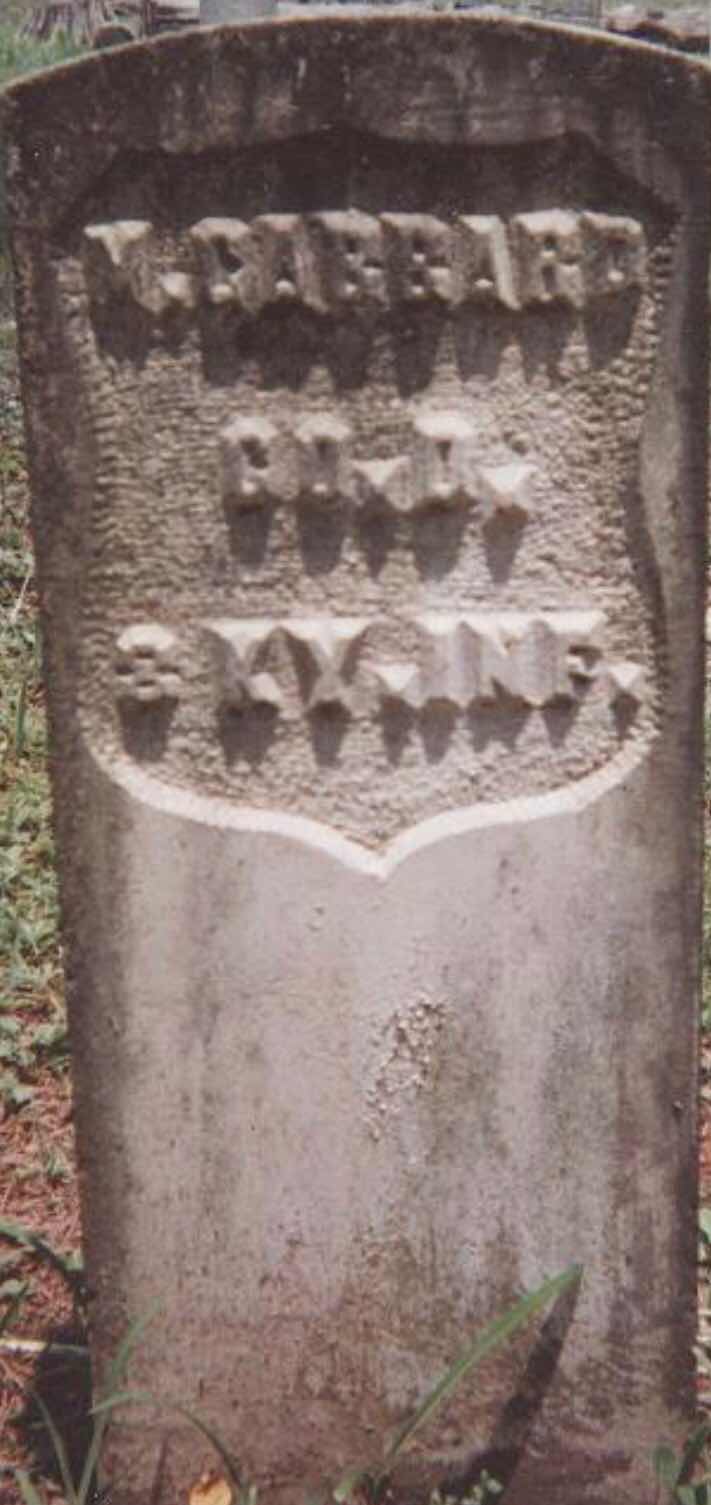
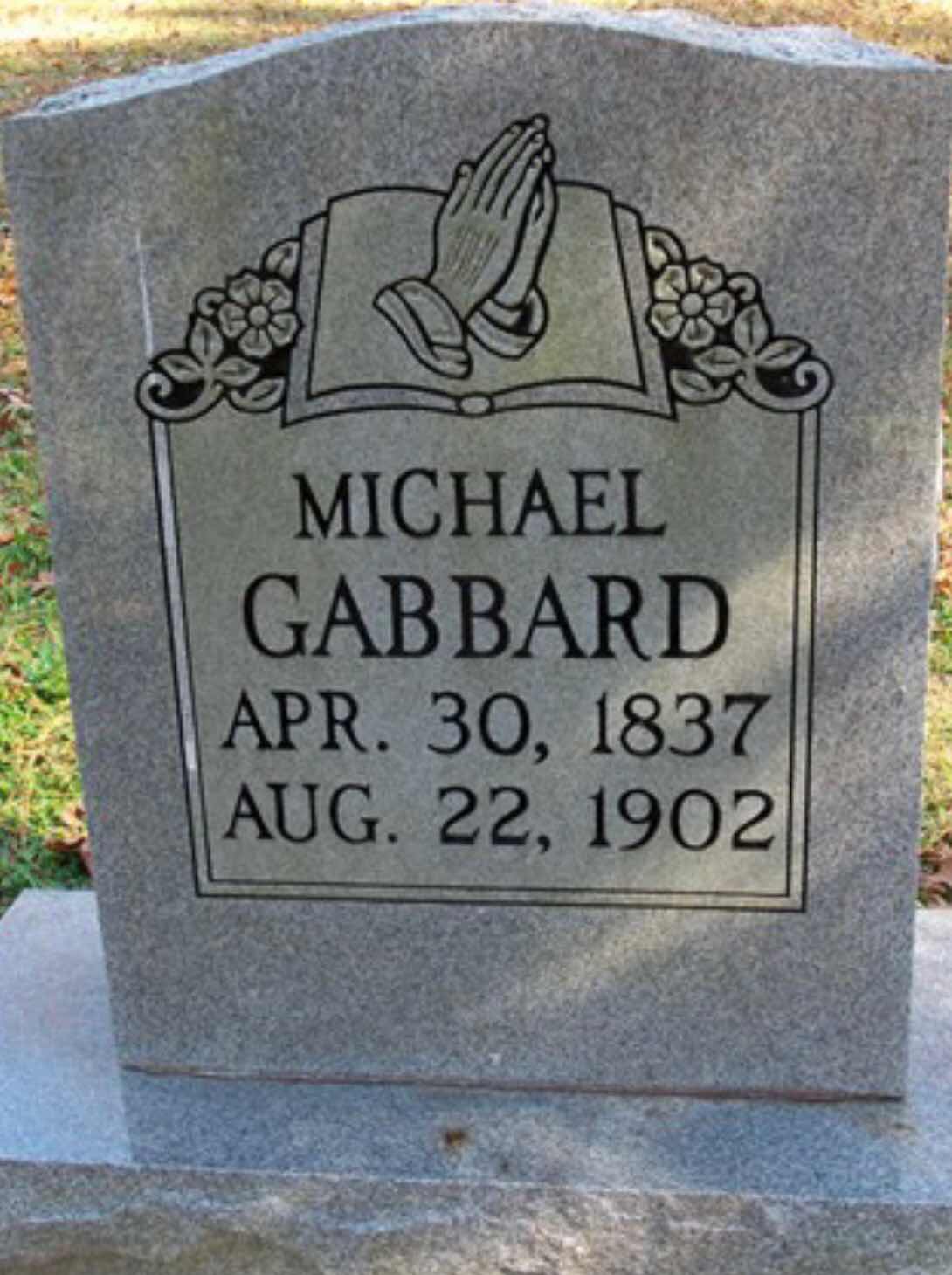
Michael Gabbard died on August 22, 1902 and was buried in the Esau-Gabbard Cemetery in Owsley County. 

Rest In Peace, soldier. 

Pictures from findagrave


Wednesday, April 1, 2020

Michael Gabbard, Part 1: Common Soldier

My previous post explored the life of Mary Ann (Mangan) Gabbard, a nineteenth century woman who was born in Ireland before immigrating to the United States, where she met and married the subject of this post, American soldier Michael Gabbard. Gabbard, a story claims, was a part of the honor guard which accompanied Abraham Lincoln’s body from Chicago to his burial place in Springfield

——

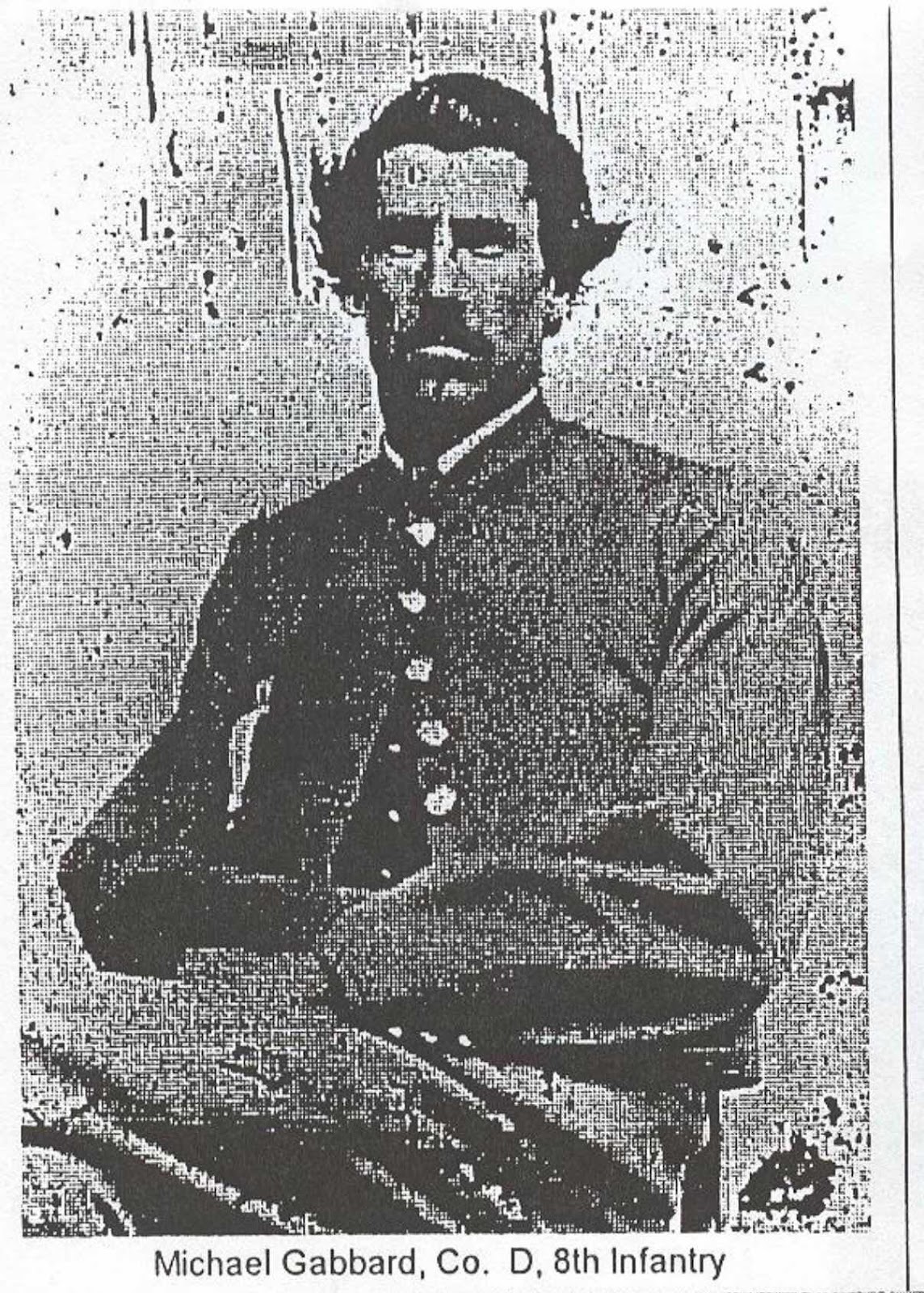
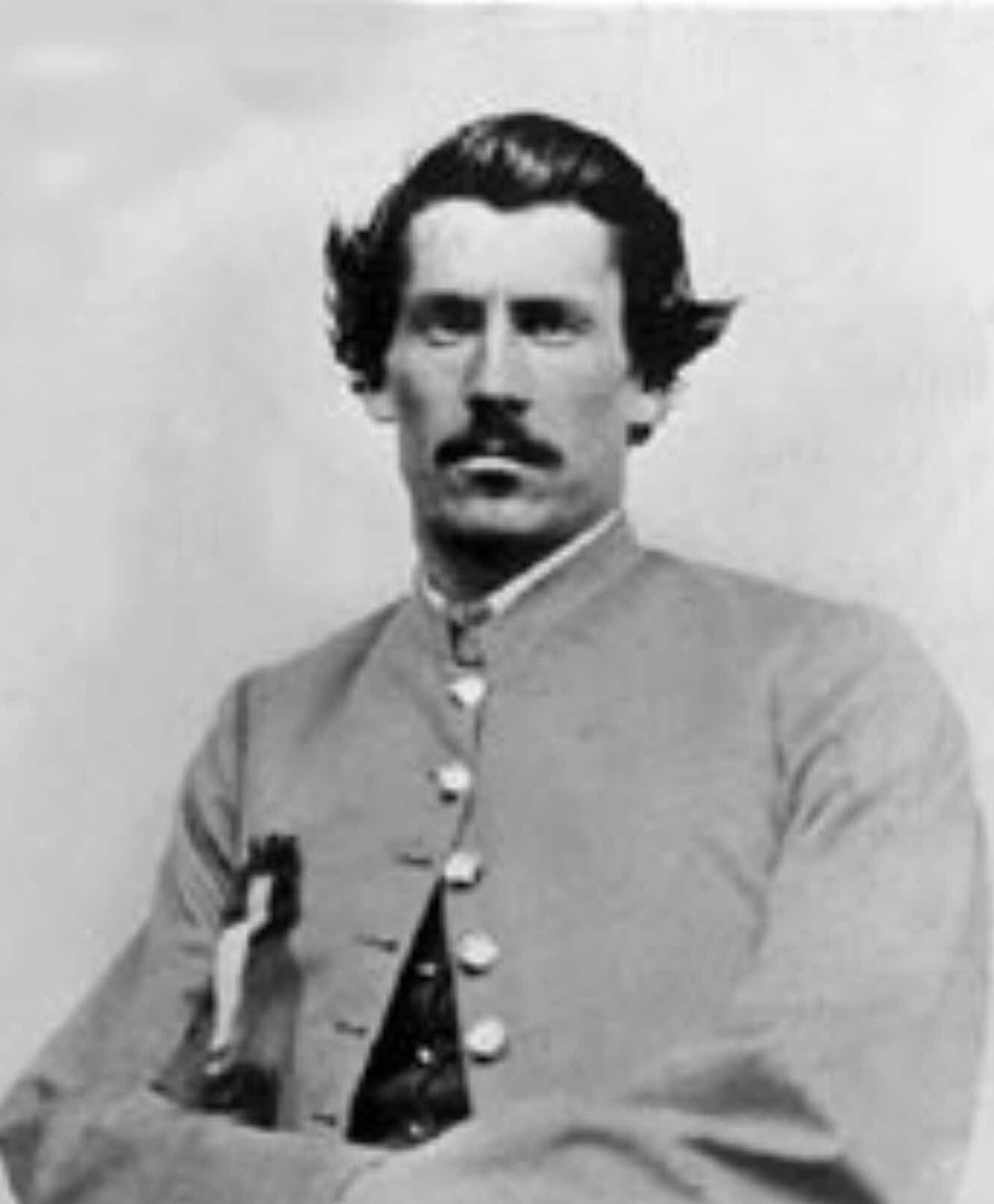
Michael Gabbard had been born on April 30, 1837, the son of Isaac Hugh and Jane (Isaacs) Gabbard. He married Mary Ann on September 15, 1864, while he was still serving in the Civil War, which he had entered as a private in Company D of the 8th Kentucky Infantry, which he joined in Owsley County on September 24, 1861 for a standard three-year term.

Photos from findagrave.com 


A brief recap of his time in the war is in a photocopy of a newspaper article which was among the documents I received from a cousin who alerted me to his story. The article is entitled It Happened Here, written by Jess  D. Wilson (copyright 1979, Jackson County Recorder, McKee, Ky.) It stated: Margie, as I told you, your great grandpa, Mike Gabbard, was wounded at Look Out Mountain during the Civil War. His entire kneecap was blown away. He used a cane and later a crutch, too. The wound never healed. 

After suffering the knee injury, he transferred to the Veterans Relief Corps (VRC.) His wife’s autobiography says he was in the 7th Regiment of that unit, but the Soldiers and Sailors database indicates he was in Company G of the 8th Regiment, as do forms on Fold3.com. Since she did not writ her story until about 1913 (according to a family history page,) it is likely that she misremembered the exact unit number.

Unfortunately, this newspaper story is untrue, as various observations and information contradict it. One example is that his wife’s autobiography (see my previous post linked at the start of this story) mentions nothing of him being seriously wounded, even as he pushed her on a swing. A man with a blown away kneecap might not be able to do a physical activity, or the wound would at least be noticeable, if as severe as the story described it. Additionally, would a man with a “blown away” kneecap have been able to participate in Lincoln’s honor guard, as he supposedly did? 

Even if Mary Ann  just did not remember that type of detail, or if the honor guard story is not true, a more irrefutable contradiction of this story comes from the timing of events.

The Battle of Lookout Mountain did not take place until November 24, 1863, after the couple had met. She acknowledges he was already in the VRC in Chicago when they met, and records on Fold3 show he had transferred to the VRC on August 5, 1863, after being listed sick on multiple muster rolls. This was three months before his reported wounding. This could be a case of her memory being faulty regarding details, but the dates on the military records confirm that he was in the VRC before the battle where he supposedly was injured. 

I did view pension index cards in his file but admittedly did not spend the time or money to request his pension file, so maybe I am missing key information about his specific ailment, though the earliest date I saw on any of them was 1876. He apparently fell ill more than once and the last illness was severe enough to remove him from his original regiment. This is one detail I wish I had, so perhaps I will request his pension records eventually.

The records I did find show that injury at Lookout Mountain was not the reason he transferred to the VRC as he was not even in that battle, being in the VRC long before that fight took place. (For anyone who may want to look at his paperwork, please note that I found some under “Michael Gabbard” and others under “Micheal Gabbard” on Fold3.)

Another piece of this story that is a bit puzzling is that some of the records on Fold3 seem to contradict each other, based on the dates and information on these documents (though none of these, even the differences, support the idea of him being wounded at Lookout Mountain.) With so many different military forms to complete and so many men involved in the war, such mistakes were probably inevitable.

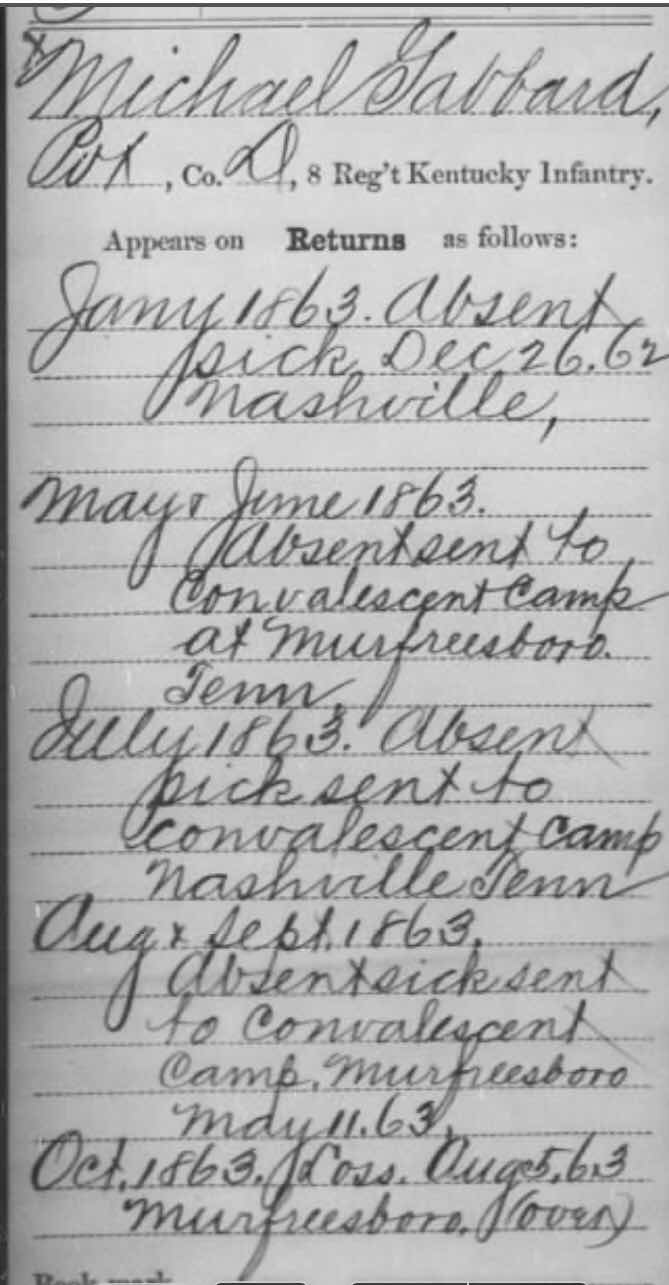
Here is a recap of the information and dates on the paperwork in his Fold3 file:
Joined for duty Sept 24 1861 Owsley County, 3 years, mustered in  Lebanon Ky Jan 15 1862 

Muster roll cards: 
Sept 24 to Dec 31 1861, present or absent: not stated
Jan & Feb 1862 present
Mar & Apr 1862 present
May & Jun 1862 present
Apr 30 to Aug 31 1862 present
Sept & Oct 1862 present
Aug 31 to Dec 31 1862 absent, at convalescent camp, Nashville
Jan & Feb 1863 present
Mar & Apr 1863 present
Apr 1863 present 
Feb 28 to June 30 1863 absent, sent to convalescent camp, Murfreesboro, TN
July & Aug 1863, absent, left at Murfreesboro TN sick, 1st July 1863
Jun 30 to Oct 31 1863, transferred to the Invalid Corps Aug 5, 1863

Appears on muster-out roll dated Chattanooga TN Nov 17 1864, last paid to Feb 28, 1863,  transferred to Invalid Corps Aug 5, 1863 

Appears on returns (1 card)
Jan 1863 absent sick Dec 26 1862, Nashville
May & June 1863 absent sent to convalescent camp at Murfreesboro TN
July 1863 absent sick, sent to convalescent camp Nashville TN
Aug & Sept 1863, absent sick, sent to convalescent camp, Murfreesboro May 11 1863
Oct 1863, Loss, Aug 5, 1863, Murfreesboro TN (over, but no 2nd page)


Some of the dates showing present or absent do not match other cards, but the main point for this story is that none of them show him available to the 8th Kentucky Infantry at the time of the fight at Lookout Mountain in November 1863.

How exactly his story developed into one saying he suffered a major injury at Lookout Mountain may be lost to history. Did he suffer a knee injury while in the VRC or perhaps in a non-military accident after the war? Did his memory falter or did he fabricate the story and share it? The 1890 Veteran’s Schedule Census does list him having a “damaged limb,” supporting the idea of his knee/leg being injured somehow, but I have found no other source stating how/when/where he was injured or where the Lookout Mountain fight entered the legend. Maybe the pension file would help with that.

The newspaper story quoted previously may partially clarify how this version of his story came into being, as it states: Nell wrote down... a lengthy (24 typed pages) family history from their oral tradition. “Nell” was a granddaughter of Michael and Mary Ann. Since the stories came from family oral history, it is likely that failing memories and mis-worded stories (wording might change with every telling and every attempt to recall them) led to a tale that does not match official records. 

This explanation might also apply to so the next part of this story as well. The next post will explore the story of Michael Gabbard’s reported role on Lincoln’s honor guard.