Showing posts with label suicide. Show all posts

Friday, April 4, 2025

"Due to Despondency:" The Life and Death of Edward Riley, 8th Kentucky Cavalry

Immigrant Civil War soldiers in Campbell County has become one of the unexpected stories that my research has uncovered. I readily admit that surprise may be my own fault, and my original expectations should have been more accurate. Immigration to the U.S. was a common occurrence in the nineteenth century and my previous Civil War reading has often discussed immigrant soldiers, frequently of German heritage, but it took my digging into this project for me to connect that national trend with the local situation. In hindsight, I should have known that soldiers born outside of the United States would constitute a significant part of my research. Oh well. Live and learn.

I mention the idea of immigration because this story is about another local soldier with an European past. Edward Riley was born in Ireland about 1830 or 1831.

After arriving in the United States, Edward had found a home in Newport, Kentucky by 1860, when he worked as a pattern maker. He lived with his wife Mary and their pair of offspring as of that year’s census, and was listed as 29 years old.

The Civil War broke out in April of 1861, but Edward waited some time before joining. Perhaps he thought the war would not last long, or his family did not want him to enlist, but he eventually overcame any hesitation and decided to join in the fight.

He enlisted in John Arthur’s cavalry company on August 14, 1862, in Newport. Arthur had been part of a three-month Ohio regiment, then had led a local home guard unit, before finally recruiting his own company. Edward joined this new company for a term of one year and paperwork showed him as 30 years old. He mustered in on September 13 in Henderson, Kentucky. He signed up as a private and served as the company’s farrier, ensuring that the unit’s horses had hooves and shoes that were in good enough shape to perform their duty.

The company Edward joined consisted of 103 men, who had the pleasure to enjoy a “fine dinner” that local women prepared for them in the engine house on York Street1 before their departure for war. (Additionally, Captain Arthur had found it necessary to reject twelve other men who attempted to join the regiment after it had reached its quota and filled.)2 The men soon departed on the steamship Florence traveling first to Louisville, from where they were to move to Eminence, Kentucky, “where they will go into camp for a short time.”       

The men arrived safely at Louisville and settled into camp near there but soon learned they would now be joining the 1st Battalion of Colonel James Shackelford’s 8th Kentucky Cavalry.3

This regiment, officially organized at Russellville, Kentucky, mustered in on an August 13, a few weeks before Edward was officially added to the roster.

In mid-September, a Cincinnati newspaper reported that one man, whom it described as a soldier in the company, though his names does not appear on the roster, had returned to Newport and reported that these men were in “excellent health and spirits” in Henderson and that they had received their bounty money after mustering in, certainly good news for them. The boys were now “eager for the fray” like new and innocent soldiers often were.4,5

The 8th Kentucky spent most of its year in the service throughout western Kentucky, helping to chase irregular Confederate soldiers, often labeled “guerrillas” by Union leaders, then in July of 1863 joined in the chase for General John H. Morgan’s Confederate troops as they raided Kentucky, Indiana, and Ohio on what became known as that general’s “Great Raid,” which resulted in many of the southerners being captured at the Battle of Buffington Island, Ohio.6    

Shackelford, a “prominent” guerrilla hunter in the Western Kentucky region, had been promoted to Brigadier General of U.S. Volunteers and to end this raid commanded a group of men who captured Morgan at the Battle of Salineville, Ohio near the end of July.

Edward mustered out of the service on September 23, 1863, in Russellville, and resumed daily life back in Campbell County, where, in 1880 he lived in Newport with Mary and seven children. He was 49 years old and made a living as a stove finisher.

Sadly, life did not always go as he wished and in mid-1888, the former foreman at the Favorite Stove Works company in Newport had “been out of work at his trade, which was that of a machinist, and has been compelled to work on the streets of Newport.” This must have been a tough situation for a proud man to accept. 

About 11:00 on the night of June 8 of that year, Edward’s son Jim walked into the dining room of the family home on Jefferson Street (now called Sixth Street) and “discovered his father hanging by the neck from the wall.” He immediately “raised the alarm,” and his mother and siblings helped cut down the body, which a doctor soon confirmed was lifeless.

His trouble finding regular work had “greatly discouraged him, and his rash act is due to despondency.”7

Edward’s funeral took place on June 10, and “was quite largely attended.” He was buried in St. Stephen Cemetery in Fort Thomas.8

The newspaper reported him being fifty years old, which differs by a few years from other records. His wife and seven children survived him and somehow pressed on with their lives despite such a terrible shock Edward’s death, especially the way it happened, gave them.9

1Cincinnati Daily Enquirer, August 19, 1862
2Cincinnati Daily Commercial, August 19, 1862 
3Cincinnati Daily Enquirer, August 22, 1862 
4Cincinnati Daily Enquirer, September 20, 1862 
5Cincinnati Daily Commercial, September 20, 1862 
6https://www.nps.gov/civilwar/search-battle-units-detail.htm?battleUnitCode=UKY0008RC, Accessed April 10, 2023 
7Cincinnati Enquirer, June 9, 1888
8Cincinnati Enquirer, June 11, 1888
9Cincinnati Enquirer, June 9, 1888


Saturday, February 4, 2023

Sergeant Philip Gantzschier, 12th Indiana Infantry

 Here is one of the stories I've found while searching for Civil War veterans from Campbell County. I have occasionally shared a few here and might try to do that a little bit more often, as there are many interesting stories. This one is fairly short and basic, though with a sad ending.

Like for many Americans in the mid-nineteenth century, immigration was vital in the life of Philip Gantzschier.

He was born on May 19, 1836, in the Hoosier State of Indiana, but was a son of parents from Baden, Germany, and his spouse, Mary Ann Meyer, was from Prussia.  

When the Civil War broke out, he joined company C of the 12th Indiana Infantry Regiment, a one-year unit in which he served as a sergeant from May 9, 1861 until May 19, 1862.

The one-year itineration of the 12th Indiana Regiment had organized in Indianapolis and, after being transferred from state service to U.S. service, spent time in the eastern theater of the war through Maryland, Virginia, and the area that became West Virginia, before marching to Washington D.C., where they mustered out of the service in May 1862 as their term expired.                                           

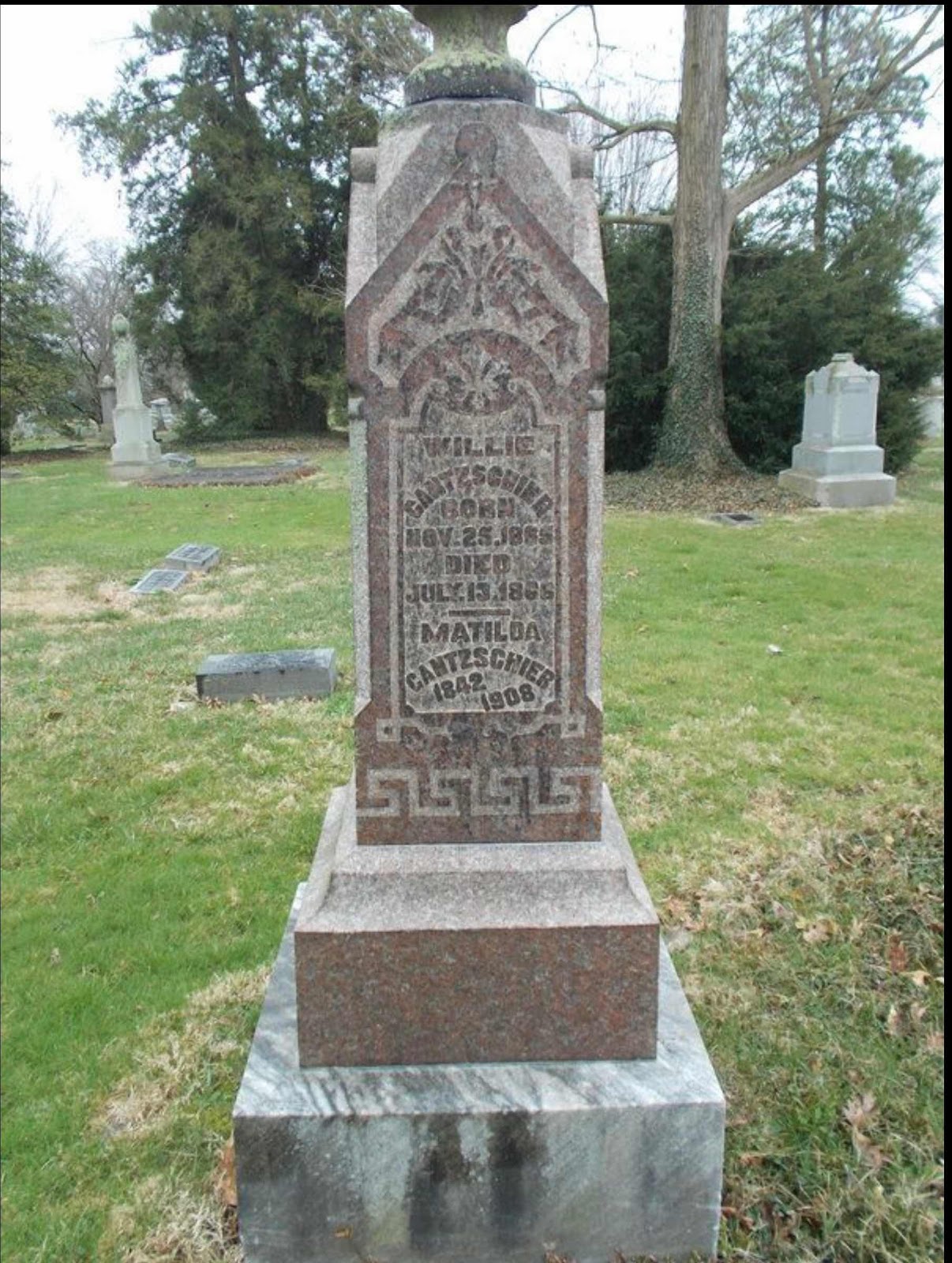
Philip eventually made his way to Campbell County, Kentucky, living in Bellevue in 1872. He worked as a carpenter and helped his wife raise one daughter, Estella, though they also had a son, Willie, who died at just seven months of age.

Estella, unfortunately, only lived until 1892, when she died at age 23, and more sadness arrived when Philip’s wife Mary Ann passed away in 1897.

He later remarried to a woman named Mathilda, but she too passed away before Philip, in 1907.

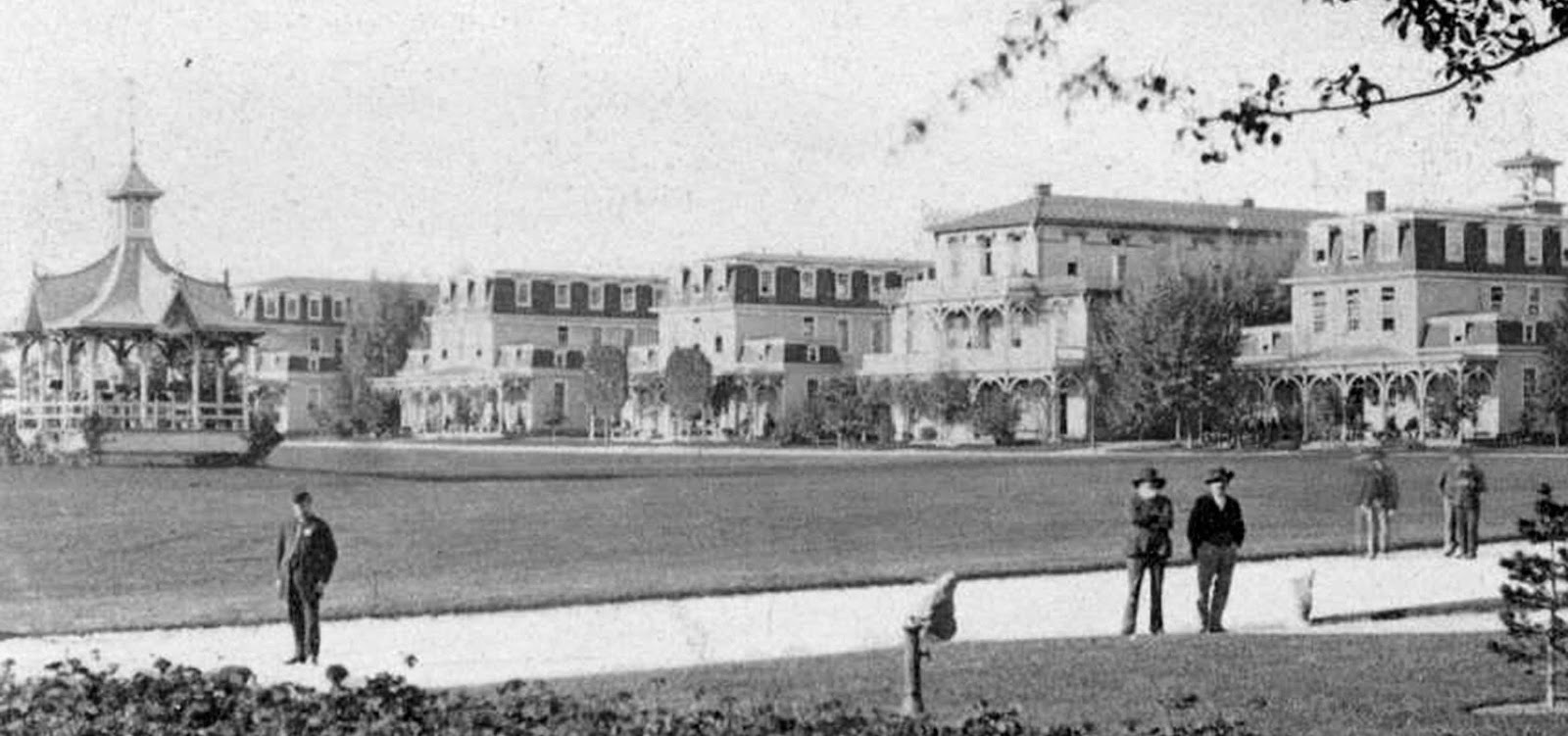
On March 26, 1910, Philip entered the Dayton, Ohio branch of the National Home for Disabled Volunteer Soldiers. At the time, he stood 5 feet 9 inches tall, with a dark complexion, brown eyes, and gray hair. He held Protestant religious views and was able to read and write. His occupation was still that of a carpenter, and his nearest family was a nephew in Indianapolis. He was receiving a military pension of $17 per month.

National Home for Disabled Volunteer Soldiers, Dayton, OH

https://www.daytondailynews.com/news/local/how-dayton-paid-respect-america-veterans/lXggvmjetQlfpHONoBoUoJ/

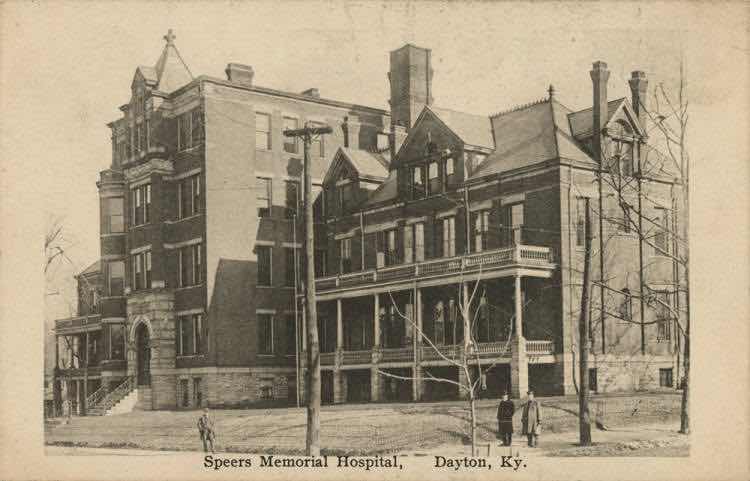
Almost exactly a year later, on March 25, 1911, while on furlough from the soldier’s home, Philip was admitted to Speers Hospital in Dayton, Kentucky, suffering from heart trouble. This was not unusual, as the Kentucky Post reported “he had been a frequent patient at the hospital and was assigned to the room he was always given.”1

Speers Hospital, Dayton, KY


On the 28th, his attending physician, Dr. Sherwood Garrison2 visited Philip, who made a comment that perhaps should have received more attention: "Doctor, I wish I had something to put me out of this misery."

The doctor did not recognize the foreshadowing and simply replied "Why you are better, aren't you?" to which the patient responded "Yes, I am. Thanks, Doc."

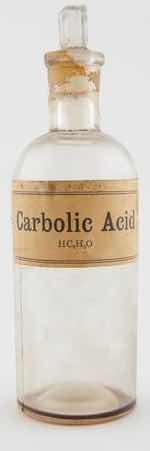
About 6:00 that evening, a nurse brought Philip his supper, then left to return to other duties. When she returned a few minutes later, “the aged man was lying there with the bottle clasped in his hand. It had been concealed in the pocket of his overcoat.”3

The bottle had contained carbolic acid, “a very poisonous substance made from tar and also found in some plants and essential oils…Carbolic acid is used to make plastics, nylon, epoxy, medicines, and to kill germs.”4


The hospital notified his doctor who contacted the county coroner to confirm the cause of death, which the death certificate noted as “carbolic acid poisoning, suicidal intent,” and that the poison was “self-administered.” Contributing factors were melancholy due to old age, disease of heart and hemorrhoids.

The newspaper mentioned that the coroner believed concern about his condition was the source of Philip’s melancholy, but loneliness may have also added to it.

His ability to bring poison into the hospital seems, at best, unusual in the current day, but times were different as the Post noted “none of the private patients are ever searched and the hospital authorities had no suspicion that Gantschier (sic) had a bottle” of that chemical in his jacket. The story claimed that he had died “with a smile on his lips” and the bottle “clasped in his hands.”

Philip was described as “well known” to the people of Bellevue, where he had been a member of the Granville Moody Post of the Grand Army of the Republic.5

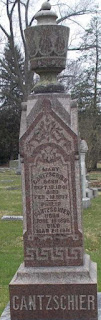
He was buried in Cincinnati’s Spring Grove Cemetery, alongside his family, who all share the same headstone, including Philip, his two wives, and the two children.


Photo from findagrave.com memorial # 78935949


Photo from findagrave.com memorial # 78935948


1Kentucky Post, March 29, 1911
2http://www.usgenwebsites.org/KYCampbell/earlydoctors.htm, Accessed November 11, 2022
3Kentucky Post, March 29, 1911
4https://www.cancer.gov/publications/dictionaries/cancer-terms/def/carbolic-acid, Accessed November 11, 2022
5Kentucky Post, March 29, 1911