Showing posts with label Charles Whittlesey. Show all posts

Friday, February 24, 2023

Sergeant Charles Mount, 20th Ohio Infantry


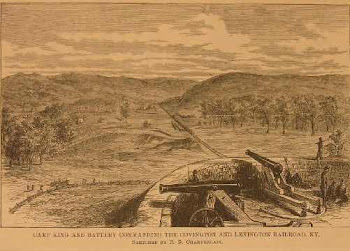
I have looked at this empty envelope before because it was addressed to Camp King, which was a recruiting center for Civil War soldiers in nearby Covington. Many soldiers enlisted and/or mustered in at the camp near the Kentucky Central Railroad, including numerous ones I have researched.

For some reason, I had never paid attention to the soldier’s name on the envelope, but I am correcting that oversight now with this look at the short life - and much shorter military career - of Charles Mount, a volunteer in the 20th Ohio Infantry regiment.

Charles Green McChesney Mount was born November 9, 1825 in Highstown, New Jersey to parents Hezekiah and Charity Mount. He had eight siblings, including sisters Jane and Catherine, whose names are written on the envelope, likely having sent this to him from Davenport Centre, New York in January 1862. (The envelope is addressed to the care of Captain Elisha Hyatt of company A instead of Charles’ company I, so perhaps Hyatt’s unit was in charge of receiving and distributing the regiment’s mail at Camp King at the time. Another possibility is “missent” means it went to the wrong company.)

On April 23, 1850 Charles married Phebe Roberts in Knox County, Ohio, and in the same year they lived there as boarders. He found employment as a house joiner in the construction industry. 

By 1860, he worked as a carpenter and his family, now including four children, still lived in the same county.

On November 20, 1861, he enlisted as a private in company I of the 20th Ohio in Fredericktown in Knox County, and received a promotion to 1st sergeant on March 10 of the following year.

The 20th Ohio had organized at Camp King per Ohio Civil War Central or, more likely, at Columbus, Ohio, according to  the National Park Service  which reports the unit organized on September 21, then “moved to Camp King near Covington Ky., and mustered in October 21,” meaning it basically came together at both places. (Covington is across the Ohio River from Cincinnati, so the location does makes sense despite being in another state.)

Camp King
https://kyhistory.pastperfectonline.com/webobject/503FE619-F158-4AF3-8AE0-105685345862#gallery-

It had originally been a three-month unit, but had now reformed for a three-year term, which was the standard for most Union regiments by this time.

The Ohio Civil War Central website linked previously provides more details on the regiment’s movements while Charles served under its banner.

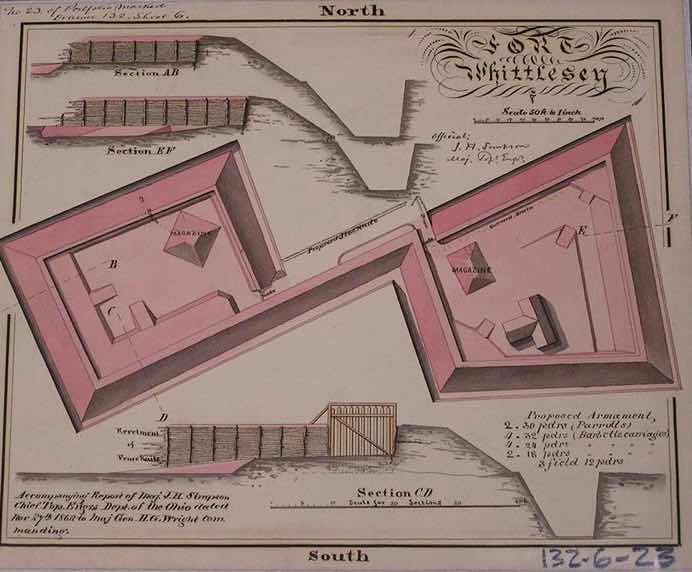
The regiment’s colonel, Charles Whittlesey, “was a graduate of West Point, an engineer, and a geologist and supervised the erection of defenses around Cincinnati, Ohio.” One of those defensive positions, Fort Whittlesey, in what is modern-day Fort Thomas, Kentucky, was named in his honor. (Fort Thomas was itself a United States military installation that was named to recognize another Civil War soldier - General George H. Thomas.) 

Fort Whittlesey


Through early 1862 this regiment “principally guarded batteries in the vicinity of Covington and Newport, Kentucky.” (Newport was across the Licking River from Covington and Camp King, and near what became the city of Fort Thomas.) These batteries were among the defenses of Cincinnati, a key Union supply city during the war. In September of 1862, after the 20th Ohio had left, these defenses became important during the scare known as the “Siege of Cincinnati.”

Some men of the 20th Ohio traveled a short way south to handle troubles arising in Warsaw, Kentucky in late 1861, as discussed here and here.  

The regiment headed to northern Tennessee, where, in February of 1862 it came under fire from Confederate forces even while remaining in reserve at the Battle of Fort Donelson. It then remained in Tennessee and fought in the second day of the Battle of Shiloh on April 7. It was still in that area in May when Charles went home on furlough due to his health. 

Phoebe’s widow’s pension file provides more details on the timeline and Charles’ condition. 

In early February of 1862, he left the army, having received a furlough to go home to recover from a fever. At that time, he likely carried all his personal possessions, including this envelope and its contents, home with him. He likely missed the- Fort Donelson adventure. 

Dr. Thomas Potter, who had been Charles’ family doctor, cared for him, and the treatment worked, allowing Charles to return to his regiment.

A few weeks later, however, he fell sick again, and on May 21 received a twenty-day furlough to return home.

The doctor’s statement reports that Charles was now suffering from a disease of gastro enteric character with bilious complications, (i.e. a sick stomach  and/or intestines, with nausea and/or vomiting). The doctor gave him an unnamed “usual treatment” for such an illness, but without much success.

He received a twenty-day extension to his furlough on July 21, along with the continued expectation that he would return to his unit - still at Pittsburg Landing, Tennessee as of the date of the extension - within the allotted time.

Charles did not improve and was eventually discharged from the army due to disability on August 25, 1862. His discharge certificate, signed at Camp Case in Columbus, Ohio, described his condition as a “habitual debility of constitution caused by disproportionate organization of body. He will never be able to do the duties of a soldier.”

Dr. Potter pointed out that Charles had never suffered from that intestinal illness before. He was “laboring under said disease when he was discharged, contracted in the service.” 

“Other credible witnesses swear to his good health prior to enlistment.”

After his discharge, Charles “lived & lingered along for about a year, sometimes worse & sometimes better,” before his condition deteriorated at the end of August 1863.

The physician believed that the sickness was not “induced or aggravated by the personal habits of the soldier” as Charles was “of good moral temperate habits.” 

Charles passed away on September 3, at his home in Fredericktown and was buried in Knox County’s Forest Cemetery.

Phebe received a pension of $8 per month, plus an additional $2 for each of her five children - including the youngest, a son named Elliot, born on June 24, 1862 as Charles was possibly still at home on furlough - until they reached age 16.
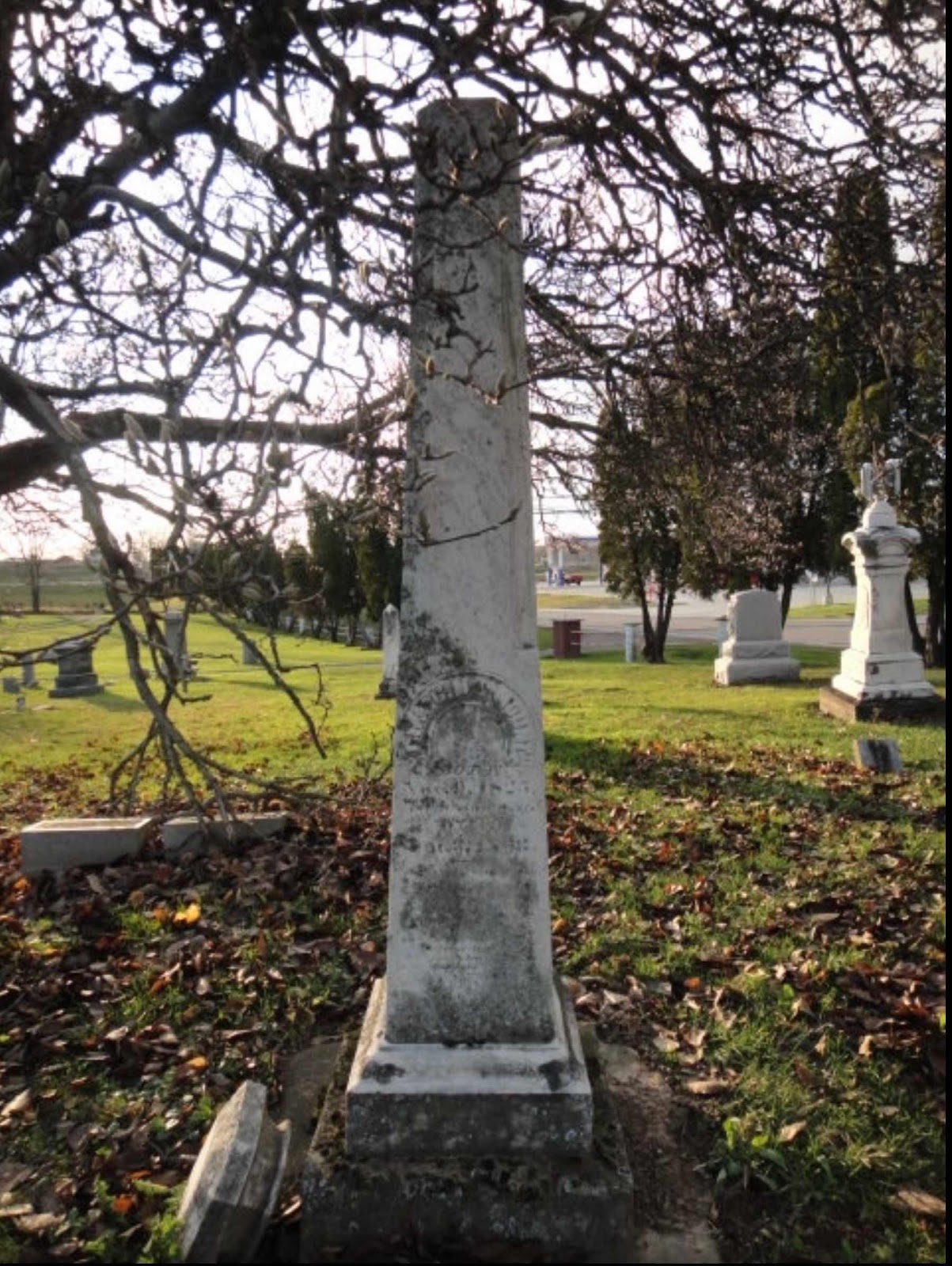


Findagrave.com memorial # 77289988

Saturday, September 14, 2019

The Difficulties In Warsaw, KY: The Response of Colonel Charles Whittlesey

My previous post described an incident in Warsaw, Kentucky in late December 1861. Here is a follow-up on that story, from the Cincinnati Enquirer of January 1, 1862. It transcribes letters to and from Charles Whittlesey, a successful geologist, who also helped design the defenses of Cincinnati. (One of the defenses, Fort Whittlesey, was named in his honor.)

The Difficulties in Warsaw, KY - Correspondence on the Subject

Warsaw, Gallatin County, Ky, December 28, 1861

Colonel Whittlesey:  The undersigned having been appointed a committee, by the loyal men of Warsaw, to confer with you in regard to the policy and all other appropriate matters that your mission here may appropriately demand of us, in regard to our town and county for the ostensible purpose of establishing peace and order among our people, and, if possible, to secure every citizen in his legal constitutional rights of life, liberty, and property, and the pursuit of happiness, which has been so wantonly jeopardized and seriously endangered by the unholy rebellion and war against the most benign and free government in the world, and to further aid and assist you in this laudable and patriotic purpose.

We respectfully tender you our humble services, and would further state to your honor that the meeting we have the honor to represent, was of the opinion, from the evidence they had before them from reliable gentlemen, that the town of Warsaw and surrounding county was in imminent peril, and that they are fearful that your present force are insufficient, however brave and patriotic they may be, to accomplish those very desirable ends, from the fact that you are surrounded by four or five counties which has largely the preponderance in strength and numbers on the Secession side. However, we merely make these suggestions for your very favorable consideration. We would suggest the propriety of your making known, by proclamation or otherwise, if it be not inconsistent with your duty and the public service, the aims and objects of  your command here.

All of which, we, the committee, in the bonds of the Union and the enforcement of the Constitution and the laws, submit to your honor.

S.H. Spencer
Harry Perin
C.W. Ferris
A. Ritchey
Dr. J.J. Robinson, Jr.

———

Warsaw, Ky, December 29, 1861

To Messrs. Spencer, Perin, Ferris, Ritchey & Robinson, committee etc.

Gentlemen - your note of yesterday confirms the reports which came to General Wade, at Cincinnati, in regard to the dangers surrounding the loyal citizens in Gallatin County, and in consequence of which I was sent here. My orders are to protect you not only from violence, but from the fear of it, as against persons who threaten you on account of your adhesion to the Government of the United States. 

If I comprehend the true state of affairs, this Government, while it exists, is and must be supreme, and its mission is to secure peace and protection to all true men. But I cannot see how persons who are engaged, directly or indirectly, in destroying its authority, are entitled of right to its protection, particularly as they have during this rebellion been guilty of so many and so cruel outrages upon law abiding citizens."

"My attention, so long as I remain in command, and have no orders to the contrary, will be turned to those who are or have been engaged in this conspiracy, who convey information to the enemy, or aid and assist  him, or who put peaceable and loyal men in fear for their persons or property. I feel warranted in dealing with them in a summary way." 

"A man may honestly entertain Secession sentiments, and so long as he is not dangerous and takes no active measures against us, gives no aid or information to those who are endeavoring to overthrow the Union, he will not only not be molested, but protected."

"As I intend to keep clear of all merely private feuds, I will state that the arrests already made would have taken place without the occurrence of the affair of Tuesday evening."

I hope I may have your cordial confidence and support in this business, and in return I will do all in my power to render you free from apprehension as well as from danger. 


Yours, very respectfully,
CHAS. WHITTLESEY,
Colonel Twentieth Reg't O.V., U.S.A


Charles Whittlesey by E Decker, 1858-crop.jpg

Charles Whittlesey, courtesy Wikipedia


Wednesday, September 11, 2019

A December 1861 Affair in Warsaw, Ky.

I have written frequently about Kentucky, even the northern Kentucky/Cincinnati area, on this blog in the past, since it is my home state and region. Here is another story from this area, a further example of the complicated nature of the war in this state. My next post will include a follow up story from the same paper.

I found this in the Cincinnati Enquirer of December 28, 1861.


Troublous Times in Warsaw, KY -Conflict between the Union Men and the Rebel Sympathizers - One of the Rebels Killed - Humphrey Marshall's son and Several Others Captured

During the past several months there have been frequent conflicts between the Union men of Warsaw and some of the rebel sympathizers residing in that vicinity, but on Tuesday last there was one of a more serious and fatal character than any that had preceded it. It occurred between John and Talbot Leonard (rebel sympathizers) and two men named Oliver and Clements, gunsmiths in Warsaw, and the former just back of the village. On that day the Leonards paid a visit to Warsaw, and, drinking pretty freely, made themselves disagreeable to the Union men of the place. Just before dark Clements and Oliver, who had been absent from the town, returned, and the former stepped into a store where the Leonards happened at the time to have made a temporary halt. Seeing the probability of a quarrel, which he wished, if possible, to honorably avoid, Clements immediately went out to the pavement, where he was followed instantly by John Leonard, with a pistol in his hand, who, applying to him a most opprobrious epithet, fired upon him. At the time of the shot Mr. Clements had his right hand in his pocket, and the shot taking effect upon it caused a fearful wound, the ball lodging between the thumb and forefinger, where it still remains.

Wounded as he was, Clements drew his pistol and fired twice upon his assailant, the first ball entering the lower portion of his left breast, and the other taking effect upon a lower portion of his body. He fell and expired almost immediately. By this time the brother, Talbot Leonard, had drawn his pistol and fired also, when Clements turned his attention in that quarter, and shot three times, the balls taking such effect that his life was considered as hopeless. Several other shots were fired in the crowd, among which Mr. Oliver, Clements' friend, received one, creating an ugly wound in his arm. The Leonards were taken to their houses, and with the evening mail-boat Messers. Clements and Oliver, accompanied by Mr. Vallandigham, a resident of Warsaw, came up to this city, to procure such aid as would hereafter preserve quiet in that town.

Intelligence of the strive being communicated to the military authorities here, 
General M. S. Wade sent forward a detachment of Colonel Whittlesey's regiment, quartered at Camp King, who left on Wednesday morning, and arrived unheralded at Warsaw on the same evening. After procuring the details of what had transpired, Colonel Whittlesey proceeded to arrest Lorenzo Graves, Judge of the County Court; Dr. A.B. Chambers, member of the Lower House of the Legislature; John J. Marshall, son of Humphrey Marshall, the Confederate General; and Hiram Baldwin, a hotel keeper in the town.

All the arrests were made so unexpectedly, and in so quiet a manner, that the town was barely awake before the prisoners were in custody, and were being marched in charge of a sufficient guard in the direction of the wharf-boat, no attempt being  made at a rescue. From the time of the landing of the detachment until the prisoners had been taken and were on their way up the river on the steamer Major Anderson, not an hour and a half had elapsed, the soldiers meanwhile retaining entire possession of the town.

On the arrival of the prisoners in this city (
Cincinnati, home of the Enquirer) yesterday morning, they were marched to the City Barracks, on Elm street, where they will await an order from Secretary Seward. Colonel Whittlesey, with his detachment, will remain at Warsaw until he has orders to return to his regiment.

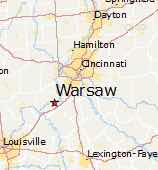
Location of Warsaw, from bestplaces.net