Showing posts with label New Haven. Show all posts

Tuesday, March 17, 2020

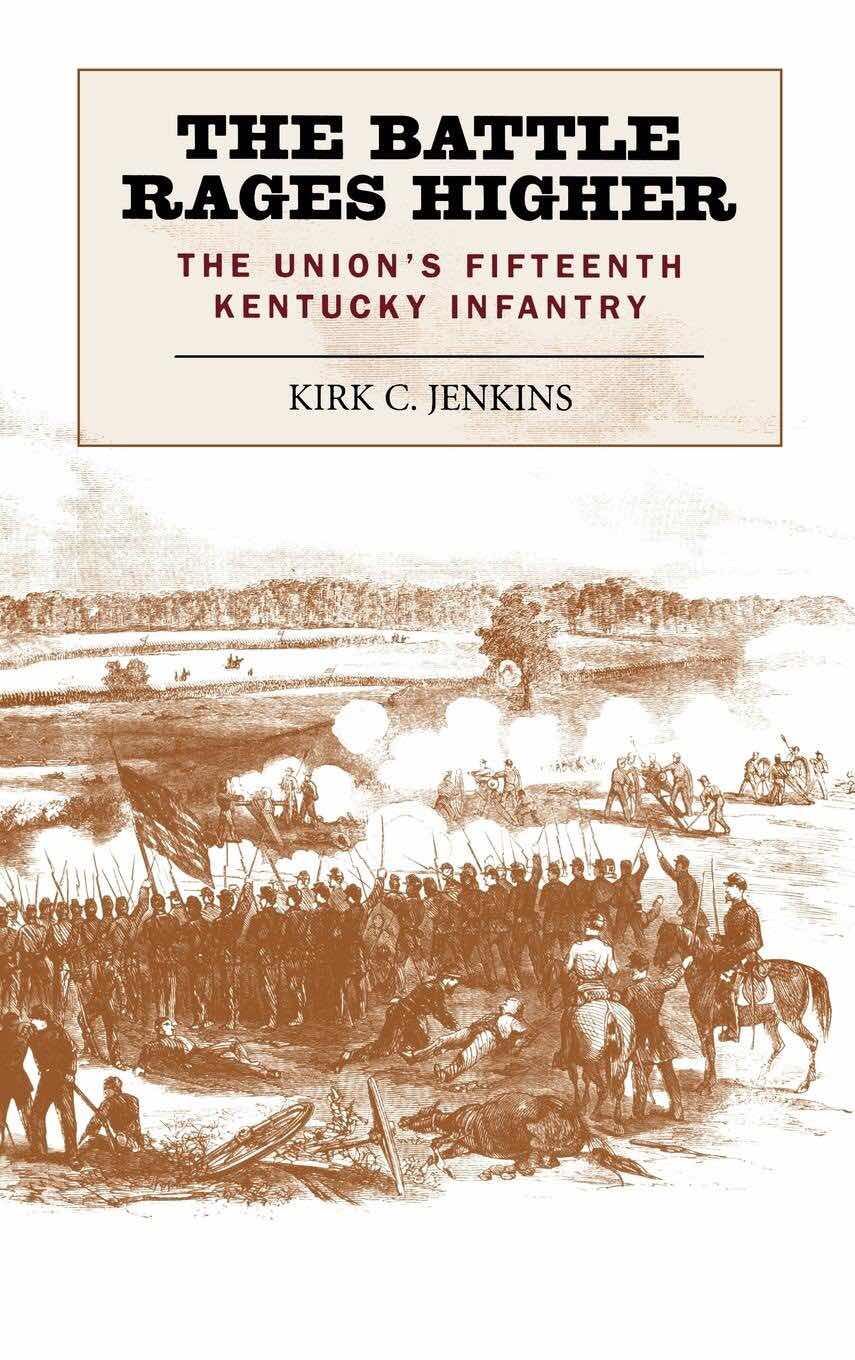
Quick Book Review: The Battle Rages Higher: The Union’s Fifteenth Kentucky Infantry


By Kirk C. Jenkins
Copyright 2003
The University Press of Kentucky

I finally have finished another book, as my reading continues to be slower than it should, so I thought I’d post a few thoughts about it. It has been a while since I did a book review. 

The Battle Rages Higher is a fine book,well-written with a readable and enjoyable narrative. Jenkins’ writing style is a good fit for this subject.

I had heard about the 15th Kentucky during my trips to Perryville, where I stood on and near the hallowed ground where they fought near the Bottom House. I have been there several times but that was about all I had heard of this unit. Once I saw this book, it was only natural for me to read it, though I wish I had done so years ago. Still, it is better late than never - I am glad to have read thus work.

This book is a basic regimental history, tracing the unit from its formation and following it into the many battles and campaigns in which it fought, including Perryville, Stone’s River,  Chickamauga, the Atlanta Campaign and more. A few of its  men were even sent to in Andersonville and though three of them survived that prison, two of the survivors ended up on the doomed ship Sultana. Private Milton Davis somehow lived through that disaster after years of war then Andersonville. That fascinates me.

Jenkins discusses the various battles and campaigns in good detail, using letters, official records and other sources for information and details to discuss the men, their leaders and their army.  It comes across as a well-researched book that provides an in-depth review of the regiment.

This book is from 2003, so plenty of  other scholarship has taken place in the years since then. I’m admittedly not expert enough to know what newer studies might add to Jenkins’ work, but this is an enjoyable and informative book that I do recommend others read. I knew of the 15th Kentucky’s fight at Perryville, but that is only a small part of this unit’s story, a tale like that of many regiments - marching, camping, fighting and various hardships in the field, away from home and family.

One surprise I received from this book was that several members of it were from, lived in, died in or are buried in my home of Campbell County, with a couple others from neighboring counties. I had never heard or expected that. At least one of these soldiers lies at rest in the same cemetery as my paternal grandparents. This entire section with the biographies of the unit’s soldiers is a terrific piece of this book, even for the many men with no connection so local to me.

The discovery of these men (most in Companies H or I) will likely lead me to a future project looking into their lives more deeply. Jenkins does include a sentence or two about each and perhaps his work will form the majority of my idea, but maybe I can find more information about at least a few of these men, or even pictures of headstones. This is something I will work on, though I am not yet sure of the format. Perhaps I will do a separate post for each name, finishing each one as I can or maybe I will do one or two longer posts focusing n several men at a time, or all at once. I have no clue on the timing of this, but I started a draft with a list of the names from the book, so that is at least a start. 

Another piece that might only interest me was that this unit mustered into the army in the small town of New Haven, Kentucky. This meant little to me, except for referring to that town  in a fairly recent post I made, but, more unexpectedly, during my recent trip to Abraham Lincoln’s birthplace, I passed through New Haven just before arriving in Hodgenville. Had I read the early part of the book more recently or planned m6 trip more in advance, I might have realized how near those towns are to each other, but I did not and seeing the “Welcome to New Haven” sign did catch me off-guard. That is just another small connection th3 book made to my life.

The Battle Rages Higher is a very good book about a Kentucky unit full of Kentucky men, and their many war-time experiences. It certainly belongs on Civil War bookshelves and in the hands of readers.



Tuesday, December 10, 2019

The Would-Be Soldier

During the Civil War, some women disguised themselves as soldiers (male, of course) in order to fight in the war. This was not an overly common occurrence, but it did happen, probably more frequently than most people realized then or do today. This subject, however, has garnered more attention and study in recent years. For instance, the American Battlefields Trust has published a story on Female Soldiers in the Civil War, and here is a Smithsonian story on the topic. This nice article also discusses this situation, and a quick online search will turn up many similar accounts.

 I came across such an instance described in the January 10, 1862 Cincinnati Enquirer, and immediately knew it was a must share as I did not recall seeing a similar account in a local source. That it happened in Kentucky certainly heightened my interest, and then I realized it mentioned a unit that I’ve read about at Perryville, the 15th Kentucky Infantry, further capturing my attention.

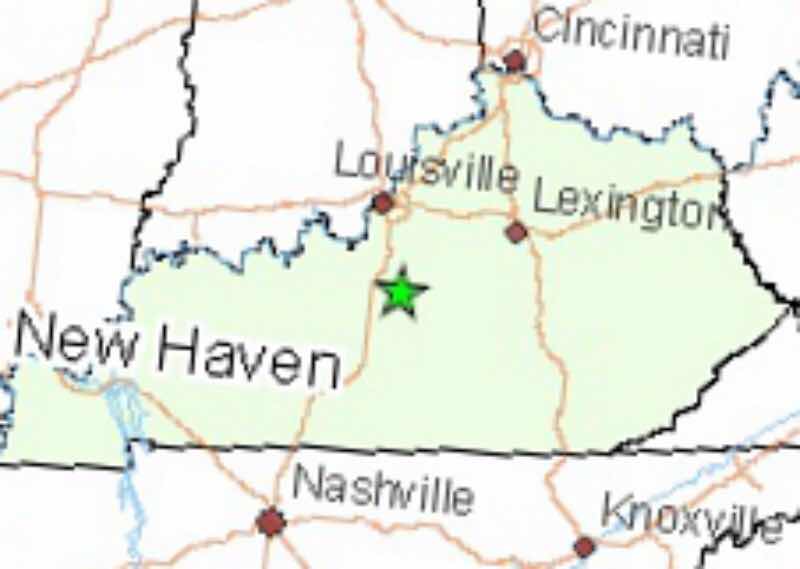
Camp Temple, mentioned in the article, was Camp Joseph B. Temple, in New Haven, Nelson County, Kentucky, the same city in which the 15th Kentucky organized and mustered into service.


Location of New Haven, from bestplaces.net

This unsigned letter was written from Camp Ham. Pope, also near New Haven, on January 6, 1862.

An incident not common in modern times, though frequent in the Amazonian and the days of chivalry, occurred at Camp Temple, adjoining us, yesterday. Some five weeks ago, a fine, healthy-looking and dashing young man joined Colonel Boone’s regiment (the 28th Kentucky Infantry.) He was duly mustered into service and performed the arduous duties of a soldier since, standing his regular guard and doing picket duty in his turn; but by some unlucky accident it was discovered yesterday that the man had changed his sex and turned out to be a woman. She was compelled, much against her will, to doff  the habiliments of Mars and substitute hat and hoops in their place. She was sent to Louisville under escort, with a view to be sent to Indiana, where it is said she hails from. She is a young widow, with captivating eyes and air and charms of romance. It is said she formerly enlisted and served sometime in a cavalry regiment, where she had a lover, and adopted the method of re-enlisting to reach him before or on the battlefield. I regret that I have not her name to send to you for the benefit of the novel writers, who could make a charming romance out of the affair. So fascinating was the would-be soldier, when forced out of unmentionables, that she quite captivated the heart of a gay Lieutenant, belonging to the Fifteenth Regiment. (This probably refers to the 15th Kentucky Infantry, which was organized at New Haven in the time frame the article describes.) He was formerly a rollicking disciple of Crispin* but now the light and life of the camp. He happened to be at the depot when she was departing, and, hearing the circumstance, immediately yielded himself up, a willing votary of the shrine of the heroine. Had she turned her face in any other direction than that of Louisville, the Fifteenth would now be minus one Lieutenant; but, inasmuch as there was another claimant for his affections there, with half a dozen responsibilities, he concluded that “discretion was the better part of valor.” 

The correspondent did briefly mention the female soldier’s physical appearance and “charms of romance,” while portraying her as chasing after a man, but also praised her work as a soldier instead of only commenting on traditional female traits, a fair and respectful description of this person. Of course, the lack of a name or other identification is a frustrating hole in the story, as is the ignorance of what the “unlucky accident” that revealed her secret was, but is still is a small, fascinating piece of the Civil War.


*The meaning of “a disciple of Crispin” is unclear. Crispin and Crispinian are patron saints of “cobblers, currents, tanners, and leather workers” per Wikipedia, and a St. Crispin’s Day Speech appears in Shakespeare’s play Henry V, but but neither of those appears to make sense in the context in which this article uses it. If anybody sees something I’ve overlooked, leave a comment or email me.