Showing posts with label culture. Show all posts

Saturday, June 11, 2022

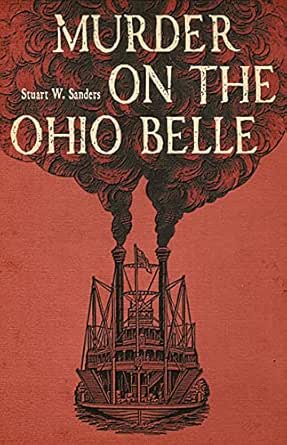
Book Review: Murder on the Ohio Belle

Amazon.com: Murder on the Ohio Belle eBook : Sanders, Stuart W.: Kindle  Store
 
Stuart W. Sanders 
Copyright 2020
University Press of Kentucky

Murder on the Ohio Belle is not a Civil War book, but covers the war era including the generation of people who brought on and fought the war, thus making it a worthwhile read for those focused on the fighting years. Mid-nineteenth century culture is the main theme of this work, as seen through the experiences of one steamboat, its crew and passengers.
 
As its title implies, Murder tells the story about a killing (actually two) that took place on the steamboat Ohio Belle, but it goes well beyond that, serving as sort of a biography of mid-nineteenth century steamboat and American culture, or at least many aspects thereof.

This book starts with a strong introduction. Many works use such a start to explain the author’s goals for the book, but few are as straight-forward and effective as the this one.

The hope of this book is to “help us better understand nineteenth century riverine culture.” (page 2) It explores the relationship northern owned boats and their crews had with slavery and slave culture along the Ohio River.The phrase “fluid border” between free states and slave states was literally true, since the waters of the Ohio formed much of that border. The author shows that these boats profited from, and thus supported, slavery with the business they conducted in the south.

Sanders further pledges to explore“how Americans contended with violence” (page 3) such as murder, lynching, and warfare, and argues “the history of the Ohio Belle also presents a portrait of how western antebellum society embraced retribution.” (page 4)

This work considers a variety of period cultural issues, such as “interpersonal violence, slavery, honor culture, and retribution.” (page 4)

The introduction comes to a definitive conclusion: “A single event…can illuminate a more important, broader narrative about our past.” The plan is to show readers “important themes from the nineteenth century that are still relevant today” (page 5), such as vigilantes, injustices, and others.

“History, including the tale of a murder on a steamboat, still matters” is an apt final sentence to this introduction.

The book lives up to the promises and goals listed in its beginning. It does so mostly in a chronological fashion, but does jump ahead and back at appropriate times to tell the story fully. 

This is not a long book. It has an introduction, eight chapters and a conclusion which combine to take up 111 pages, including the acknowledgements, but does also feature 30 pages of notes, some of which include information beyond the citations. This length, and the writing style of the author, make it a quick and easy read, so anyone worried about finding enough time to read an entire book should still consider this one.

Besides the telling of the story of the actual murders, and how it parallels mid-nineteenth century American behavior, this book also details the career of John Sebastian, the captain of the Ohio Belle, and how he dealt with those issues on his boat.

Another interesting aspect of this work is the story of Margaret Garner. Many people have heard or read  of her escape from slavery in Boone County, Kentucky, across the Ohio River to Cincinnati, where she killed her young daughter instead of letting slave catchers capture her. This book details more of her story after that incident, as she was sent downriver aboard a steamboat.This part of her story is not as famous as her attempted escape, but does include more heartbreak. Her tale was an unexpected but valuable addition to the study of the region's culture at the time. Few stories illustrate the nature of slave-state Kentucky’s proximity to the free state of Ohio as clearly as hers does.

Violence, revenge, honor, and the definition of a “gentleman” (and expectations of such a man’s behavior and interactions with others) are concepts that appear throughout the book, and are familiar to Civil War students. The use of alcohol, mixed with gambling and traits like pride, honor, and the tradition of carrying concealed weapons was a common contributor to problems, including occasional mob violence. This behavior on “the Ohio Belle, and other vessels was simply a reflection of behavior on land during this period.” (pages 58-9) This book provides examples of this, including in the river city of Louisville.

Class distinctions – particularly between wealthy planters and “lower” economic classes, but also between races – were ever present in how people behaved on land and water.

Of course, the defining event during the steamboat era of the mid-nineteenth century was the Civil War, and chapter seven dives into it, how it affected the Ohio Belle  (captured by the Confederacy) and John Sebastian (he lost his left arm during the conflict.) It was the ultimate example of violence during the era, but these years also continued to demonstrate the dangerous desire and search for vengeance, much like during peace time.
 
Overall, this is a fine book for anybody who enjoys history, but it also covers topics that should interest those focused on the Civil War, river history or social/cultural history in mid-1800s America. This book is a pleasure to read. I happily recommend it.

Saturday, May 22, 2010

Book Review: West Pointers and the Civil War


author: Wayne Wei-Siang Hsieh
copyright 2009
University of North Carolina Press


When I first began to read this book, it struck me as being a tough read, perhaps a bit too technical for my tastes, but after just a couple of minutes of reading, the author's style grew on me quickly and I found the book to be readable, enjoyable and informative. It was kind of unique in that regard, but I truly did start enjoying it more after I had warmed up to it briefly.

Hsieh's book tells the story of the development of the "old army" especially how it learned, developed and studied tactics, and, maybe just as importantly, how the army developed a nationalistic and fairly conservative culture that would play a big role in how the Civil War unfolded.

The author does a fine job of detailing how the American military's poor performance in the War of 1812 alarmed military leaders of the time and how they took steps to improve the military's efficiency, while fighting against an American tradition of disapproval of standing armies (or, as Hsieh calls it on page 2 "an Anglo-American martial tradition that had glorified the civic and military virtue of the studiously unprofessional citizen-soldier"). Despite this mistrust of standing armies and professionalized military men, the American leaders were able to learn from the British and French and begin to write their own tactical manuals for military use. A lot of these were simply translations from the French, but as time passed American military leaders, such as Winfield Scott, started making additions or changes to the French tactics, as they deemed necessary due to the unique features of American geography.

When war with Mexico broke out in the mid-1840s, Hsieh points out that the U.S. Army performed much better than it had in the previous nation-state war with Britain, giving the army as an institution more confidence in its concept of professionalism.

What I found most fascinating about the book however, was when it got to the Civil War. The old army had developed a very conservative, nationalistic culture and tradition. The author shows examples of army officers in the 1850s following orders they may not have agreed with because it was their duty, and then shows how this mindset affected men deciding which side to support during the Civil War. Not all officers who had interests in the South automatically left the army to fight for this new nation; several stayed with the Union, supporting their country and army as they had learned to in the antebellum years. 

The prime examples of how this conservative mindset are well ilustrated by the author. He begins the book with a look at Robert E. Lee's refusal to resort to guerrilla warfare in the post-Appomattox days, and then discusses George McClellan's mindset (along with that of his followers and admirers, even amongst army men) during the war - the unwillingness to attack slavery being the primary motive. Hsieh points out that this was not necessarily an act of treason as many radical Republicans assumed, but rather an extension of the mindset and culture the old army had created among many of its officers. 

Hsieh also does a wonderful job of showing how McClellan basically fathered the Army of the Potomac, leaving his conservatism as part of the inheritance the army gained after his departure. Even the arrival of Ulysses Grant could not totally overcome the basic mindset that this Eastern army had learned from its original commander. I found this to be an especially interesting point, with good examples cited by the author.

Perhaps the main point of Hsieh's work is that the Civil War unfolded as it did because of two main factors: 1.The predominance of men of military and West Point (including other military schools such as Virgina Military Institute) backgrounds in positions of influence of both sides and 2. the fairly conservative culture these men learned and took to battle with them. With both Union and Confederate military leaders having such similar backgrounds, it is not surprising that both sides had similar military competence and similar strategies during the war. Of course, not everything was exactly the same on both side, but each side did fight a "nation-state" type of war instead of resorting to guerrilla action, as each side had a goal of having organized nation states after the war. Had one side done something radically different than the other, such as widespread guerrilla warfare, the war would likely have taken on a different form, but both sides had similar training and similar goals.  These commonalities led to a long, bloody war, with neither side having a dominant advantage over the other in military expertise, strategy or morale, as the Americans had had in the Mexican War. This explains the relative scarcity of "decisive victories" from either side during the war.

After reading this book, I found that the phrase "brother's war" has new meaning to me - not only does it refer to the familial connections of sibling taking each side, as most people use it to mean, but I can now see it as showing how the split of "West Point brothers" as they may be called had such a direct influence on the type and length of the war as well. Looking at the graduates of West Point as a type of  family is a perspective I had not thought about prior to reading this book.

Another point made throughout the book, especially regarding the Mexican War and the Civil War was that war is more than an act of technology and tactics. As Hsieh pointed out on page 158 "The Minie bullet and the trench certainly had a profound effect on battlefield conditions during this period, but all those effects had to be channeled through a military machinery grounded as much in flesh and blood as in lead and cordite." It was this "flesh and blood" military machine that he discussed throughout the book that had the biggest impact in how the Civil War developed. As he wrote on page 176 to back up this point: "More goes into war than the technical qualities of arms and ordnance - much still depends on the uncontrollable vagaries of Fortune, the ill-defined courage of the contending men-at-arms, and the basic competence of the leaders on hand."

I must confess that I found this a hard review to write, though I know not why. Hsieh's telling of the story of the development of the American army and how this process influenced the Civil War is a fascinating one and probably has too many interesting points for me to mention here. One part of the book I really like is the detailed end-notes at the end of the book - many of them provide other information or points worth considering.  

This is definitely a book Civil War students, especially those interested in the military side of the war, should consider having on their bookshelf.

(As always, this review is done on my own time and with no compensation from anyone. All opinions are simply my own thoughts expressed by my own will. Thank you for reading it.)