Showing posts with label motivation. Show all posts

Wednesday, May 10, 2023

Book Review: Tar Heels in Gray: Life in the 30th North Carolina Infantry in the Civil War

By John B. Cameron
McFarland & Company, Inc.
Copyright 2021


As the back cover of this book states, “The 30th North Carolina was involved in most of the major battles in Virginia from the Seven Days through the surrender at Appomattox.” Most of its men joined early in the war, but others were drafted and served unwillingly. 


“What was the war actually like for these men?”


It is that question, and others like it, that this book explores and discusses in a deeply-researched text that those interested in the men of the Civil War armies should read. 


Tar Heels in Gray is a good book, an enjoyable and detailed biography of a regiment’s time in the war, focusing on non-combst-specific challenges the unit and its men faced, including recruitment, motivation, disease, desertion, hunger and others.


It is not intended as a military study of campaigns and battles like most regimental histories are, but focuses its attention on other important details about daily soldier life that contributed to the regiment’s ability to arrive at and perform in battle. This is a good approach by the author and produces a valuable look at the challenges the unit faced just to have enough able-bodied men to fight.


This book is generally well-written and easy to read, but I admit that some of the statistical discussions, and the descriptions of how the author decided what fit in which category and how he assembled the statistics, were not as enjoyable as other parts, though the graphs and charts were helpful. That may just be me - I often don’t enjoy the deeply analytical and statistically-based articles about sports I follow either - but I do understand why he included these sections in the book to show his methodology. I do wonder, however, if some of the discussion of the methods could have been included in an appendix.


My personal taste on that one issue aside, I especially enjoyed the letters to and from the home front and the descriptions of camp life and relationships between soldiers were outstanding and valuable. (The discussion about Louis McLeod and Francis Moore was especially interesting. I wish their friendship had lasted longer do that their story would have been longer and provided more material for the author. That was a perfect discussuon for this type of book and showed the humanity of these men in terms of the appreciation of friendships and the feelings of loss or betrayal.)


 The 30th North Carolina was just one regiment, but this is a look at it likely shows similar experiences as men in other units, especially Confederate ones, faced. 


I also enjoyed the discussions of the various diseases men in the men of the 30th faced. Some medical terms are technical and/or in Latin, but the overview of the diseases, how common they were, and, especially, how some were likely misdiagnosed was enlightening, and might help me on my current project. 


This note might be another quite picky one, but the author’s style of writing dates - the day, followed by the month, then the year (e.g. 23 June 1865) - is a bit distracting at least for me as I am accustomed to the more traditional style (e.g. June 23, 1865).


This is a relatively short book, 161 pages including the endnotes (which are worth reading, as many include additional information other than sources), plus a six page bibliography, but is well-researched, with the use of many soldier letters, census records, tax records and more. It is clearly the product of much work (such as the analysis of how to classify the economic and occupational statuses of the more than 1,000 soldiers in the regiment, and the discussion of the wounds and diseases these men suffered). It is an impressive effort, with a fine result that provides good insight into how a regiment and its men joined the army, lived, survived, were motivated, deserted and/or died in the dangerous and deadly years of the Civil War.


*Please note that I received a copy from the publisher for no charge. I have published my honest comments herein without allowing how I acquired it to affect my opinions.  

Wednesday, June 10, 2020

“I am Fighting to Put Down Rebellion”

I found these stories in the Cincinnati Enquirer of January 26, 1862 and felt this perspective was worth sharing. 

It is not unusual to read of a Union soldier or group of soldiers opposed to the abolition of slavery as a war aim, so seeing anti-abolition sentiments in this letter from a soldier in the first few months of the war is not a shock. I do find myself wondering what this private felt about the Emancipation Proclamation, preliminarily issued about 8 months later, if he survived that long. 

This story further interests me because the 44th Ohio was one of the units in the northern Kentucky area around or just after the Siege of Cincinnati, a topic this blog has mentioned several times. It is kind of a local angle to this story. 

Also note that both this newspaper and the individual who wrote the letter were from Ohio, a “free state” in the North, yet both still expressed anti-abolitionist attitudes. That is not surprising from Cincinnati, which had many ties to the South, and is pretty typical of the Enquirer’s attitudes.

Abolition Tracts Among the Volunteers
Camp Piatt, January 12, 1862

To the Editors of the Enquirer:

SIR: Inclosed you will find a cursed Abolition document - it will speak for itself - which the negro worshippers are distributing among the soldiers in large quantities. Comment, if it is worth comment - and of course it is - I leave you to make. If I had time, I would write a long article on the subject, but I have not, as I’m but a private - and that is the reason I got the document. Privates are supposed to have no sense, or just sense enough to be made to believe and do anything; but the paper got into the wrong hands this time. And, further, I will say, or ask, if such papers are allowed to be distributed among the soldiers so profusely, when will this war end? This much I would like to say to them: I am not fighting to free negroes; and if they want them freed, let them do the fighting themselves. I will not. I would as soon shoot a real Abolitionist as a Secesh. I consider that they are as much the instigators of this war as any man in the South, and even more so; yet they claim to be Union men. Such Union men ought to be in purgatory. They now boldly declare their purpose, and are distributing their infernal trash among the ignorant soldiers, as they suppose; But there are some of them sharp enough to see what they are driving at. 

I am a native of Ohio, but not an Abolitionist, by any means; and I am fighting to put down rebellion, not to free negroes.

A Soldier,
Forty-fourth Ohio Regiment

———————

Here is how the editor reacted to this letter. In the first paragraph, I added the emphasis in bold because that is a line I’ve often seen or heard in discussions of slavery, but it is the first time I remember seeing it so explicitly stated in a period newspaper.

Cincinnati Enquirer January 26, 1862   

VOICE OF A SOLDIER 

We publish elsewhere a letter from a volunteer in the Forty-fourth Ohio Regiment  in relation to the distribution among the troops of Abolition documents. Accompanying the letter was a tract Entitled “CATECHISM FOR WORKINGMEN.”  It purports you have been  published by the “American Reform and Tract and Book Society of Cincinnati, Ohio.”  We have before noticed Abolition tracts issued from this manufactory, and designed for circulation among the troops. The one before us is filled with the usual Abolition sophistries, that slavery produced the war and ought to be destroyed. Purporting to be written “by the son of a blacksmith,” it makes an appeal to workingmen to aid in wiping slavery from off the face of the land. Every intelligent workingman knows that liberating four million slaves, to be the competitors in the field of voluntary labor with laboring whites, is not going to elevate but rather degrade the whites. The laboring whites at the South, though poor, know that they are not on a level with the blacks, as this tract asserts they are, but are a superior race. It is that knowledge that makes them take the interest they do in thwarting the schemes of the Abolitionists. The tract before us aims to induce the white laboring man and woman to aid in putting themselves on a level with the blacks. 

“A SOLDIER” sees through the game, and tells the intermeddlers, who are the primary cause of the war, that he regards them in the same light he does the rebels, that he is fighting to put down the rebellion, not to free the slaves, and that he can not be made their tool. That is plain talk, and we rejoice to hear it from such a source. 

Monday, October 14, 2019

“Smith Did Right:" An Incident in Grand Junction, TN

Standing just inside his house, a wealthy Southern gentleman shoots at trespassing Yankee soldiers, then sends his family away, joins the Confederate army, and, soon thereafter, sacrifices his own life. It may sound like the plot for a cheap Civil War novel (Mr. Smith Goes to War!), but it is a true tale as seen in a report from the January 28, 1863 Cincinnati Enquirer. 


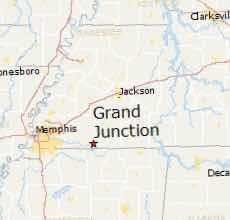
Per bestplaces.net

From the Chicago Post
From Grand Junction - A Lamentable Tragedy - Army Depredations the Forerunner of Evil

Grand Junction, Tenn., January 14, 1863

To the Editor of the Post:

It is with no ordinary regret that I lay the following sad tale before your readers.

A few evenings since, the residence of Robert Smith, a well-to-do planter, about four miles from here, was the scene of a tragic and deplorable rencontre. Smith, in spite of the edict of Jeff Davis, raised a good crop of cotton, and willingly sold it for “green-backs” to one of the Northern cotton-buyers. It was rumored around his neighborhood that he had ten or twelve thousand dollars in his house. During the day the soldiers encamped near him, and busily helped themselves to the store of provisions that he had for himself and family. He did not complain of their demands for something to eat; but he firmly gave them to understand that they should not come into his house. After nightfall he locked his doors and forbade regress or ingress to any person. A gentlemen who was in the house is my authority for what happened. 

About nine o’clock P.M. half a dozen soldiers came to the door and demanded admittance. He asked who they were and what was their business. They replied, in a gruff voice, to open the door, and not ask any d——d questions. He informed that he would not open it, and warned them of the consequences if they attempted to make a forceable entry. They commenced to batter the door, when he again warned them to desist, or if they did not, he would shoot the first man who crossed his door. ‘You will, eh,” says one who immediately fired at Mr. Smith. He (Smith) thereupon fired and killed the foremost of the gang. Immediately the other five fired, but did not do any harm. Smith fired again and wounded another. They immediately left, but did not remove their dead comrade. The matter was reported to General Hamilton, who, I understand, has said “served them right; I wish he had killed them all.”

If the case is as it has been told to me, and I am compelled to believe it, as the gentleman who informed me is a man of truth and firm integrity, I am sure there is but one sentiment, and that is Smith did right. It is high time to stop the growing spirit of lawlessness and insubordination that is perceptible in our army. If we can not protect the Union man - the man who has voluntarily taken the oath of allegiance - the man who has dared to deft the edicts of the Richmond junta, and to show by acts that he is opposed to the iniquitous regime of Davis, I think it is time to move our army a little further north, in order that the persecuted cotton grower, and enemy of Secession, may not be humbugged by the shadow of a protection that is as unsubstantial as the fabric of a vision. 

That was the entirety of the story as this article presented it, but an online search uncovered a genealogy website which provides more details, including Smith’s wealth in both land and slaves. It also describes the above-mentioned affair: 

During the winter of 1862 and 1863 some Yankee looters came to his house demanding food. Robert told them he had given them all he had and that they should return to camp. They tried to force their way into the house and in the ensuing scuffle, Robert killed at least one of them. Robert immediately sent his wife and small children to neighbors and went to join up with his son John’s unit. (Originally in the 13th Tennessee Infantry, CSA., John had since joined the 18th Mississippi Cavalry, in which he became Lieutenant Colonel. Two of his brothers, Richard and Marion, also served in this unit.) 

That night the Yankees returned and burned his house. Robert was made Captain of the 18th Mississippi Cavalry. (The Soldiers and Sailors website does show a Robert W. Smith as a captain in Company D of the 18th Mississippi Cavalry.) 

One noteworthy tidbit was that John, while in the 13th Tennessee, was injured at the Battle of Richmond on August 30, 1862. 

An additional source that provides perspective on this story is Hardeman County, Tennessee: Family History, Volume 2. (I tried to link to the page with this story on it.) It includes more details, claiming that the soldiers were stragglers from Grant’s army who also burned other buildings on the plantation. (This was during the period when Union General Ulysses S. Grant was trying to figure out how to capture Vicksburg.) It does mistakenly place this episode in February, after the story had been printed in the January newspaper. This book also states that a few days later, Smith tried to form a company to join Nathan Bedford Forrest’s men. A fight with Union troops ensued, and the only casualty of this skirmish was R. W. Smith, who received a mortal wound and was leaning against a tree when his son, Marion, found him and placed him on the ground. He died shortly thereafter and was carried back to the plantation where he was buried.

The genealogy page linked above states: Robert was killed in a battle on Yellow Rabbit Creek just south of Ashland and near what is now the border of Benton and Tippah County (Mississippi) 1 May 1863. This matches the death date on his headstone, but the book’s version of when he died - seemingly in February - contradicts the May 1 date. One possible explanation for the apparent difference might be that the book describes the same fight in which Robert met his demise, but just inaccurately portrays its time frame. Both sources agree that the cemetery where he lies in rest is on land from his plantation. (That skirmish seems to have been too small for appearance in modern records though here is a link to water quality information about that creek, so at least its existence is confirmed.)  

A fair question about both the family history account and the book is what their sources were. Maybe period newspapers from that region gave them the information they published, but family oral history or other books may have contributed as well.

Another possible misunderstanding shows up in the original newspaper story. That article called Smith a “Union man” and "enemy of Secession." Smith was likely not such a person, certainly after this event, but probably not beforehand either, given his sons’ Confederate service. Whether that misinterpretation came from the source who witnessed the event, the individual who wrote to the journal or an editor at the Chicago Post is unclear, but it appears that someone tried to use this incident as propaganda to portray the Union army as hurting people it was supposed to protect, perhaps basing this on Smith’s alleged willingness to sell cotton to northern buyers. The author of the newspaper version of the story did not include details like the burning of the other buildings or Smith joining the army. Maybe that was a timing issue - writing the letter before learning of those things - but maybe the author omitted Smith’s reaction as it was not that of a Union supporter. (On the other hand, it may be unlikely, but is not completely inconceivable that he was a Southern Unionist before this incident, even with at least one son in the Confederate army, as divided family loyalties did exist. Perhaps the behavior of the Union soldiers did actually change his viewpoint.Without further information, it is difficult to know Smith’s original sentiments.)

This post started as a simple transcription of a period newspaper account, but as the family and county history sources added more intriguing detail and context, even with reasonable questions about some details, it evolved into a fascinating tale of a small but devastating affair. Episodes like this do not receive much attention but still show that even minor events often had major consequences. A death in a fight like this pained surviving family members just as badly as did a death at Gettysburg, Shiloh or Antietam. How many other wartime incidents were similar to this, but are unknown today? Hopefully historians and genealogists continue to find, record, and share such stories to help others understand the magnitude of the entire war, not just the famous battles. 

This entire story is intriguing, from the discovery that four members of the same family (a father and three sons) served in one regiment to one man’s finding his mortally-wounded father (a natural part of that novel, of course.) It also provides another study of why soldiers fought - in some instances, like this one, their motivation literally was to protect home and family and/or to seek retribution against the enemy, both rationales that people even more than 150 years later can still understand.


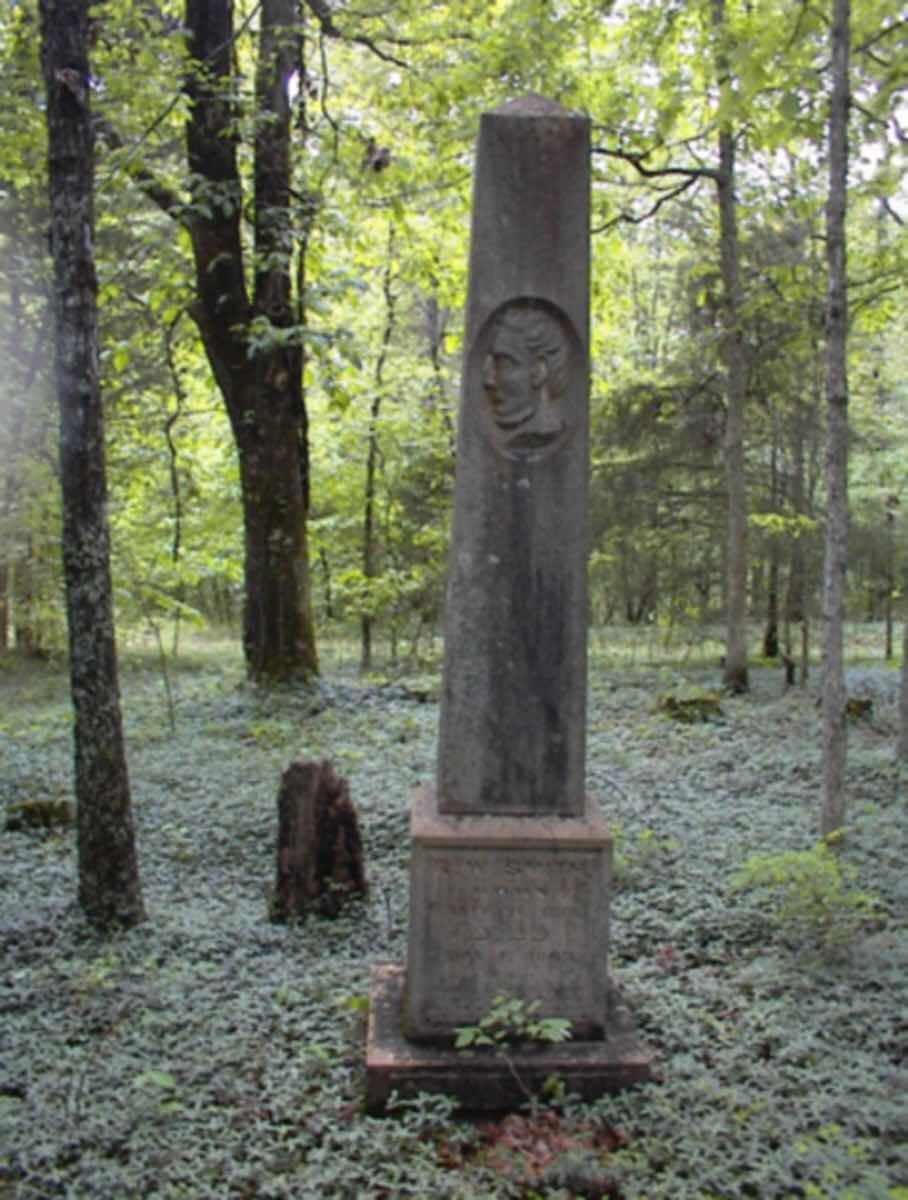
Robert W. Smith’s headstone, per genealogy site linked above


Tuesday, September 27, 2011

In which I Compare Confederates and Klingons

Worf, Klingon
Robert E. Lee, Confederate


First of all, you're welcome for the captions under the pictures beginning this entry. :-)

Recently, I have been watching Star Trek: The Next Generation (I'll call it TNG ) on DVD and in one episode (probably more, but it caught my attention in one of them), Worf was in company with some fellow Klingons, and in their conversation they made several mentions of words like "honor" "duty" "courage" and "family."

For some reason that got me thinking that these warriors from outer space sure sounded like a different group with which I was familiar - Confederate soldiers.

I don't know that I'll ever  do any kind of thorough research on this, but found it to be an interesting thought, so I will consider it briefly here.  Some Confederates did fight in the Civil War as a matter of personal honor, or of proving their bravery. Staying home while others fought for the South would have shamed them, and in TNG, Worf frequently refers to his and his family's honor. In fact, that becomes a recurring theme in multiple episodes when the Klingon High Council accuses his father of betraying the empire. An example of this regarding the Confederacy is found on page 39 of the book Reluctant Rebels (Kenneth Noe, copyright 2010, University of North Carolina Press) when the author quotes one soldier letter: "you know me too well to think I could stay at home idle while all my young friends have left their families and friends. George Crawford and John Knowles have left their homes long ago for the same cause and I hope it shall never be said that John Beggs was afraid to go." 

Duty is another theme that is mentioned both in studies of Confederate soldiers and by the Klingon characters. It is closely related to honor and "honor and duty" is a commonly heard or read phrase, to describe some kind of moral obligation to serve their government. Robert E. Lee's decision to join Virginia's forces after the state seceded and he resigned from the U.S. Army is one example of duty, while Worf resigned from Star Fleet in order to do his duty by serving on a Klingon vessel during a Klingon civil war.(Wow - there's a similarity I had not noticed until I typed that sentence. Was Worf really another Robert E. Lee, trying to reclaim his family name from actions his father supposedly took, and then resigning one position to take another in a civil war? Is there a comparison between Mogh and Lighthorse Harry Lee? Is there a "Klingon Yell (maybe when they see a fellow warrior die?")

All of these themes are closely related and another word heard frequently with them is "loyalty." How many Confederates like Lee or John Singleton Mosby fought as they did out of loyalty to their home state? Some like George Thomas resisted this call, but for many southerners, the actions of their state determined what they would do. This is another theme that Worf often falls back on, such as in the episode when he first meets K'Ehleyr (at least their first on-screen meeting) and lectures her about Klingon virtues of loyalty, duty and honor.

That episode also ties in with Worf's emphasis on family and how a Klingon is responsible for the actions of past and future generations, especially regarding a familiy's honor. This is certainly more of an issue in TNG than in the Civil War, where family divisions between the Union and Confederacy were not uncommon, but still Confederate soldiers did write about protecting their families and homes, and keeping their wives free from possible attack by freed slaves. Family connections also helped Klingons achieve political positions, while that same idea certainly was influential in the south (and the entire nation) in the 1860s.

"Manhood" and "courage" are two other closely-related virtues that fit the comparison as well. These were especially important to the Klingons, but even Confederate soldiers felt that they needed to prove their courage, and their willingness to fight for their loved ones was part of what it meant to be a man. 

Obviously, comparing a fictional television series set centuries in the future to real people and lives from 150 years ago may not be the most serious of history, but I thought it was a fun and even a bit humorous of a comparison. I do wonder if a serious sociologist or social historian could do a longer study on this topic, maybe embracing these virtues in other public media.  Still, as I watch more of the TNG episodes and hear words like "honor" and "duty" spoken by Klingons, it does remind me of how many young men, especially in the South, looked at life as they faced war and battle 150 years ago.

All-in-all, I tend to doubt that that Confederate soldiers obsessed over ideas like "honor and duty" as Worf or other Klingons did on TNG but these virtues were important to both cultures, in the real world of the Confederates and the fantasy worlds on television. Honor and duty were part of the motivations of many Confederate soldiers and as one website says: "Klingons hold honor above all else" (http://reocities.com/Hollywood/8459/klingon.html) a sentiment with which anybody familiar with the show can easily agree.

Whether it was Robert E. Lee working with thousands of fellow soldiers to battle the Yankees of the North, or Lieutenant Worf, working with Jean-Luc Picard to explore space and meet new life forms, virtues like honor, duty, family and loyalty all played a role in decisions they made and how their lives - real and imaginary - turned out.

Live long and prosper.

Wednesday, September 14, 2011

Book Review: Reluctant Rebels


Kenneth W. Noe
copyright 2010
University of North Carolina Press
Book Club edition
Civil War America, Gary Gallagher, editor

Studying motivation of why soldiers fought in the Civil War has become a more popular topic as time has passed, with several prominent scholars offering different thoughts, opinions and perspectives on the reasons men risked their health, lives and futures in the 1861-1865 conflict.

Among the most recent historians to discuss this area of study is Kenneth W. Noe, Draughton Professor of Southern History at Auburn University. In Reluctant Rebels, he chooses to focus on men who joined the Confederate army in 1862 or later, after missing out, skipping out, ignoring or otherwise not giving in to the rush of volunteers who signed up soon after the firing of Fort Sumter and Lincoln's call for troops.

Noe uses sources from and about 320 soldiers he identified as late enlistees and digs through their war-time correspondence as well as census and tax record information to compare them to the men who had enrolled earlier, in demographic information and,their motivation for joining the army.

Throughout the book, he compares the demographics of the later enlistees to the "first responders" as we might call them today, and also looks at their level of motivation due to subjects like patriotism, Confederate nationalism, defense of slavery, political ideology, peer pressure (or sexual intimidation) from others, especially women at home, bounties and conscription. He also nicely describes the ties that these later fighters kept to their homes and the importance of their messes, relatives and other small groups of comrades that they formed once in the army.

I enjoyed the way he did this and found it to be very informative. It is not always the smoothest narrative, but expresses Noe's findings very well and in a manner that makes sense. It can be difficult to write a readable analysis of that style, frequently relying on statistics and numbers,  but Noe accomplished this and produced a book that is very readable and enjoyable, as well as informative. (By the end of the book, several of the soldiers whose writings he used become very familiar and the reader - or at least this one - starts to know what type of feeling to expect when their names show up in the text.)

Dr. Noe also consistently compares his findings to what many of the authors who tackled this are before him claimed, and showed how they compared and contrasted, both in the differences between the soldiers and the emphasis on various aspects that each author used. In this sense, it is a bit of  historiography on soldier motivation (including a good discussion and many examples of the three main types of motivation that historian John Lynn had helped describe - initial motivation, sustaining motivation and combat motivation. This was a new topic to me and one that I find fascinating and will try to consider when doing future reading about the war.) 

At the end of the book, he includes four tables from his database of information, showing more detailed numbers of the issues discussed throughout the book. This work also includes end notes and a long list of works cited.

Reluctant Rebels is a fine book that Civil War students or enthusiasts interested in why the soldiers fought and kept fighting should read. It describes many of the possible motivations these men had, first not to enlist, then to (finally) join the thousands of others who had gone before them and, finally, why they continued to fight. It is very informative and enjoyable and a book I am happy to recommend.