Showing posts with label abraham lincoln. Show all posts

Friday, January 1, 2021

Emancipation Proclamation


One of the crucial documents in American history, certainly worth recalling at the start of a new year. 


By the President of the United States of America:


A Proclamation.


Whereas, on the twenty-second day of September, in the year of our Lord one thousand eight hundred and sixty-two, a proclamation was issued by the President of the United States, containing, among other things, the following, to wit:


"That on the first day of January, in the year of our Lord one thousand eight hundred and sixty-three, all persons held as slaves within any State or designated part of a State, the people whereof shall then be in rebellion against the United States, shall be then, thenceforward, and forever free; and the Executive Government of the United States, including the military and naval authority thereof, will recognize and maintain the freedom of such persons, and will do no act or acts to repress such persons, or any of them, in any efforts they may make for their actual freedom.


"That the Executive will, on the first day of January aforesaid, by proclamation, designate the States and parts of States, if any, in which the people thereof, respectively, shall then be in rebellion against the United States; and the fact that any State, or the people thereof, shall on that day be, in good faith, represented in the Congress of the United States by members chosen thereto at elections wherein a majority of the qualified voters of such State shall have participated, shall, in the absence of strong countervailing testimony, be deemed conclusive evidence that such State, and the people thereof, are not then in rebellion against the United States."


Now, therefore I, Abraham Lincoln, President of the United States, by virtue of the power in me vested as Commander-in-Chief, of the Army and Navy of the United States in time of actual armed rebellion against the authority and government of the United States, and as a fit and necessary war measure for suppressing said rebellion, do, on this first day of January, in the year of our Lord one thousand eight hundred and sixty-three, and in accordance with my purpose so to do publicly proclaimed for the full period of one hundred days, from the day first above mentioned, order and designate as the States and parts of States wherein the people thereof respectively, are this day in rebellion against the United States, the following, to wit: 


Arkansas, Texas, Louisiana, (except the Parishes of St. Bernard, Plaquemines, Jefferson, St. John, St. Charles, St. James Ascension, Assumption, Terrebonne, Lafourche, St. Mary, St. Martin, and Orleans, including the City of New Orleans) Mississippi, Alabama, Florida, Georgia, South Carolina, North Carolina, and Virginia, (except the forty-eight counties designated as West Virginia, and also the counties of Berkley, Accomac, Northampton, Elizabeth City, York, Princess Ann, and Norfolk, including the cities of Norfolk and Portsmouth[)], and which excepted parts, are for the present, left precisely as if this proclamation were not issued.


And by virtue of the power, and for the purpose aforesaid, I do order and declare that all persons held as slaves within said designated States, and parts of States, are, and henceforward shall be free; and that the Executive government of the United States, including the military and naval authorities thereof, will recognize and maintain the freedom of said persons.


And I hereby enjoin upon the people so declared to be free to abstain from all violence, unless in necessary self-defence; and I recommend to them that, in all cases when allowed, they labor faithfully for reasonable wages.


And I further declare and make known, that such persons of suitable condition, will be received into the armed service of the United States to garrison forts, positions, stations, and other places, and to man vessels of all sorts in said service.


And upon this act, sincerely believed to be an act of justice, warranted by the Constitution, upon military necessity, I invoke the considerate judgment of mankind, and the gracious favor of Almighty God.


In witness whereof, I have hereunto set my hand and caused the seal of the United States to be affixed.


Done at the City of Washington, this first day of January, in the year of our Lord one thousand eight hundred and sixty three, and of the Independence of the United States of America the eighty-seventh.


By the President: ABRAHAM LINCOLN 

WILLIAM H. SEWARD, Secretary of State.


Tuesday, November 17, 2020

Reaction to Lincoln's Proposal of Compensated Emancipation 1862

I'm still working on my book project and will hopefully publish another update on it soon, but had previously found this article and thought it was worth sharing here as well. I'll keep looking for stuff like this occasionally even as I work on my project. 


This editorial came from the Cincinnati Enquirer of March 8, 1862 and is in reference to President Lincoln's March 6, 1862 Message to Congress supporting compensation to states willing to emancipate all slaves inside its borders.


The Message of President Lincoln - Slave Emancipation

It is to be deeply regretted that President Lincoln has so far yielded to the radicals in his party as to send in a message recommending that the United Stated afford pecuniary aid to such States as are willing to abolish slavery. It will have an unfortunate effect in the South, as indicating a meddlesome disposition upon the part of the General Government to interfere with their domestic institutions and to bias their State Legislatures by its influence. It will be time enough for the General Government to talk about affording aid to abolish slavery when the Southern States, or any of them, ask it at its hands. At the present time, when the country is loaded down with debt and taxation in order to carry out the war, it is simply impossible for it to make an investment of some hundreds of millions dollars in negroes. If the scheme was ever, or will be ever practicable, it is not now.

Strange caprice and infatuation, in view of the uniform failure of negro emancipation in the British and French West Indies, to effect any result except ruin to the countries that embark in it, to recommend it in this Union! What reasonable man can desire to enlarge our population of free negroes? The President's own State of Illinois prohibits a free negro from coming into it; and in all the free States, as well as slave, they are regarded as a most undesirable population, yet the President would have the whites of the North exhaust their pecuniary resources and to be beggared by taxes in order to set free millions of African slaves!

The suggestion springs from that uneasy, restless, insane spirit of fanaticism that has already been of such immense mischief to the country, and which every man should frown down. Leave negro slavery alone, where the Constitution leaves it, to work out its own destiny. Leave it to time. We of the North are not called upon to interfere with it in any form or shape, and can not do it except at our great injury and disadvantage. Better by far appropriate, as a measure of humanity, hundreds of millions of dollars to alleviate the distresses of poverty in the North, among the whites, than to invest the sum in creating free negroes. We much mistake the temper of the Northern people if they ever consent to it. We doubt whether a single Congressional district out of New England and the Ohio Western Reserve would vote, if it had the opportunity, in favor of the President's scheme.

Thursday, February 27, 2020

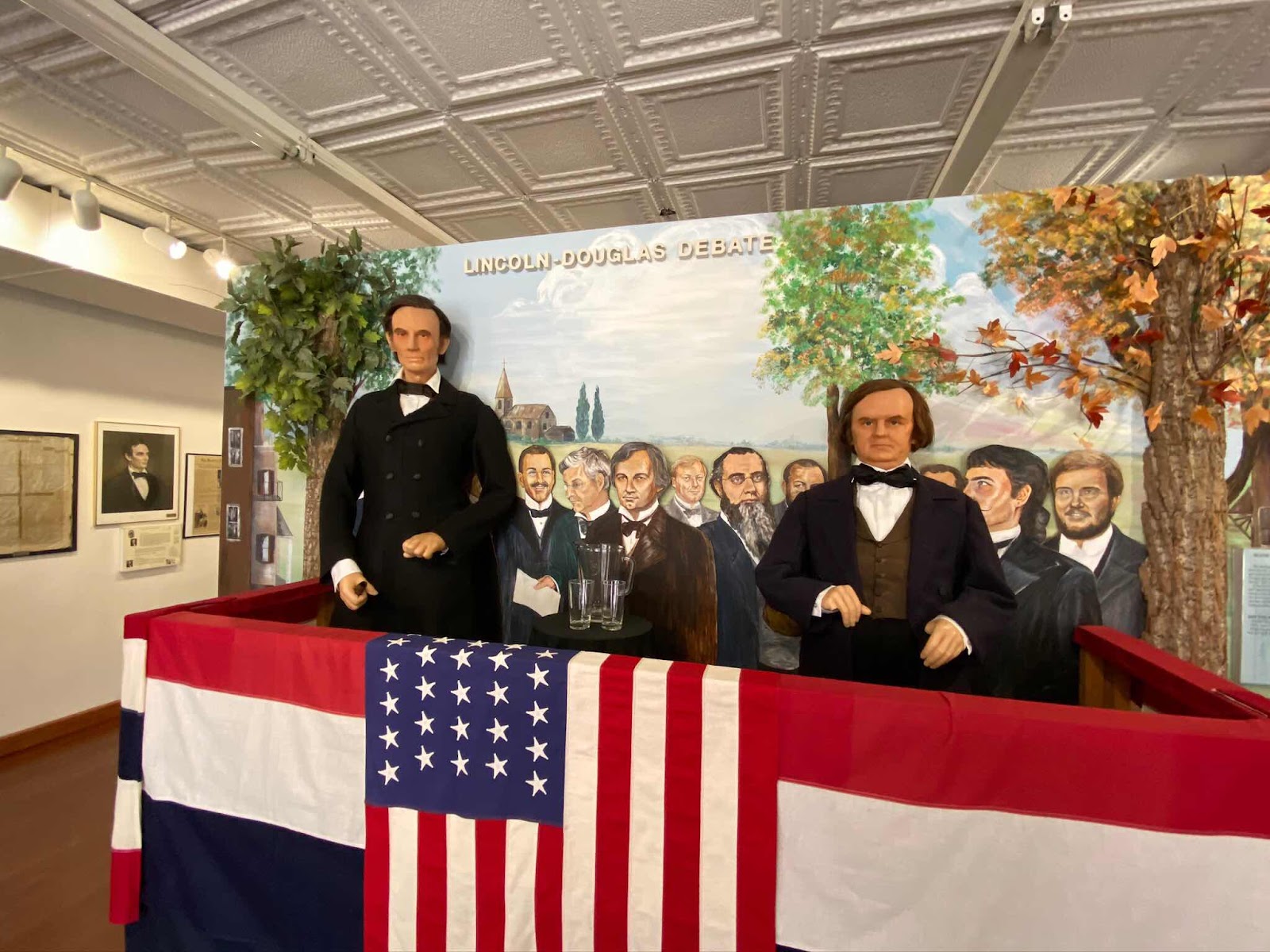
Brief Tour of a Few Abraham Lincoln Sites in Kentucky

After my brief trip to Perryville  I decided to spend a night in the area and do some more “heritage tourism” by visiting a couple other sites I had not seen for several years. 

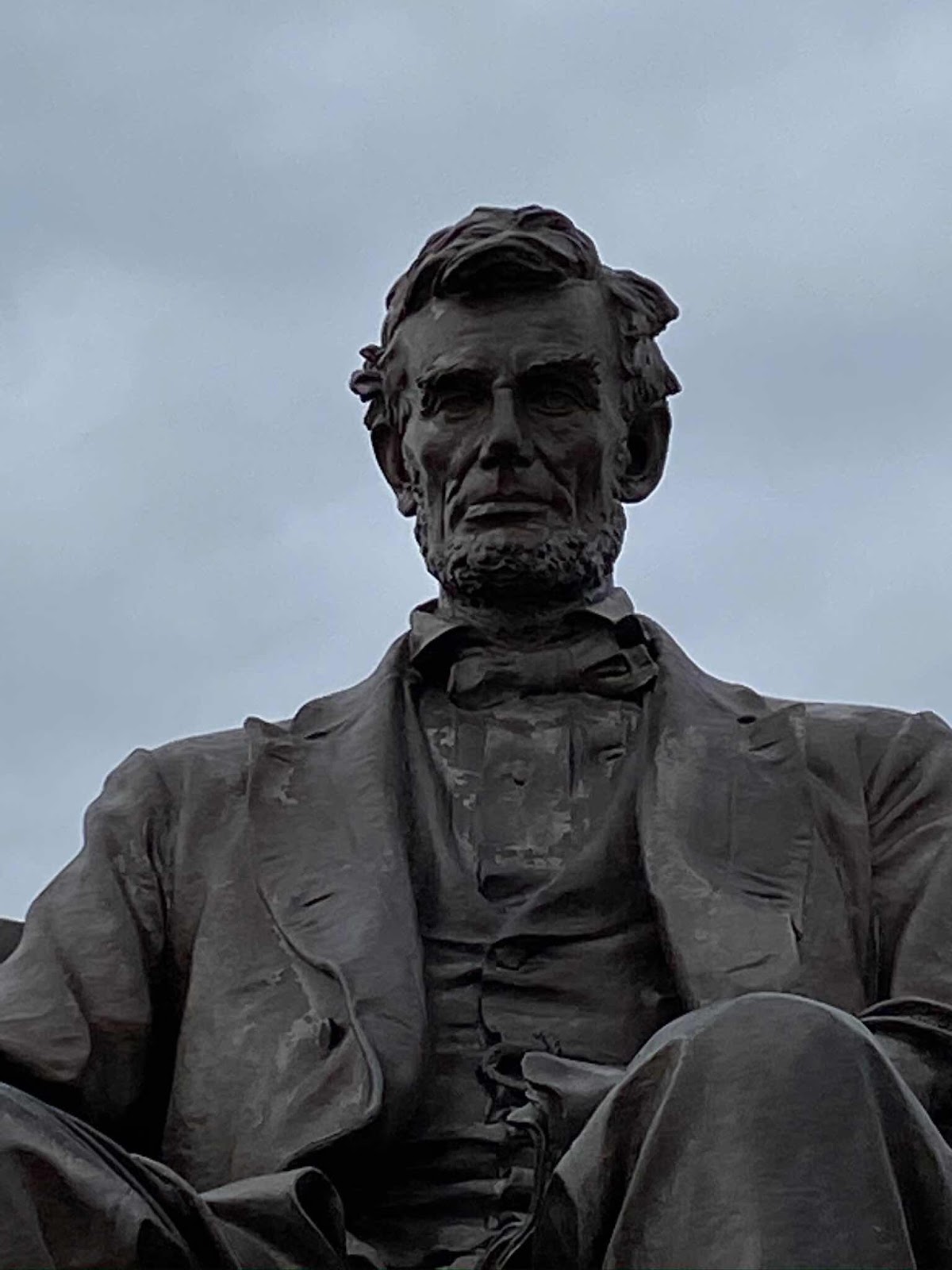
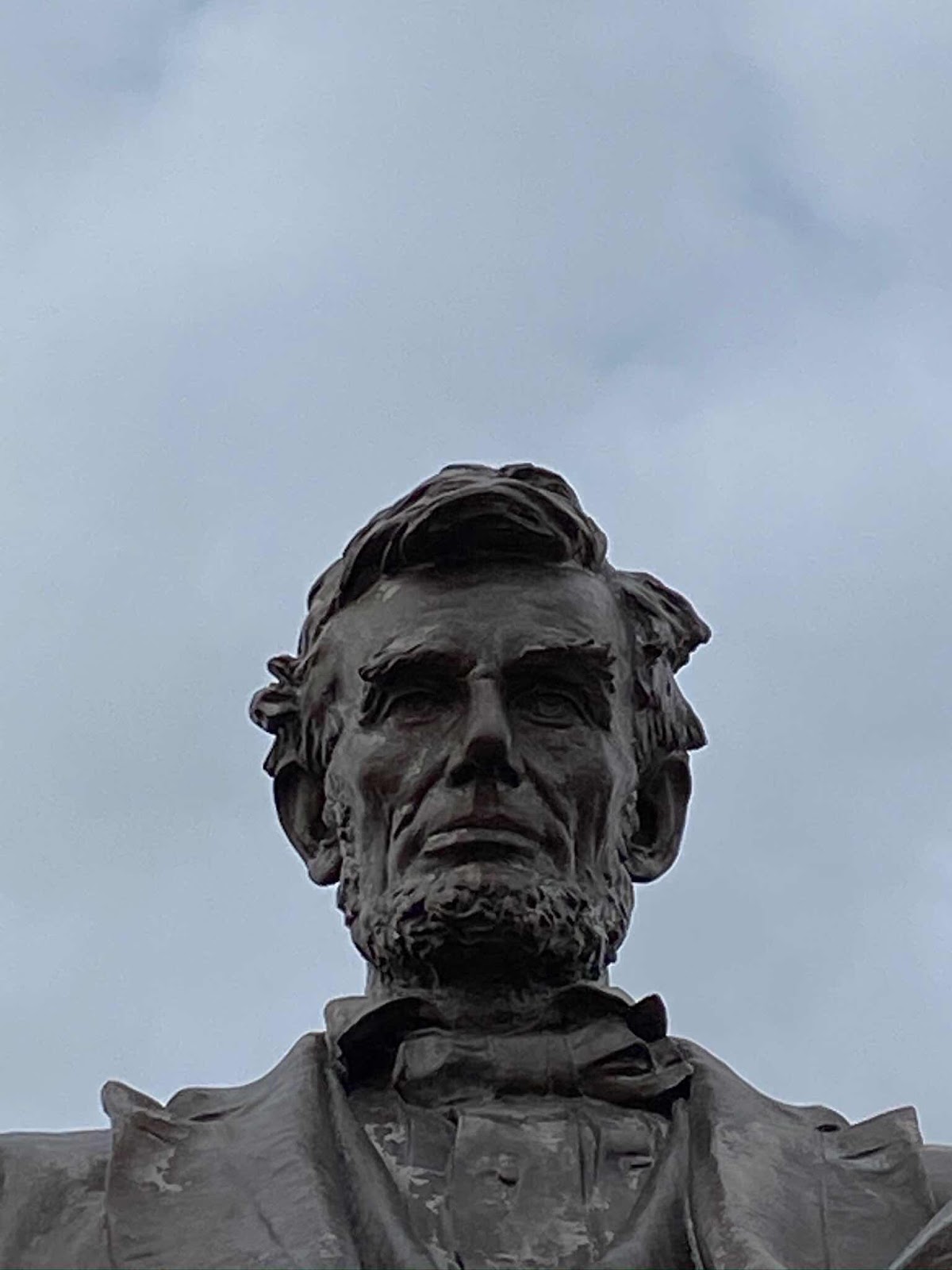
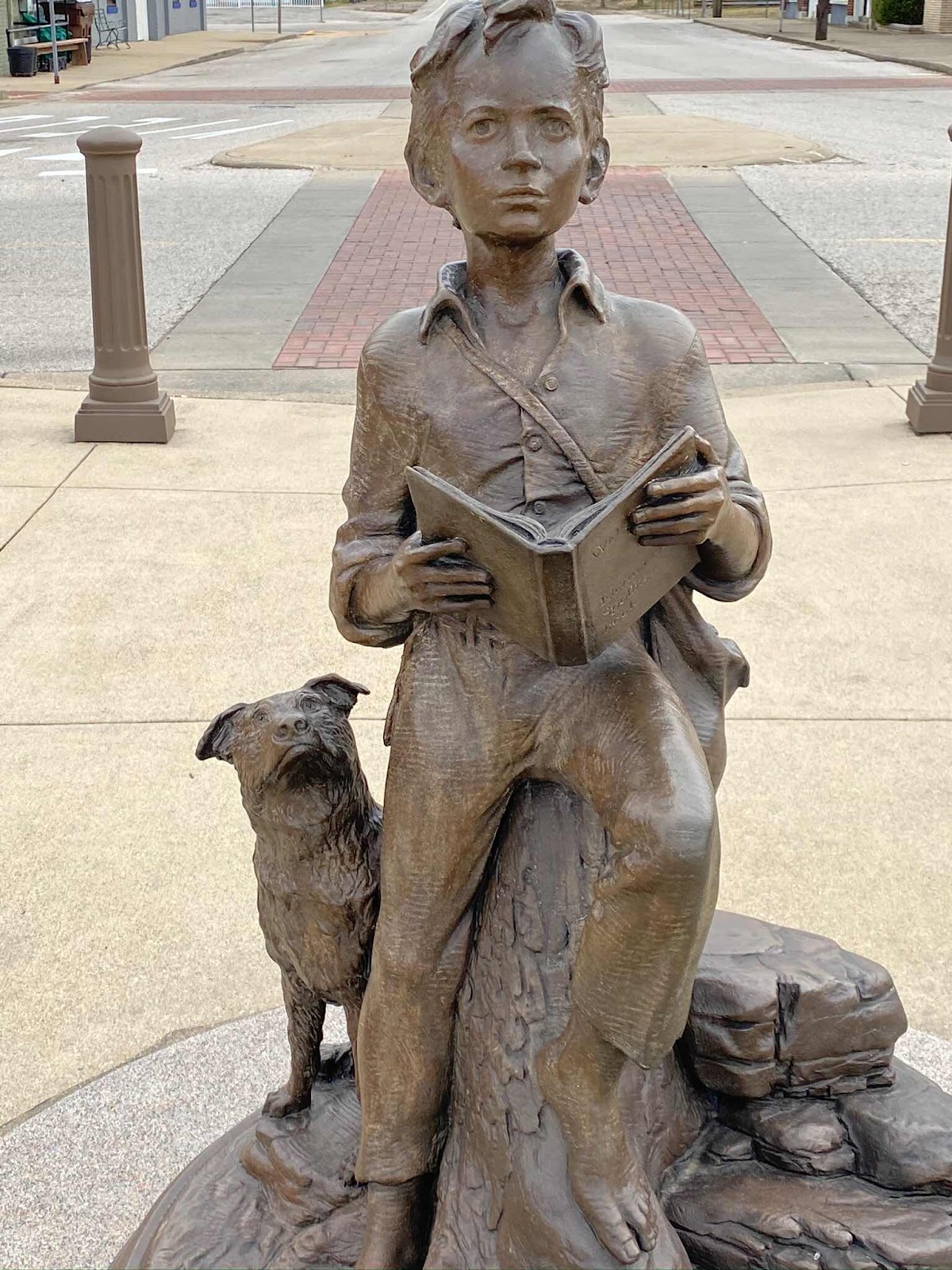
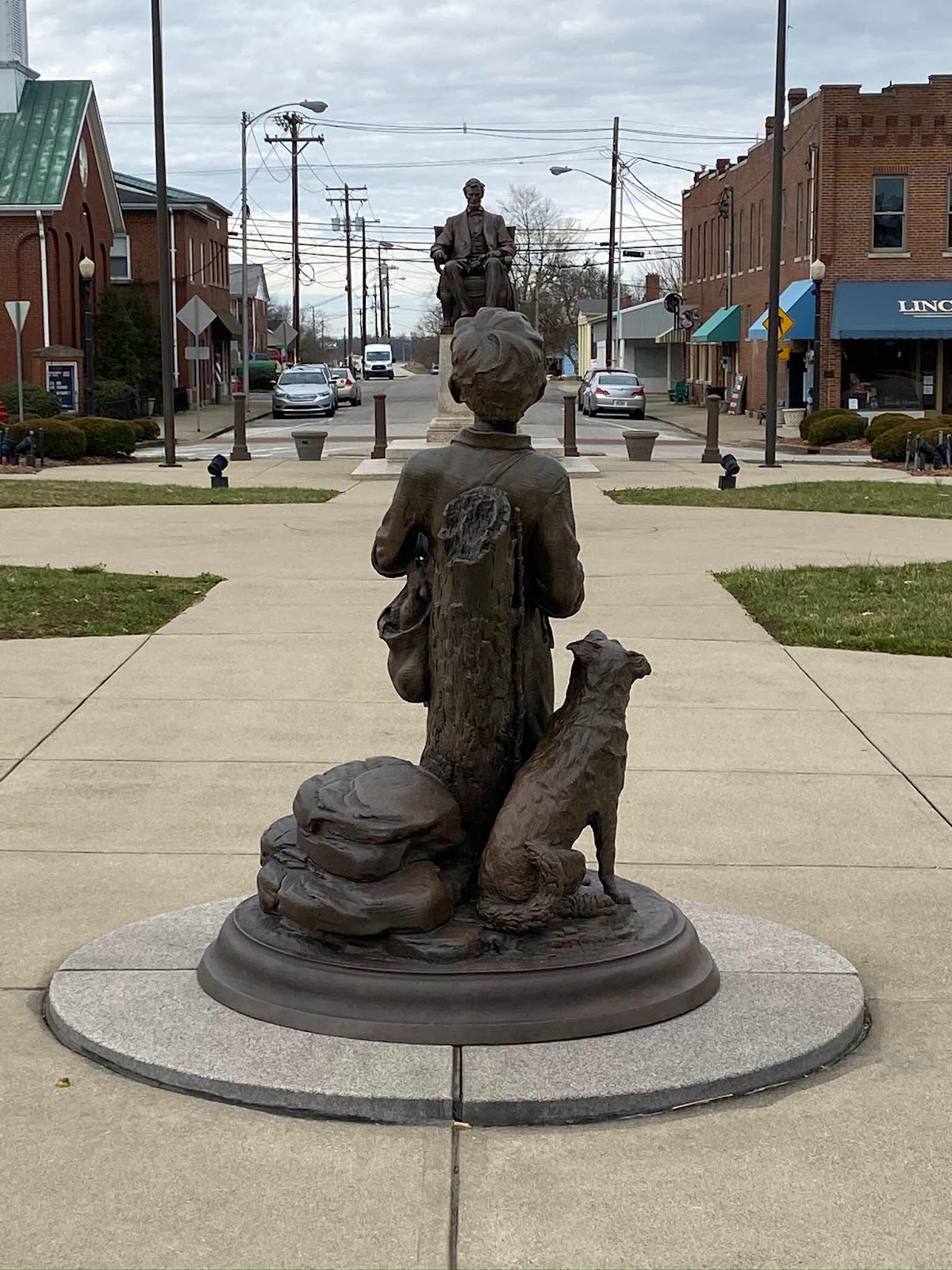
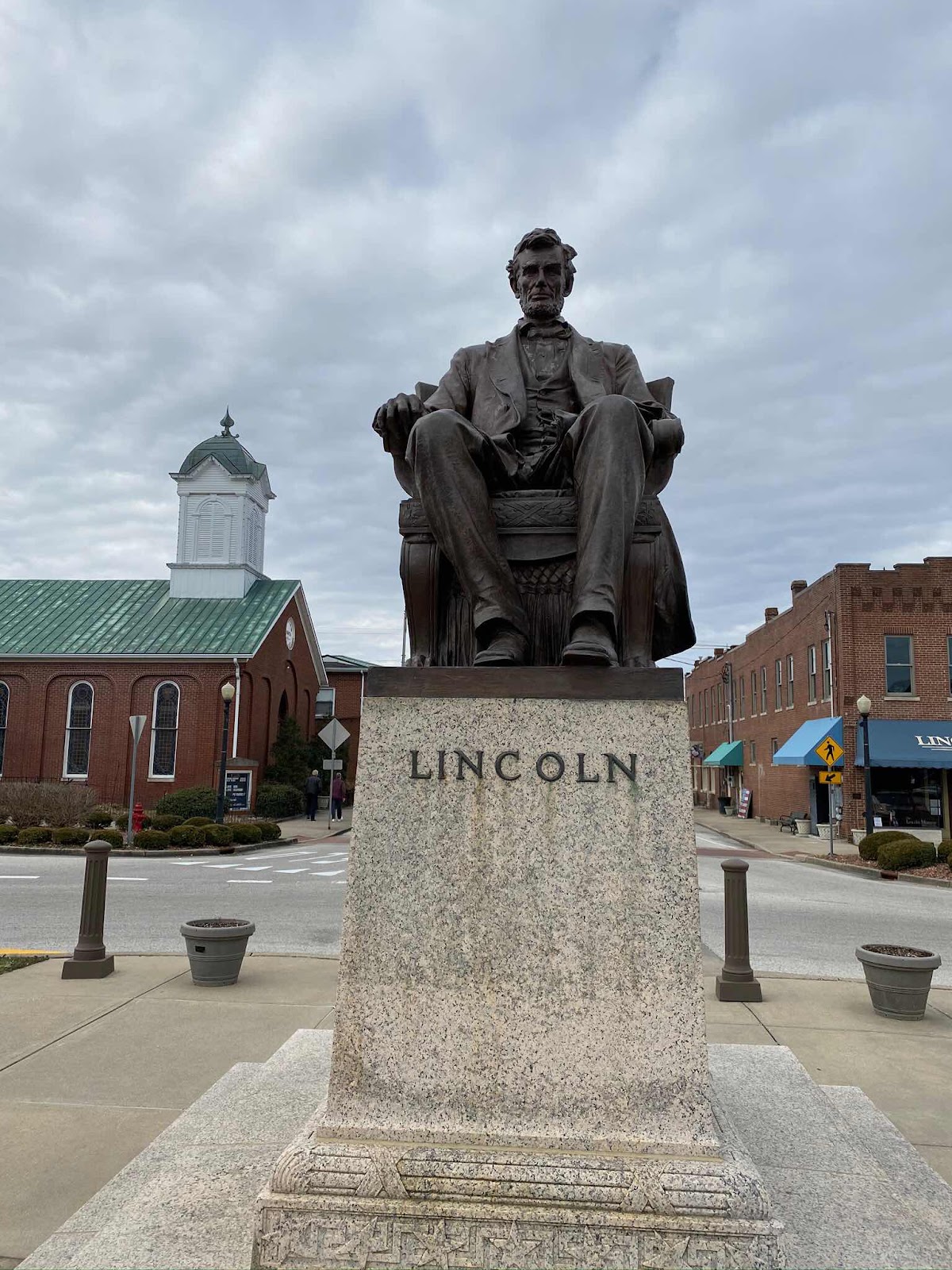
I visited the small town of Hodgenville to look at the large Abraham Lincoln statue in the middle of the town and the smaller statue of Lincoln the boy that I had forgotten was there.

It was an enjoyable trip. The museum in Hodgenville is not huge, but is very nice. It is definitely worth a visit, especially if you’re already in the area, since it is not at all far from the birthplace. It is also near several other great tourist attractions and in hindsight I wish I had planned my trip more and made stops at Shaker Village, Fort Harrod, My Old Kentucky Home and the Civil War Museum in Bardstown. A trip to Danville would have been nice too.  Other readers might like the area because of the Bourbon Trail and the choices it offers, though that’s not for me. It is a wonderful region of the state, very scenic and with a lot of history. 

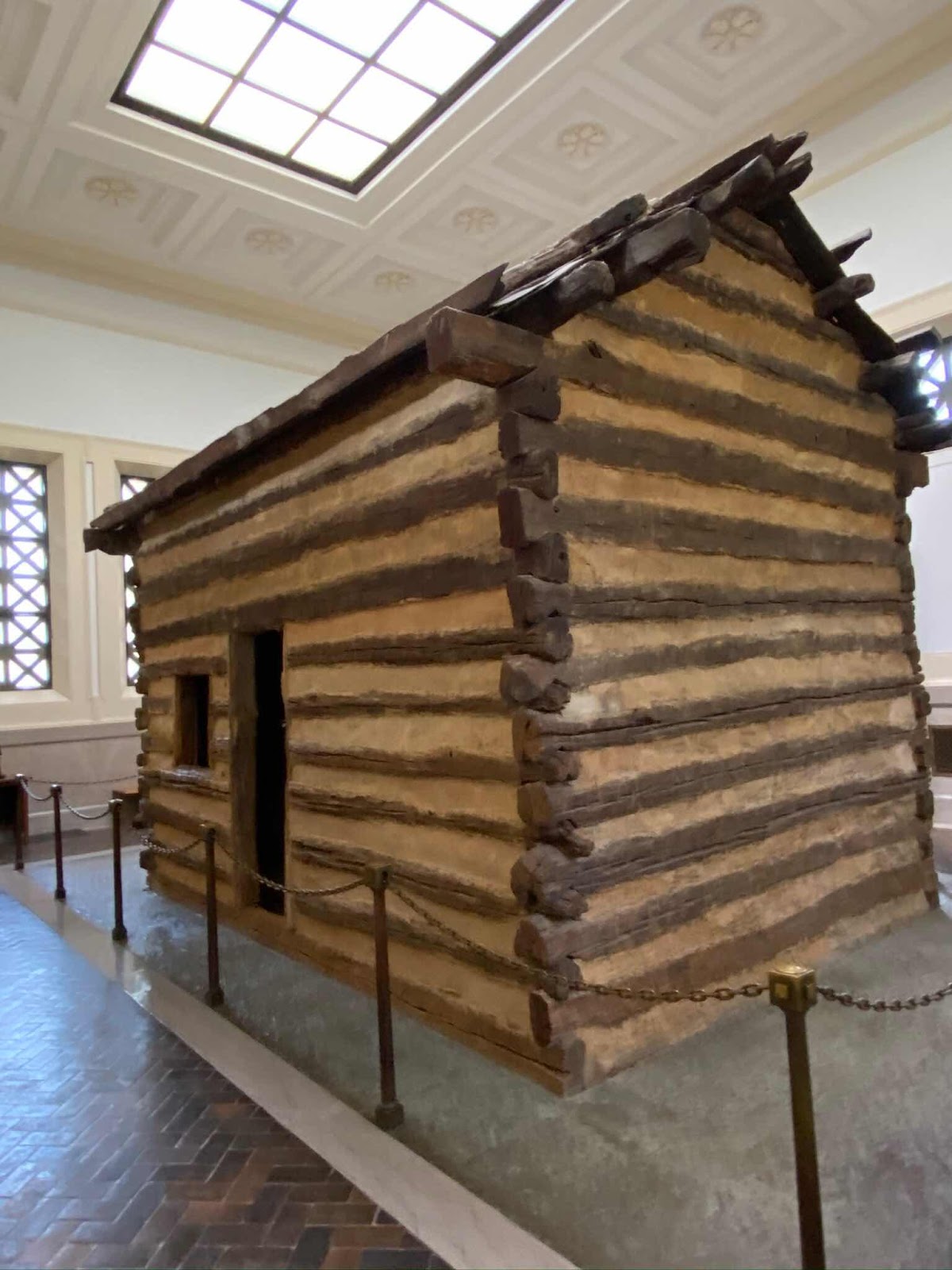
Here are some photos. The sky was not as perfectly clear as the day before, but it was a warmer day and stayed dry, so I cannot complain at all, especially in February.


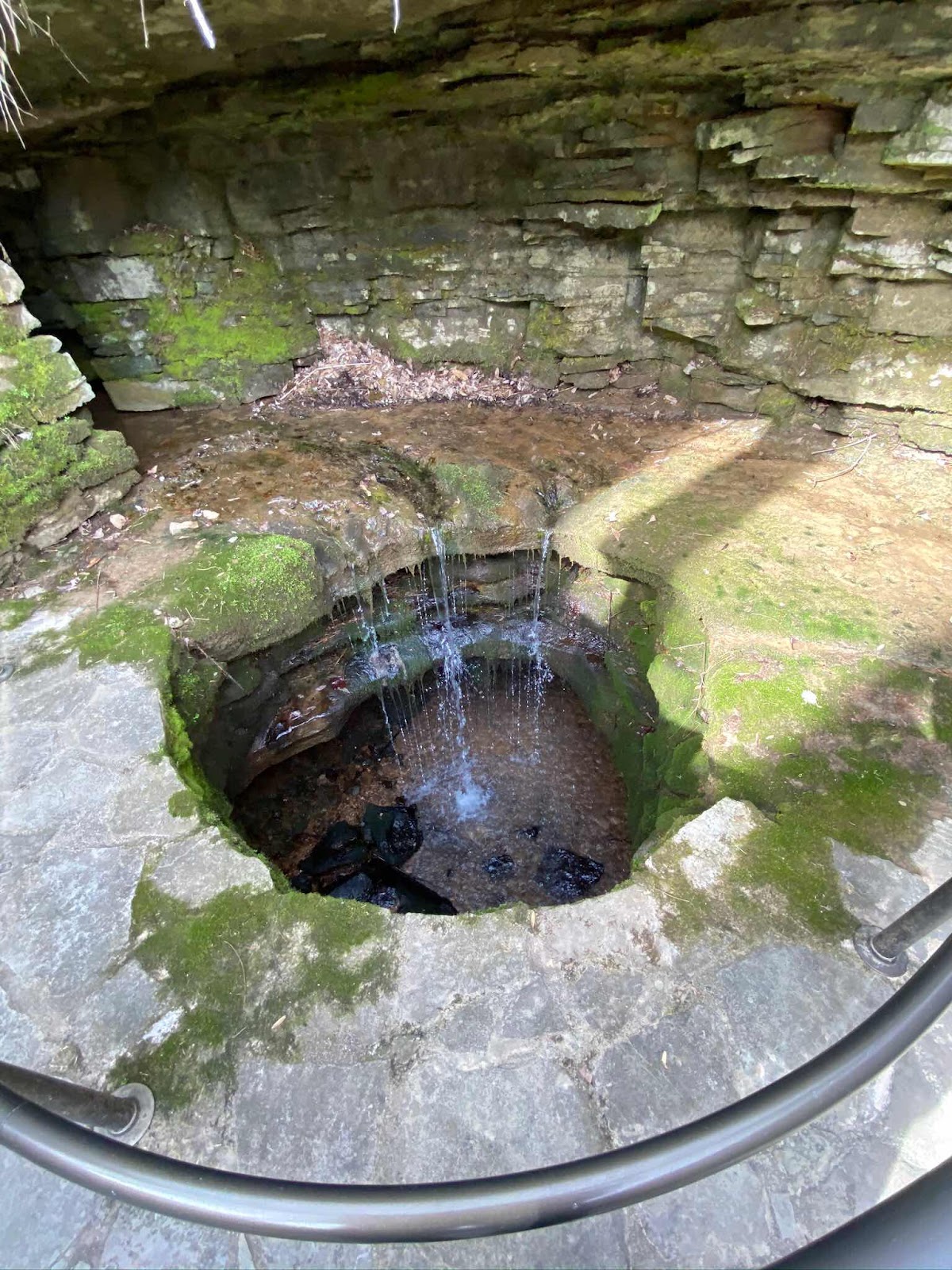
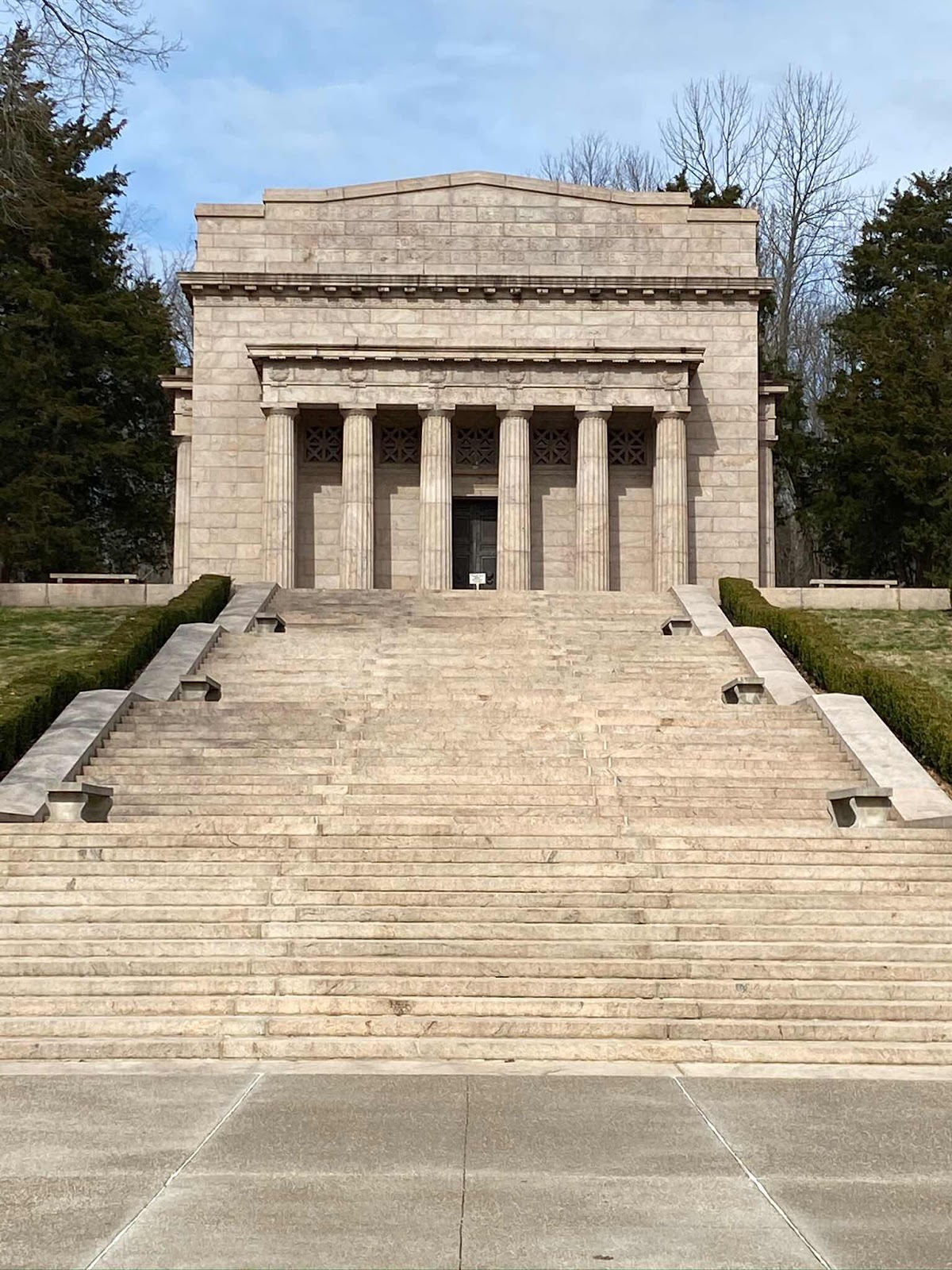
The nearby museum was not yet open, so I headed to Lincoln’s Birthplace at the Sinking Spring Farm. 


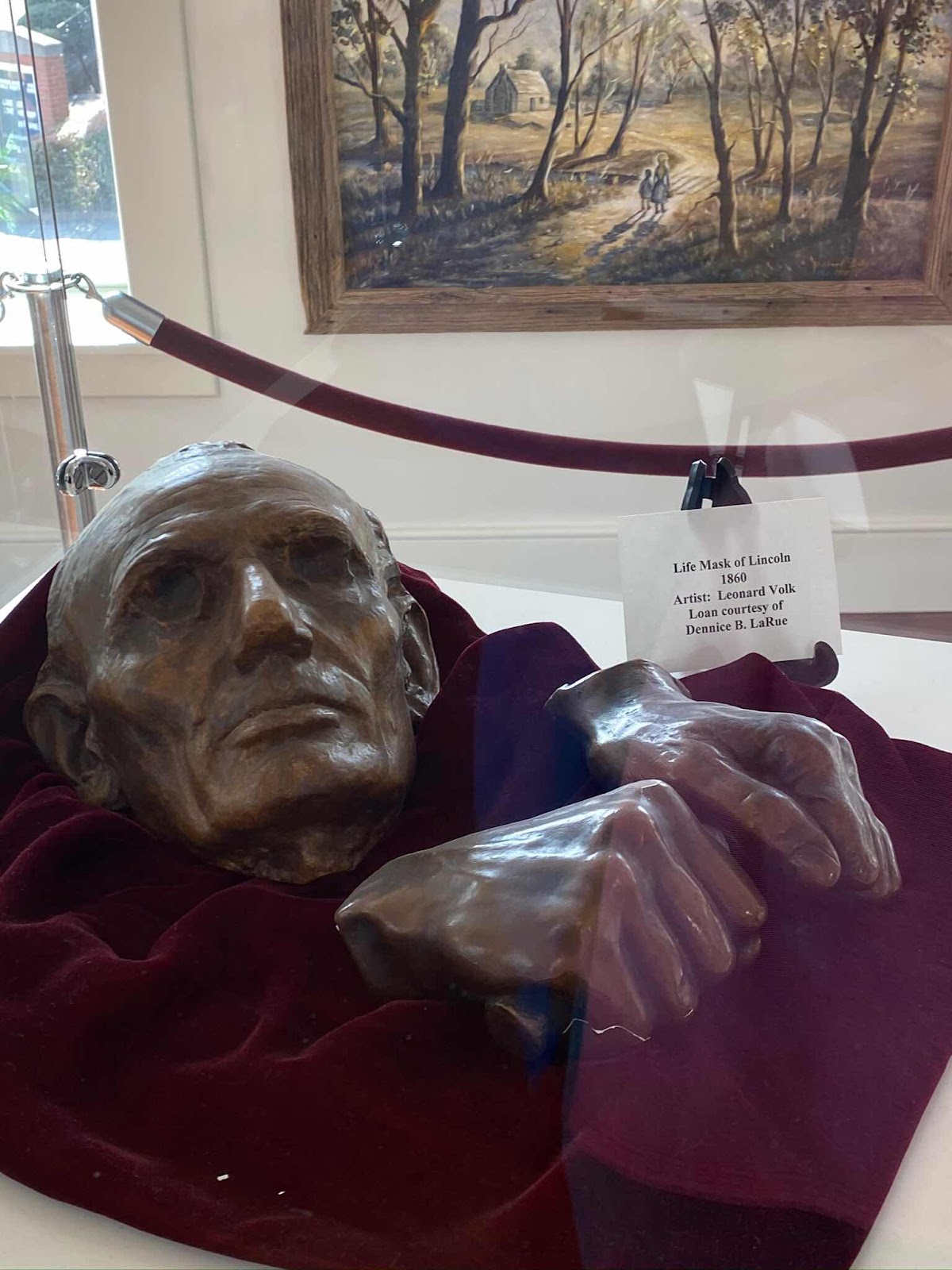
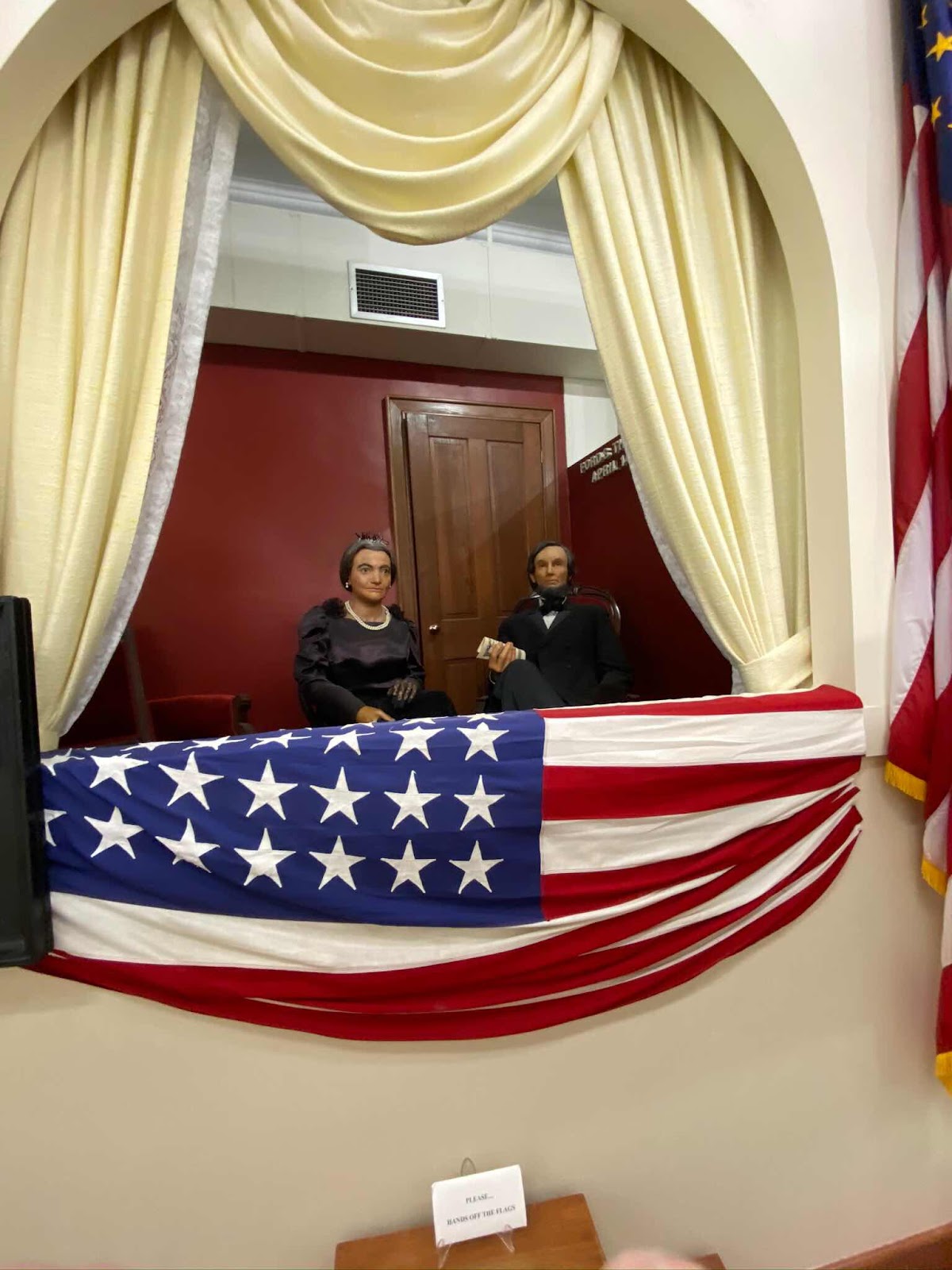
I then returned to town to visit  the Lincoln Museum once its opening hour had arrived.  It is a neat little museum, certainly worth visiting. Here are just a few scenes from it.


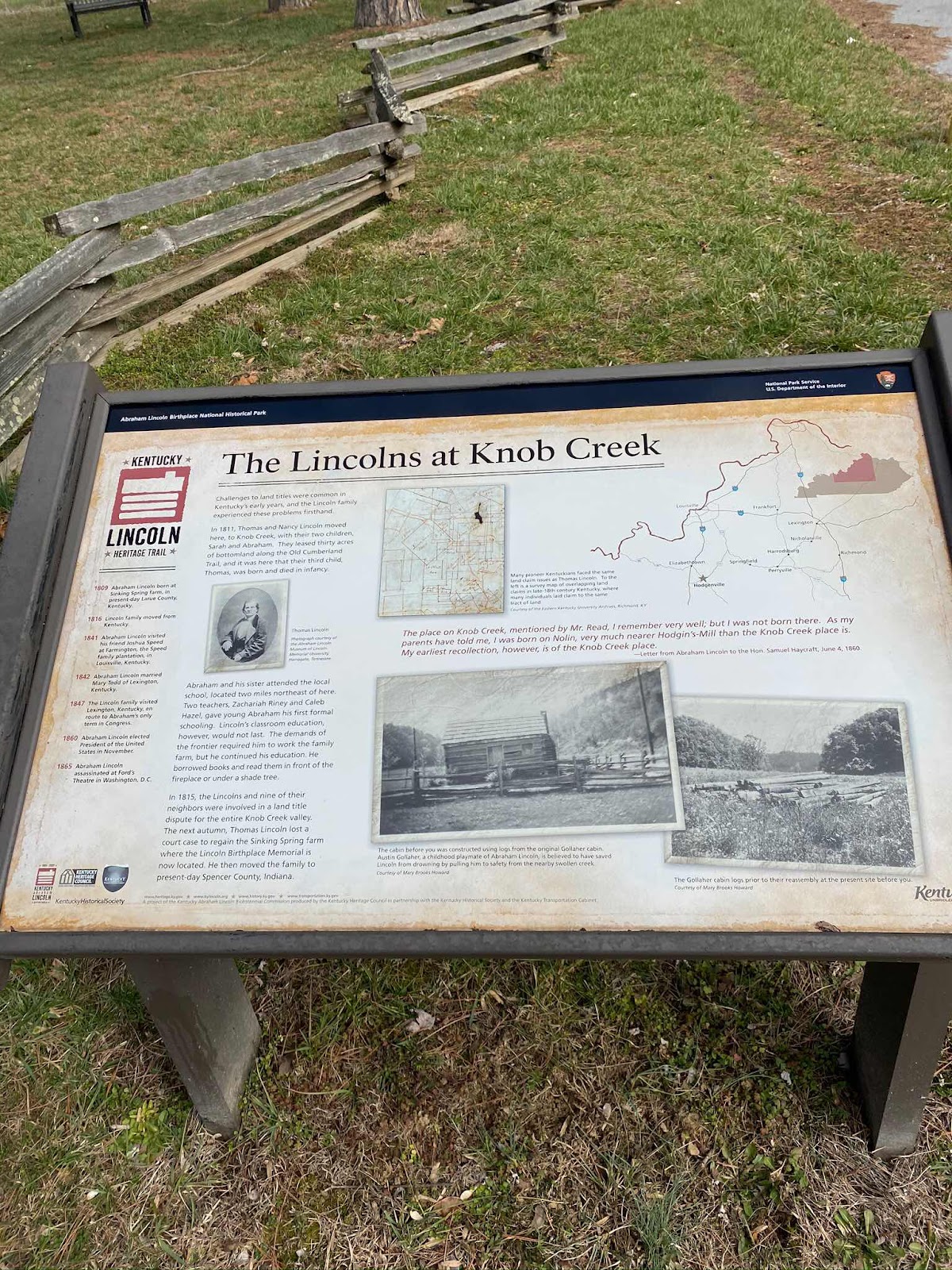
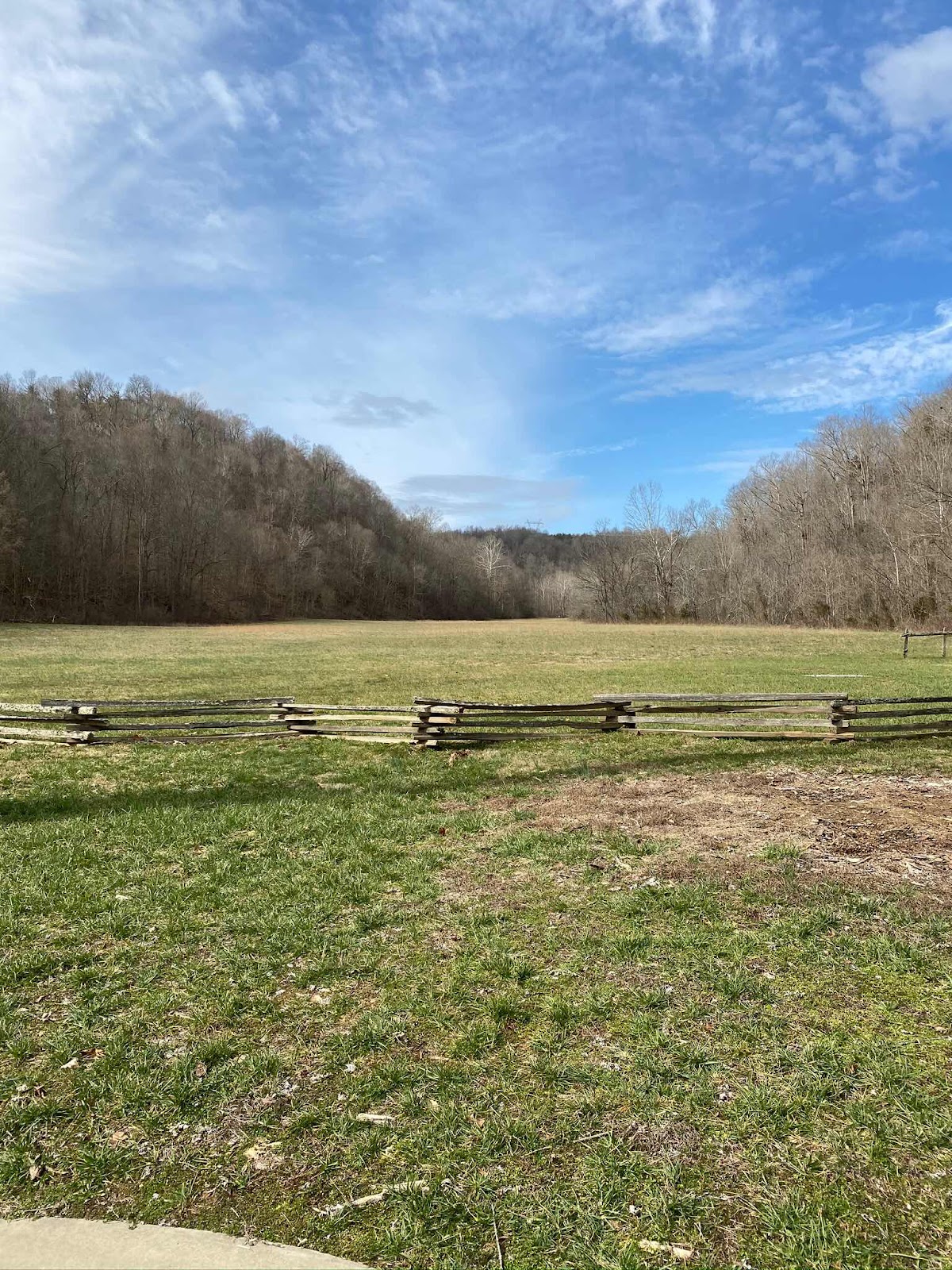
Here are a pair of views from Lincoln’s Boyhood Hone on the Knob  Creek land


Tuesday, November 19, 2019

Why a Body-Guard?: Lincoln’s Trip to Gettysburg (And Other Commentary)

I was curious about what the Cincinnati Enquirer printed about the Gettysburg Address, though, having read other of its articles from this period, I had some idea of what to expect. 

Unfortunately, I could find no opinions about Lincoln’s few appropriate remarks directly from this journal. It did reprint an article from a Pennsylvania newspaper ridiculing Lincoln’s refusal to give an impromptu talk when a crowd serenaded him, but made no mention of his actual speech on that November day. 

The Enquirer did, however, provide a commentary about the President’s use of a group of soldiers as a bodyguard, an editorial easy to question now, with the knowledge of what happened at Ford’s Theater about seventeen months after these comments. It followed this with more editorializing about the administration. 

I do find it interesting that the author did at least use terms like “our arms” and “our armies” to advertise his loyalty to the United States while showing that he was obviously not a fan of the nation’s strategies or its “simple-minded President.”

The Enquirer published this piece on November 24, 1863.


Special Correspondence of the Enquirer
FROM WASHINGTON 

The President and his Body-Guard Gone on an Excursion - why Have a  a Body-Guard for a Republican President  - How Halleck is Snubbed by the President and a Secretary of War - Halleck Wants to Attack Richmond from the South - How Not to do It! - The Solution Found In Butler

Washington November 19, 1863 

The President, accompanied by two members of the Cabinet, several other dignitaries, and some of the foreign ministers, left  here yesterday in a special train, in order to attend the ceremonies of the dedication of the Soldiers’ Cemetery at Gettysburg. The President was es orated by a body-guard of soldiers. Why a body-guard of soldiers? No other President ever travelled so escorted. True we are at war. But the President was not going to the front. If he had been going to the front, to see how Gen. Meade was progressing in obeying his famous order to “find and fight the rebel army immediately,” then a body-guard of cavalry would have been eminently proper. Nay, no one even thought of objecting, when the successor of Washington and the “heir to the aspirations of John Brown” was seen every day during the summer, riding from the White House to the Soldiers’ Home, and back again, with his carriage escorted by a squadron of cavalry. For at that time, to the national disgrace be it said, if not so attended, Mr.Lincoln was in real danger of being captured and carried bodily off by bands of Confederate soldiers, who always found means to get within our lines; and who, under that singular man Mosby’s, even yet make their daily incursions to within sight of the dome of the Capitol. Besides, that mode of escort was so much more decorous and becoming than the one devised by the simple-minded President himself; namely, having a big infantry recruit, with his blunderbuss in hand, bundled into the carriage with the Chief Magistrate, and another one, similarly armed, seated beside the driver. Such was actually Mr. Lincoln’s body-guard, until it occurred to Halleck, who happened to see it one day, that that was not exactly the manner in which his President should be escorted. Then, and therefore, came the squadron of cavalry.

If the incongruity of a plain Republican President, thus assuming the state and manners of a King, struck for a moment, it was quickly followed by the recollection that the individual thus guarded by flashing sabers and all the panoply had usurped and exercised powers that no King of England would have dared to assume.

But why the body-guard of soldiers to go from Washington to Gettysburg in Pennsylvania? Not in order that the President may appear in due honor there, for there will be thousands of soldiers there to escort him. Not as a retinue en route, for the distinguished party who went in the same train formed a retinue composed of men of such position and distinction as an a Emperor might be proud of. The truth may as well be told. Mr. Lincoln never passed through Baltimore since the night when he went through that city in disguise; and he is afraid of it. Fears for his personal safety, and that alone, led him to take his military escort with him. Of course it would be an insult to your readers to say a word as to the utter groundless of any such fears; but this it is, that “conscience doth make cowards of us all.” 

The want of success which so often attends our arms; the fact that even the victories gained by our armies are always barren of results; the fact, in a word, that the war is no nearer a termination now than it was two years ago, is generally attributed to General Halleck. This is natural, because Halleck is nominally the General-in-chief of the army. But the fact is, General Halleck exercises very little authority in the management of the war, and none at all where his views come with those of either Mr. Lincoln or the Secretary of War. On such occasions (and they occur very often) Halleck is practically a cipher. Judged by a European standard, by the side of such Generals as Napoleon, Moreau, Ney, Desaix, McDonald, and Keebler, Halleck does not rank as a third-rate or a fourth-rate soldier. But when it is remembered that, of the trio who our conducting our campaigns, he is the only one who has even any pretensions to military knowledge, and that he is constantly snubbed and put down by the other two, how can we ever expect success? 

An illustration of this has just occurred. Because the Pennisula route to Richmond was the choice of a general McClellan; and  ecause that officer believed, in common with all other Generals who have enjoyed a military education, that the route affords the best opportunities for the capture of Richmond, therefore the Administration has decided never again to make a campaign on that route. In this decision Halleck concurred, and still concurs. Because General McClellan is known to believe that, for military reasons, it is impractical to reach Richmond by the overland route (a belief which the successive defeats on that route of Burnside, Pope, Burnside again, Hooker, and Hooker a second time, and the retreat of Meade, have proved to be well-founded,) therefore, the Administration has decided that that route, and that alone, shall be the only one in which our armies shall march to Richmond. In this decision, too, Halleck concurred; but he concurs in it no longer.

Every one who has studied the matter attentively, and with the aid of good maps, must have perceived that the present is the moment for making an attack on Richmond from the direction of Norfolk, Suffolk, and Petersburg; or at least for an expedition from Suffolk or Newberne (sic, i.e. New Bern), which, striking the Wilmington Railroad at Goldsborough or Weldon, shall destroy enough of that road to break up the connection between Richmond and Wilmington. The recent captures of the steamers Robert E. Lee and Cornu is have inflicted a severe blow upon the South. The port of Wilmington is about the only one left through which the Southern States can carry on their foreign commerce. To follow up this blow by an expedition which should destroy, or render useless the railroad between Wilmington and Richmond, would go far towards bringing the war to a termination. The Confederate leaders themselves are impressed with the importance of these facts, and, as I have recently learned, actually anticipate that a demonstration against this railroad, and an attack against Richmond from the South, will form a part of our plans for the winter campaign. General Halleck wishes this to be done; and before the removal of General Foster from the Military Department, he wished him to be reinforced to an amount that would give him the command of 75,000 troops, and intended him to attack Richmond from the south, while General Meade was marching toward it from the north. The President and Secretary of War, however, did not favor the project at all. And just then political considerations intervened, which resulted in the appointment of Butler to supersede General Foster. Of course that puts an effectual quietus on the whole project. Butler is not a fighting General, nor can he plan battles or campaigns for others to fight. His forte is to bully, to threaten, to irritate, and to make war on women and non-combatants. He was just the man to send to Newberne, in order that the war in that locality may be protracted, even at the expense, it may be, of a second Big Bethel. 

If the plan of General Halleck had been carried out, it may be too much to say that Richmond would have fallen this winter. But it is not too much to say that it would have been necessary for the Confederates to have exerted all their energies to save it, and to have concentrated there all of their forces in the East. As matters are now, however, they can easily defend their Capitol, for it is not even seriously threatened. 

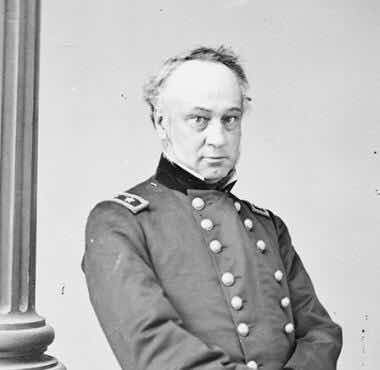
Henry Halleck, from battlefields.org

Tuesday, November 12, 2019

“An Insult to Public Intelligence:” Abraham Lincoln’s Re-Election

Here is another story which seems appropriate to post at this time of the year, similar to a post I did recently.

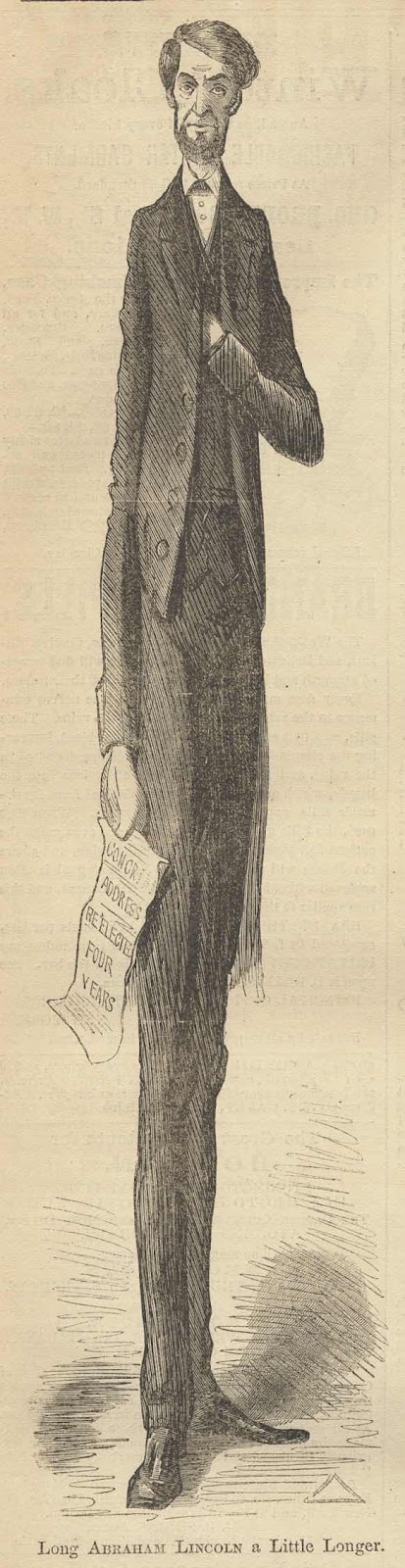
 That previous post described one view of Abraham Lincoln’s election in 1860, so this one naturally concerns his re-election four years later. The Cincinnati Enquirer published this on November 9, 1864. The author certainly did not hide his true feelings.

The Re-Election of Abraham Lincoln

Yesterday broke dark and lowering - the clouds were heavy - a drizzling and dismal rain was falling - and in every respect it was a cheerless and melancholy day; but a fit one for the re-election of ABRAHAM LINCOLN. The physical elements were in entire harmony with that state of the public morals and public intelligence that could repeat, after all the terrible lessons of the past, the horrid mistake of 1860. They were in harmony with the black and cheerless prospect that this re-election of the prime cause of our misfortunes opens to us. Nature, we repeat, sympathizing with the deed about to be committed, put on her most somber robe and darkest colorings. As to the means by which this political result was effected, we have spoken in another article. They will constitute the most woeful chapter in our national history. After making all due allowance for the frauds, forgeries, and rascalities, it will ever remain a wonder how so many hundreds of thousands of electors could deliberately vote to perpetuate the dynasty that is now in power. Not only does it seem to be an insult to public intelligence, but it would appear to be opposed to all the principles which ordinarily governs human nature and human conduct. It can only be accounted for upon the theory that a strange and unaccountable delusion has seized the public mind, giving it all the aspect of confirmed lunacy and madness. 

But it is useless, in this connection, and at this time, to speculate upon causes or express astonishment at results. What is written is written, and what is done is irrevocably finished. We can only hope for the best from this sad event and affliction, which forebodes such calamities to our beloved country. We hope we have in this matter no pride of opinion. Greatly should we rejoice if the future, which now appears to be of so frightful a character, should be robbed, as we approach it, of the evils that apparently attend it, and that some sparkling jewels may be found in the head of the ugly and venomous toad that is burrowing under the tree of American liberty. 

But with all the aid that philosophy can summon - with all the hope of the patriot - we can not draw aside the veil that hides another period of Mr. Lincoln’s administration without the greatest dread and apprehension. We are now embarked in a current that leads straight to the rapids of destruction, toward which the ship of State with all its priceless cargo is drawing near with frightful velocity. If we fail to be engulfed in its inmost depths under such pilotage as that of Mr. Lincoln, it will be the most remarkable miracle that was ever performed. 


"Long Abraham Lincoln a Little Longer"
From publications.newberry.org

Monday, November 4, 2019

“Their Triumph:” One Reaction to Abraham Lincoln’s Election

The Cincinnati Enquirer of November 8, 1860 included this brief commentary on one of the immediate effects of Abraham Lincoln’s election as President of the United States. It seems like a story worth sharing during election season.

The Negroes and the Election

The negroes in this city yesterday were greatly exhilarated by the triumph of Lincoln, and gave vent to their feelings in the most enthusiastic manner. They seemed to understand that it was emphatically their triumph; and all believe that it is the harbinger of Abolition in the South and negro equality in the North! In the Slave states the same belief extensively prevails. In this connection we will relate an anecdote or two to illustrate their feeling.

The other day, in Lexington, as we were assured by a Kentucky gentleman, while a lady was fitting a dress upon one of her slaves, a girl about nine years of age, the latter remarked that, if her mistress would give her another real nice dress, she would stay with her after the election! 

A few days since a Kentucky farmer, in Scott County, overheard one of his negroes inform his colleagues that, no matter what they did, he should stay with his master after the election! 

It will be remembered that, in 1856, a report was current in Tennessee among the negroes, that FREMONT had been elected, and was at the mouth of the Cumberland River, with a large force to set them free. They became insubordinate, and an extensive conspiracy and insurrection was the result. There can hardly be a doubt that the election of LINCOLN will have a bad effect upon the negroes, rendering those at the North saucy and insolent, and in the South insubordinate. 

—————

The author - consciously or not - reinforced the “loyal slave narrative” that some slavery defenders used in claiming that slaves accepted or even liked being slaves, their situation and that they loved their masters while being naturally subordinate. Though these anecdotes at least implied it was possible that those slaves might leave, their conclusions supported the idea of the servants’ loyalty, before the final paragraph contradicted that view. The only word that seems to be missing from that final stanza is “uppity,” though I do not know if that was a word in those days. At least those closing lines acknowledge that slaves were able to desire change in their status and that not all slaves would be content to remain faithful and passive chattel.

This story also demonstrates the reality that even a newspaper editor in Ohio, a free state, did not maintain a positive attitude towards slaves and showed no sympathy towards them.


Sunday, April 14, 2019

Thinking of Abraham Lincoln on April 14


On this April 14, I decided to write a few lines about my thoughts on Abraham Lincoln. This is not a book review or anything I have researched or drafted - just a few random thoughts that I decided to share on this 154th anniversary of such a sad, tragic day.

I've always admired Lincoln's work ethic and focus. Even when he lost an election in Illinois, struggled to make a living in New Salem or faced difficulties dealing with women, he just "kept on keeping on." He did have a bout of depression and certainly had tough times, but none of them stopped him until the horrendous act at Ford's Theater on that awful Good Friday. He kept moving forward in life, from poor boy, to store clerk, to surveyor, attorney, state legislator, Congressman and President.
 mor
Of course, it is impossible to write about Lincoln without noting his writing skills. His speeches and papers are so incredible. I especially like his Second Inaugural, even though every time I start to claim that as my favorite of his works, I keep coming back to the brevity of and phrasing in the Gettysburg Address. I simply cannot make a decision on which I prefer, though I think the Second Inaugural deserves more attention than it gets. "With malice towards none, with charity for all" is just a brilliant phrase, even if not as well-known as "Four score and seven years ago."

Part of this post, I admit, is because I have not written much lately, but on Facebook this morning I someone mention that he/she makes a Lincoln post on this date every year. I don't know that I will do that, but it is a good idea that I wish I had thought of and I am going to "borrow" that idea at least for today.

Lincoln was born in Kentucky and when I was in elementary school, I learned that fact. Since I also was born in the Bluegrass State, that fact caught my attention. I guess I have always enjoyed stuff with a local connection or else a love of Kentucky was always a part of me. I have admired him since my school days and when I read about Lincoln, the Civil War was a natural off-shoot of that reading and my love of the war developed from there.

A few years ago, I took a trip to Lincoln's birthplace and boyhood home in Hodgenville. The birthplace building was closed for renovation so I did not go through it and have not made a return trip. That would be a good idea for this summer, but I said the same thing last year. It is easy to say things or make plans than to do them.

Last year, I did read a biography on John Wilkes Booth. I had previously thought I would never do such a thing, as it felt weird to study the creator of such a horrible act, but I am glad I read it. It humanized Booth, yet still showed the awful, perhaps cowardly, side of him that led to the tragedy at the theater. His life was more than that one act and though April 14, 1865 properly does define his legacy, there was a lifetime that led up to it and he did have family and friends, just like other people. He was not born a monster who spent his entire life doing such deeds. I still have not read any of the books specifically about the assassination and the hunt for Booth and maybe I should. Like the travelling, though, that is easier said than done.

I know this is far from my best or most in-depth post, but it does feel good to type these words and express my thoughts on this date and I am glad I saw the Facebook post that gave me the idea.

Abraham Lincoln is, has been and will continue to be the historical figure I admire the most. There is no doubt about it. His strength, ambition, persistence, intelligence and many other traits made him a fascinating character and the situation in which he found himself as President gave him the opportunity to prove his greatness. He was the right man at the right place at the right time.

Monday, November 19, 2018

Gettysburg Address

This is a post I’ve made a few times over the years. I know it is not the most original or in-depth commentary, but it is something I just feel the need to post almost every year. These words are still as brilliant as ever and the writing style, such as the repetition of “we cannot” at the start of the final paragraph, remains as impressive as the actual words. I still enjoy reading it and hope you will too.

Four score and seven years ago our fathers brought forth on this continent, a new nation, conceived in Liberty, and dedicated to the proposition that all men are created equal. 
Now we are engaged in a great civil war, testing whether that nation, or any nation so conceived and so dedicated, can long endure. We are met on a great battle-field of that war. We have come to dedicate a portion of that field, as a final resting place for those who here gave their lives that that nation might live. It is altogether fitting and proper that we should do this. 
But, in a larger sense, we can not dedicate -- we can not consecrate -- we can not hallow -- this ground. The brave men, living and dead, who struggled here, have consecrated it, far above our poor power to add or detract. The world will little note, nor long remember what we say here, but it can never forget what they did here. It is for us the living, rather, to be dedicated here to the unfinished work which they who fought here have thus far so nobly advanced. It is rather for us to be here dedicated to the great task remaining before us -- that from these honored dead we take increased devotion to that cause for which they gave the last full measure of devotion -- that we here highly resolve that these dead shall not have died in vain -- that this nation, under God, shall have a new birth of freedom -- and that government of the people, by the people, for the people, shall not perish from the earth.


Image from Abraham-Lincoln-History.org


Sunday, August 12, 2018

Book Review: Mrs. Lincoln by Catherine Clinton


By Catherine Clinton
  (c) 2009
Harper

Before reading this book, one I have wanted to read for quite a while, I expected to feel much pity for Mary Lincoln after reading it, like I did after watching the movie Lincoln, and while I do feel some of the sentiment, I am in a quandary, as I also feel a different, unsympathetic feeling, perhaps as harsh as derision, or at least frustration, towards her.  This book describes a complicated, confusing, sad, tragic, ambitious, successful woman and life. She was strong, yet weak, intelligent, yet naïve, independent, yet self-identified with her husband and his career.  I realize that some of those descriptions are redundant or contrasting, but I find that an appropriate way to describe the subject of this book.  She was simply human, but not a simple hunan, and this book does a terrific job of exploring the many competing facets of her life.

These various aspects of Mary Lincoln form a main topic of this book, which serves as a biography of both the former Mary Todd and of her marriage. Though her life certainly takes priority, telling the story of Mary Lincoln simply requires a discussion of her husband and marriage. It is inescapable, even after the assassination, as Clinton notes: Her identity was wholly bound up with remaining Mrs. Lincoln (page 287).

That line is an accurate summary of Mary’s post-1865 life, but this book starts much earlier, thoroughly discussing her early life, including the tragic loss of her mother, the coming of her step-mother and the ever increasing size of her nuclear family, with so many siblings and half-siblings.

I must admit that when I think of the tragedies in Mary’s life, the loss of her mother often escapes my mind, but this book illustrates how great a loss this was for her, as well as the difficulty of having a step-mother and so many half-siblings. The tension in this large family is evident in this book and the author shows that this situation hurt Mary, the first major loss of her life, but certainly not the last. 

Mary grew up in a well-to-do Southern household, a lifestyle that influenced her expectations of life going forward. To paraphrase a popular saying, you can take the girl out of the South, but you can’t take the South out of the girl. This was largely true of Mary, who constantly expected the same type of life and socializing she witnessed in her youth. She did, to her credit, grow to disapprove of slavery, an institution with which she grew up, but otherwise saw herself as a Southern belle, with the expectations of being treated as such. Clinton describes this dominant part of Mary’s personality throughout the book. 

One word used more than once in this work was “entitled,” a fair description of Mary’s attitude. She liked being the center of attention and expected to receive attention, respect, and even admiration due to her position of First Lady and, later, in a term she coined, “First Widow.”  She did make some attempts to help herself, one time resulting in the embarrassing “Old Clothes” scandal, but also expected gratitude from the government and from people who she believed benefited greatly from her husband’s Presidency. This is another theme explored throughout the book, but especially in the discussion of the post-1865 years.

Page 329 offered up another memorable line describing Mary’s attitude, this time in reference to the assassination of James Garfield: when she discovered there was a movement afoot to offer government funds to provide for Gardield’s widow and five fatherless children, Mary, not uncharacteristically, thought of herself (my emphasis added.). She had adored her husband and children and spent much time and energy visiting wounded troops in the hospitals, but  could often be much less unselfish.

Clinton discusses many aspects and incidents of Mary’s life including her love of youngest son Tad and the devastation his death caused her. Of course, her commitment to an insane asylum by eldest son Robert receives much attention, including discussion of the unfairness of the trial and the grudge Mary understandably held against Robert for years. Her behavior during these years, especially concerning issues of money is examined and the author points out possible legitimate mental health issues Mary may have suffered, while also giving examples of times when Mary’s faculties were working very well. The complexity of the questions of her mental health apply to the complexity of her whole life as well. 

This is a riveting book about a complex woman who led a fascinating, sad, complicated life. To keep this review to a reasonable length, I will not attempt to mention all the specific incidents it covers, but the author does an outstanding job of presenting evidence and then analyzing it. An especially noteworthy example of this is the description of Mary’s temper, jealousy, and behavior towards Julia Grant and other women during a late war trip to Virginia. 

At the end of the work, Clinton adds a few paragraphs about Mary’s reputation both in her time and in the modern era, including how scholars and writers have treated her. This was a wonderfully unexpected and interesting section and I wish it had been expanded to include more details, such as some found in the end notes. 

Biographies frequently develop into near hagiographical works for their subjects, as authors who spend so much time and effort studying people can start to like them and let this positive feeling seep into their work.  That did not happen in this book - Clinton certainly offers praise for Mary at times and defends her behavior more than once, but also provides frequent criticism and points out bad decisions Mary made and flaws she possessed. It is a balanced examination of Mary Lincoln, and the author deserves much credit for that fairness, perhaps the strength of this book. 

The book does include helpful end notes and a few photographs as well. I wish the pictures had been of higher quality (maybe that’s a function of the type of paper used in the book)  but that is picking nits. The text is well-written and makes for an easy, quick read. This is a fine book, a virtual must-have for any Lincoln scholar or those interested in women’s history, and a “should-have” for general Civil War libraries. I am happy to recommend it strongly.

Sunday, November 19, 2017

Sound Bites of History: The Gettysburg Address


Courtesy americanrhetoric.com

I don’t know that I have anything new to say about this famous speech, but I felt it appropriate to publish it here again today. I have made a couple of entries on it over the years, and probably will do so again. How can someone write about the Civil War and not at least mention this speech? I can’t. It’s remarkable that such a short speech can be so powerful. 

Anyway, Lincoln obviously lived well before the current era of radio and television coverage and of political sound bites, but I’ve always thought of him as a master of sound bites in some weird sense. He produced many brief, but memorable phrases that would probably be sound bites if created today, and a few of them come from this brief speech. “Four score and seven years ago,” “all men are created equal,” “the world will little note, nor long remember, what we say here,” “new birth of freedom,”and “government of the people, by the people, for the people” are ones that stand out to me, even if not all were his original creations. He had many others in other speeches and writings, but these catch my attention in this speech (and I probably could add a couple more.)

I fully realize this is nothing original or earth-shattering, but I wanted to commemorate this short but powefrful speech today. Here is the Bliss copy of the speech, from the Abraham Lincoln Online site.

Bliss Copy
Ever since Lincoln wrote it in 1864, this version has been the most often reproduced, notably on the walls of the Lincoln Memorial in Washington. It is named after Colonel Alexander Bliss, stepson of historian George Bancroft. Bancroft asked President Lincoln for a copy to use as a fundraiser for soldiers (see "Bancroft Copy" below). However, because Lincoln wrote on both sides of the paper, the speech could not be reprinted, so Lincoln made another copy at Bliss's request. It is the last known copy written by Lincoln and the only one signed and dated by him. Today it is on display at the Lincoln Room of the White House.

Four score and seven years ago our fathers brought forth on this continent, a new nation, conceived in Liberty, and dedicated to the proposition that all men are created equal. 

Now we are engaged in a great civil war, testing whether that nation, or any nation so conceived and so dedicated, can long endure. We are met on a great battle-field of that war. We have come to dedicate a portion of that field, as a final resting place for those who here gave their lives that that nation might live. It is altogether fitting and proper that we should do this. 

But, in a larger sense, we can not dedicate -- we can not consecrate -- we can not hallow -- this ground. The brave men, living and dead, who struggled here, have consecrated it, far above our poor power to add or detract. The world will little note, nor long remember what we say here, but it can never forget what they did here. It is for us the living, rather, to be dedicated here to the unfinished work which they who fought here have thus far so nobly advanced. It is rather for us to be here dedicated to the great task remaining before us -- that from these honored dead we take increased devotion to that cause for which they gave the last full measure of devotion -- that we here highly resolve that these dead shall not have died in vain -- that this nation, under God, shall have a new birth of freedom -- and that government of the people, by the people, for the people, shall not perish from the earth.

Tuesday, July 11, 2017

Sexy Abraham Lincoln Statue?

In the last few years, I've had a lot of interest in the story of the Abraham Lincoln statue in Lyle Park, downtown .Cincinnati. What especially has intrigued me about it are the various controversies around it, starting from the commissioning of the project through the unveiling of the finished work and the idea of sending a copy to London. A lot of people, especially Robert Lincoln, thought this statue to be ugly, undignified, and even inappropriate as an image of the former President. Some people liked it, but many did not.

Author's picture, Lytle Park


In this link I have posted some other pictures I took of this monument as well as a link to my previous stories about it. I also gave a presentation to a local group about this issue, covering the same material.

Recently, and thanks to social media, I saw an article about a different Lincoln statue, a "sexy" or "hot" Lincoln. This is certainly different, especially the reactions mentioned in this story from near Chicago. The statue is over 70 years old, but apparently this view of the attractiveness of it is fairly new.

I have, of course, not seen the statue in person, but from what I've seen in the few pictures in the article, I'm not impressed. It does not look much like Lincoln to me at first glance, similar to some of the reactions in the story. It uses the young and beardless version of Lincoln as is seen in Cincinnati, but not the same pose or overall image.

The face looks too smooth, even for the younger man, and even too shiny, though that may be a photography issue. The hair somehow seems wrong as well. The shirt being open until the middle of his chest also looks inappropriate, though I admit I'm no expert on the fashion trends of the day, especially for someone doing farmwork. Maybe he wore clothes like that, including the rolled-up sleeves, to be cooler while he rested. The sleeves seem more reasonable to me than the open shirt.

He also appears to have a slight smile or smirk on his face, which photographs at the time did not use, but as the statue was designed to show him resting after doing work, who is to say that is not accurate? He probably was happy to sit down and pick up a book, though the look on his face is not familiar to us. The bare feet are a nice touch and seem realistic.

Ironically, the statue in Cincinnati became mockingly known as the "stomach ache statue" because the artist George Barnard Grey had placed Lincoln's hands over his abdomen, leading some viewers to believe Lincoln looked ill. On this statue, the hands at first appear to be in a similar position, but the seated pose and the book he is holding makes that less apparent.

His clothing is also much less wrinkled than in the Cincinnati statue and I do wonder if they would look so nice after a few hours of work outside.

I don't mean to criticize the statue too much, especially just judging by a few photographs. It is different than others and is not unrealistic, though I still find the face and head to be barely recognizable as Lincoln. I'm not sure I can explain it, but that part just seems to be wrong. The side angle picture in the article is especially noteworthy to me as it appears to be any man, not specifically Lincoln.

From the linked story at dnainfo.com


From eBay 

Perhaps the statue is fine and the issue is my own personal image of Lincoln. As asked in my previous stories, who owns his memory or determines his image - the artist, the audience, or someone else? Is it just "beauty/image is in the eye of the beholder?" This is just another example of how different people produce different images or have varying memories of a historical figure, even someone as famous and as photographed as Lincoln was. Maybe the lack of photographs from Lincoln's youth affects this, though there are images of the unbearded man that help us see his pre-presidential looks. With that said, I just do not see a good image of Lincoln in this statue, especially the facial features. For this beholder, the beauty is simply not there.

Sunday, January 29, 2017

The Inauguration of President Lincoln, from the Youth's Companion

I just posted a story about a reaction to Lincoln's First Inaugural, so here is a look at some reaction to his Second Inaugural Address. This brief story is from the newspaper called the Youth's Companion, of March 9, 1865.This will likely be the last in my posts about the election/inaugural from the last few months.

It is a bit strange that this article does not mention the address Lincoln gave that March 4th day, but here is a link to his second inaugural, which some people consider Lincoln's greatest speech. The article did, however, manage to mention religious freedom.
 
On the last day of the past week a ceremony both grand and impressive took place at Washington. Pres. Lincoln was at noon of that day inaugurated as president of the United States for another term of four years. Amidst the applause of those assembled to witness the ceremony, he came forward and took the oath of office. This was administered to him by Chief Justice Chase, in a  manner that was deeply impressive. For the second time Mr. Lincoln swore to be true to the Constitution and the Union, to faithfully perform the duties of his  high office, and to protect religious liberty and laws throughout our land. Four years since he stood on the steps of the Capital to accept the same high trust. Then there were fears of disturbance, and threatenings from desperate, traitorous men, and many troops were called out to prevent violence and to protect the president. But he did not falter, nor did he hesitate boldly to proclaim what he intended to do for the preservation of the Union. And now that the four years of his first term have passed away he comes forward again to devote himself to the nation. He has honestly performed his duties during his term of office, and how thankful should we all be that we have had such a man at the head of affairs. May God bless Mr. Lincoln, and give him strength to carry on through the next four years of his office as faithfully as he had done hitherto. His position is one of great anxiety and care, and his duties are many and hard to bear. Let us all, then, pray that God will aid him in the performance of them, and the end of the coming four years will see us a happy, prosperous and peaceful people.


image courtesy loc.gov
\


Saturday, January 21, 2017

Reaction to Lincoln's First Inaugural


I thought this article about Abraham Lincoln's First Inaugural Address, from 155 years ago was appropriate now.  It is from the Covington Journal of March 9, 1861.  

The Coercive Policy of the New Administration

The refusal of Mr. Lincoln to recognize the Southern movement as a revolution accomplished must inevitably involve the most deplorable results. It shuts out negotiation, and thus precludes all hope of amicable adjustment.

Now, whether Mr. Lincoln chooses to recognize the fact or not it is nevertheless true that seven sovereign States have severed their connection with the federal Union. They have not only declared their independence but have formed a confederacy of their own, elected a President and Vice President, appointed civil and military offices, and, in short, have assumed all the duties and responsibilities of an independent government. That the people of the Confederate States are in earnest cannot be doubted; that they have the ability to maintain their position admits of little doubt. Mr. Lincoln says they are not out of the Union and are subject to the laws of the United States. They say they are independent of the old Union, and have laws of their own for their government. Mr. Lincoln will undertake to enforce the laws. There is now but one way to do that, and that is at the point of the bayonet. The Confederate States will resist force by force. War follows, and after the expenditure of thousands of lives and millions of treasure, we come back to the starting point, and must settle the question by negotiation. 

Would it be better for the United States government at once to act upon the indisputable truth that freed governments are based upon the "consent of the governed," and acknowledging that the Southern government is beyond its control, treat with the authorities of the Confederate States for an amicable adjustment of all perplexing questions? 

-----

The author used words and phrases like "revolution accomplished" and certainly took a pro-Southern view in claiming that the declarations of secession were enough to separate those states from the federal government, as though the administration should just take their words for it and not try to resist the breakup of the country. President Lincoln certainly proved to be more strong-willed than this author.


Wednesday, October 5, 2016

Period Article on Lincoln's Nomination

As we enter another election season, I thought I would share this story I found. It comes from the Covington Journal  of May 26,1860. It is a bit more complimentary of the new party's selection than I expected, as the Journal had been a supporter of John Bell and opposed any idea of abolishing slavery, a trait then associated with the Republican Party, as the final sentence shows.

The selection of ABRAHAM LINCOLN and HANNIBAL HAMLIN as candidates for President and Vice President by the Republican Convention at Chicago is hailed with considerable enthusiasm by the adherents of the party of the North. The nomination of Lincoln is perhaps as strong of one as could be made. With talents of no mean order and some rather rare elements of personal popularity, he will undoubtedly unite the Republicans of the North-west, at least, and command their hearty support. New England, too, appears to be satisfied with the nomination, though we have seen no indication of unwonted enthusiasm in that quarter. But this is not enough. The Republicans must carry, in addition, both New York and Pennsylvania and the probabilities now are that they will carry neither of these States. We are not ignorant of the fact that a hundred guns have been fired in honor of the Chicago nominations at Albany, and at some points in Pennsylvania there have been similar manifestations of popular approval. All this, however, is very inconclusive. A dozen men may manage to have a hundred guns fired and fifty man hold a very enthusiastic ratification meeting. SEWARD, as the founder and law-giver of the party, was entitled to the nomination, and expected it. It is evident that he and his devoted followers in the State of New York, are sorely disappointed, and it cannot be supposed they will give a very hearty support to a candidate the selection of whom has dashed to the ground their long cherished hopes. At the late State elections in New York the Republicans were beaten on a part of their ticket, and we see no reason to conclude they are stronger now than then. Indeed, we believe they have been steadily losing strength ever since the last Presidential election. Pennsylvania is essentially a conservative State, and if the Republicans succeed there, the fact will doubtless be owing to the inexcusable failure of the Opposition to unite against them.

The following is the main plank of the Chicago platform: 
"That the normal condition of all the Territory of the United States is that of freedom; that as our Republican fathers when they had abolished Slavery in all our national Territory had ordained that "no person should be deprived of life, liberty or property without due process of law," it becomes our duty, by legislation, whenever such legislation is necessary, to maintain thus provision of the Constitution against all attempts to violate it; and we deny the authority of Congress or a Territorial Legislature or any individuals to give local distance to Slavery in any Territory in the United States."

It will be noted that the idea of "no more Slave States" is embodied in unmistakeable language in this declaration. In fact the platform is identical in spirit with that of '56, while the candidates of '60 are, if possible, more sectional than those of '56.

Friday, March 4, 2016

March 4, 1865: Lincoln's Second Inaugural

Whether this speech or the Gettysburg Address is the better speech is something I've pondered more than once. I cannot say I have ever decided either way. I did like Ronald White's book Lincoln's Greatest Speech about this inaugural and accepted that viewpoint, but further readings of the few appropriate comments in Pennsylvania have made me less certain. It's a tough call, perhaps one I'll try again to make someday, but this post is just about the 1865 speech, which is definitely worth another reading and some additional thought.
I have underlined a few phrases that I especially like and added some comments. I am sure my choices and thoughts are not uncommon, but I wish to point them out anyway, at least to exercise my own mind.There is just a lot of very good writing in this speech.


Fellow countrymen:

At this second appearing to take the oath of the Presidential office there is less occasion for an extended address than there was at the first. Then a statement somewhat in detail of a course to be pursued seemed fitting and proper. Now, at the expiration of four years, during which public declarations have been constantly called forth on every point and phase of the great contest which still absorbs the attention and engrosses the energies of the nation, little that is new could be presented. The progress of our arms, upon which all else chiefly depends, is as well known to the public as to myself, and it is, I trust, reasonably satisfactory and encouraging to all. With high hope for the future, no prediction in regard to it is ventured. 

(It would have been easy - and justifiable - for Lincoln to emphasize a highly positive view of the military situation, but this more conservative approach is very effective. It sets the tone for the rest of the speech as a series of mainly logical thoughts and comments, including some optimism, instead of a standard political rally. Perhaps more examples of the approach he chose would be nice to see today.)

On the occasion corresponding to this four years ago all thoughts were anxiously directed to an impending civil war. All dreaded it, all sought to avert it. While the Inaugural address was being delivered from this place, devoted altogether to saving the Union without war, insurgent agents were in the city seeking to destroy it without war--seeking to dissolve the Union and divide effects by negotiation. Both parties deprecated war, but one of them would make war rather than let the nation survive, and the other would accept war rather than let it perish, and the war came. 

(The compare and contrast strategy impresses me here. He does not specify which party did what, but it s still clear what he means. The final four words, -"and the war came" - are all only one syllable and this phrasing strikes me as simple, yet very powerful. In fact, my first attempt at a blog was called "And the Blog Came.")

One-eighth of the whole population were colored slaves, not distributed generally over the Union, but localized in the southern part of it. These slaves constituted a peculiar and powerful interest. All knew that this interest was somehow the cause of the war. To strengthen, perpetuate, and extend this interest was the object for which the insurgents would rend the Union even by war, while the Government claimed no right to do more than to restrict the territorial enlargement of it. 

(His beliefs on this subject are certainly clear.)

Neither party expected for the war the magnitude or the duration which it has already attained. Neither anticipated that the cause of the conflict might cease with or even before the conflict itself should cease. Each looked for an easier triumph, and a result less fundamental and astounding. Both read the same Bible and pray to the same God, and each invokes His aid against the other. It may seem strange that any men should dare to ask a just God's assistance in wringing their bread from the sweat of other men's faces, but let us judge not, that we be not judged. The prayers of both could not be answered. That of neither has been answered fully. The Almighty has His own purposes. "Woe unto the world because of offenses; for it must needs be that offenses come, but woe to that man by whom the offense cometh." If we shall suppose that American slavery is one of those offenses which, in the providence of God, must needs come, but which, having continued through His appointed time, He now wills to remove, and that He gives to both North and South this terrible war as the woe due to those by whom the offense came, shall we discern therein any departure from those divine attributes which the believers in a living God always ascribe to Him?

(Again, the comparing and contrasting of the opposing sides and their goals stands out and noting that that it was impossible to satisfy both sides, that neither might be totally happy and that punishment was given to both impresses me as good observations. It seems obvious once he mentions it, but how many recognized it before he did, especially publicly? It also goes back to his undated "Meditation on the Divine Will" fragment which shows this was not a new line of thinking for him.

I also believe that while he states "judge not, that we be not judged," that the words immediately preceding to it actually lead the reader to a judgement. That is pretty strong writing, though perhaps it could be called "manipulative.")

Fondly do we hope, fervently do we pray, that this mighty scourge of war may speedily pass away. Yet, if God wills that it continue until all the wealth piled by the bondsman's two hundred and fifty years of unrequited toil shall be sunk, and until every drop of blood drawn with the lash shall be paid by another drawn with the sword, as was said three thousand years ago, so still it must be said "the judgments of the Lord are true and righteous altogether." 

(The grammatical structure, with the adverbs starting the sentences, and the subjects following the verbs, plus the repetition of words and sounds make this sentence so memorable. I find "mighty scourge of war" to be an excellent description, especially the harsh "c," "r," "g" and "w" sounds. "Scourge" may be the perfect word here or for any description of war.)

With malice toward none, with charity for all, with firmness in the right as God gives us to see the right, let us strive on to finish the work we are in, to bind up the nation's wounds, to care for him who shall have borne the battle and for his widow and his orphan, to do all which may achieve and cherish a just and lasting peace among ourselves and with all nations.

(This conclusion may be my favorite piece of Lincoln's, or anyone's, writing. When I gave a presentation about Lincoln last year, it included discussion of events in early 1865, and I concluded it with this sentence, though I added the word "amen" to the end, as these lines strike me as a "mini-prayer." (I have seen at least one website refer to "Lincoln's prayer" starting with "fondly do we hope" but I think this final section truly fits that description.) 

This is a truly great ending to a speech, so I "borrowed" it to end my presentation (though deciding which words and phrases to emphasize was not easy.) This speech ended on a high moral note, a "call to arms" for the citizens of the nation.)

Monday, November 30, 2015

New Kentucky Bridge to be Named for Abraham Lincoln

I mrentioned this possibility recently, and it has now come to fruition. I think it is a good decision and am glad to see Lincoln's memory continue to live on in such a fashion.

Here is a picture from the story about it.


Thursday, November 19, 2015

A Few Appropriate Remarks

Courtesy hankeringforhistory.com

In the last few years, I have found myself favoring Abraham Lincoln's Second Inaugural over the Gettysburg Address  as my "favorite" Lincoln speech, or perhaps the one I thought had the most meaning, but as I have recently read and re-read the Gettysburg Address, I am not so certain. I do not know why my appreciation for this speech has grown, but it seems to be doing so. The concluding concepts of a "new birth of freedom" and "government of, by and for the people" really strike a chord with me right now.

Perhaps I can learn to accept that neither speech is better/more meaningful/more important than the other and just appreciate both at the same level. Not everything has to be better or worse than everything else.

Both are remarkable addresses, but since today is the anniversary of the remarks in that small Pennsylvania town, I will reprint those words, from the Bliss copy as on Abrahamlincolnonline.org.

Four score and seven years ago our fathers brought forth on this continent, a new nation, conceived in Liberty, and dedicated to the proposition that all men are created equal. 
Now we are engaged in a great civil war, testing whether that nation, or any nation so conceived and so dedicated, can long endure. We are met on a great battle-field of that war. We have come to dedicate a portion of that field, as a final resting place for those who here gave their lives that that nation might live. It is altogether fitting and proper that we should do this. 
But, in a larger sense, we can not dedicate -- we can not consecrate -- we can not hallow -- this ground. The brave men, living and dead, who struggled here, have consecrated it, far above our poor power to add or detract. The world will little note, nor long remember what we say here, but it can never forget what they did here. It is for us the living, rather, to be dedicated here to the unfinished work which they who fought here have thus far so nobly advanced. It is rather for us to be here dedicated to the great task remaining before us -- that from these honored dead we take increased devotion to that cause for which they gave the last full measure of devotion -- that we here highly resolve that these dead shall not have died in vain -- that this nation, under God, shall have a new birth of freedom -- and that government of the people, by the people, for the people, shall not perish from the earth.

Wednesday, November 18, 2015

Will Kentucky Name a Bridge after Abraham Lincoln?


I just found this article on Facebook and thought it was worth some discussion. I do not live in or travel to the area of the Commonwealth mentioned in the article, so I likely won't cross this bridge, at least soon, but I find this to be an interesting idea, one I would not oppose.

I am sure there are other worthy names to discuss, but this idea interests me because it shows Lincoln can still play a role the state's collective memory, 150 years after his death, and be more than an ignored face on countless pennies or the more appreciated $5 bill. 

I guess that is not a revelation, but sometimes I do wonder if people in general know or care much about history, even such an important and famous figure like Old Abe. Perhaps that is just me being overly cynical.

I especially like how this would give a bigger chance to discuss Lincoln's ties to that specific region. People may not always appreciate history, but local connections or stories can sometimes draw more interest than a larger or national story can. Explaining Lincoln from that more local perspective would be a nice regionalized story and a good addition to the Lincoln Heritage Trail. (This is part of my personal temptation to claim "all history is local." I know it's not true, but is it often seems at least partially true to me. It's at least something for me to ponder sometimes.) The fact that his memory is already honored around the state does not mean that we should stop finding new ways to study and remember his life and legacy, and this sounds like a good addition to me.


Saturday, October 31, 2015

2 More Local Lincoln Statues

Statue at Public library in Covington, courtesy abrahamlincolnonline

Up lose view courtesy cov200tour.com


Statue at Chase College of Law, courtesy chase law.nku.edu

Cropped version 

I just found out about two more local statues of Abraham Lincoln, and though these apparently created no controversy like the uproar over the work by George Barnard Gray, they also feature the younger, unbearded Lincoln. This is another instance of how writing this blog has allowed me to learn something, though I do,admit embarrassment about not knowing of these sooner. Oh well. Now I know.

Most statues of the Lincoln seem to show him as President, with his famous facial hair. Perhaps this shows that it was that stage of his life and career that became most memorable, because of the war and/or the Emancipation Proclamation. Of course, just the office of President brought him fame that his previous careers could not, so it is probably seems that this older, bearded Lincoln would be the most well-known and remembered and, thus the most likely yo be featured in works of art. 

Here is an excerpt from the description of the statue outside the Covington library from my favorite 
Lincoln website, Abraham Lincoln Online.

Sculptor Matt Langford has depicted what Lincoln might have looked like as a young man, when he experienced a period of struggle and self-education. Two symbols help represent Lincoln's life at this time -- the ax, which helped to support himself, and a book, which speaks of his aspirations. A plaque on the base reads, "I shall prepare myself. Someday my chance will come."

Langford, who lives in an antebellum log cabin in nearby Union, hopes to inspire younger generations with this image of a future president who rose from his humble Kentucky origins through hard work, disciplined study, and determination.

I believe that both of these were commissioned by Oakley and Eve Farris, local philanthropists.

I will try to visit these to get some of my own pictures and observations as soon as I can.